The French Art of Dining Well: An Evening at Pépé Bistro, Phnom Penh
Just beyond the entrance of the National Museum of Cambodia, along the understated charm of Street 13, Pépé Bistro brings a little of the French bistro tradition to the cultural heart of Phnom Penh. Its location is particularly appealing: barely half a minute on foot from the museum, three minutes from Hyatt Regency Phnom Penh and within easy walking distance of the Royal Palace. In a neighbourhood steeped in Cambodian history and architectural heritage, the restaurant offers a different kind of cultural encounter, one expressed through the familiar pleasures of French cooking, a thoughtfully assembled wine list and the conviviality of a well-run neighbourhood bistro.
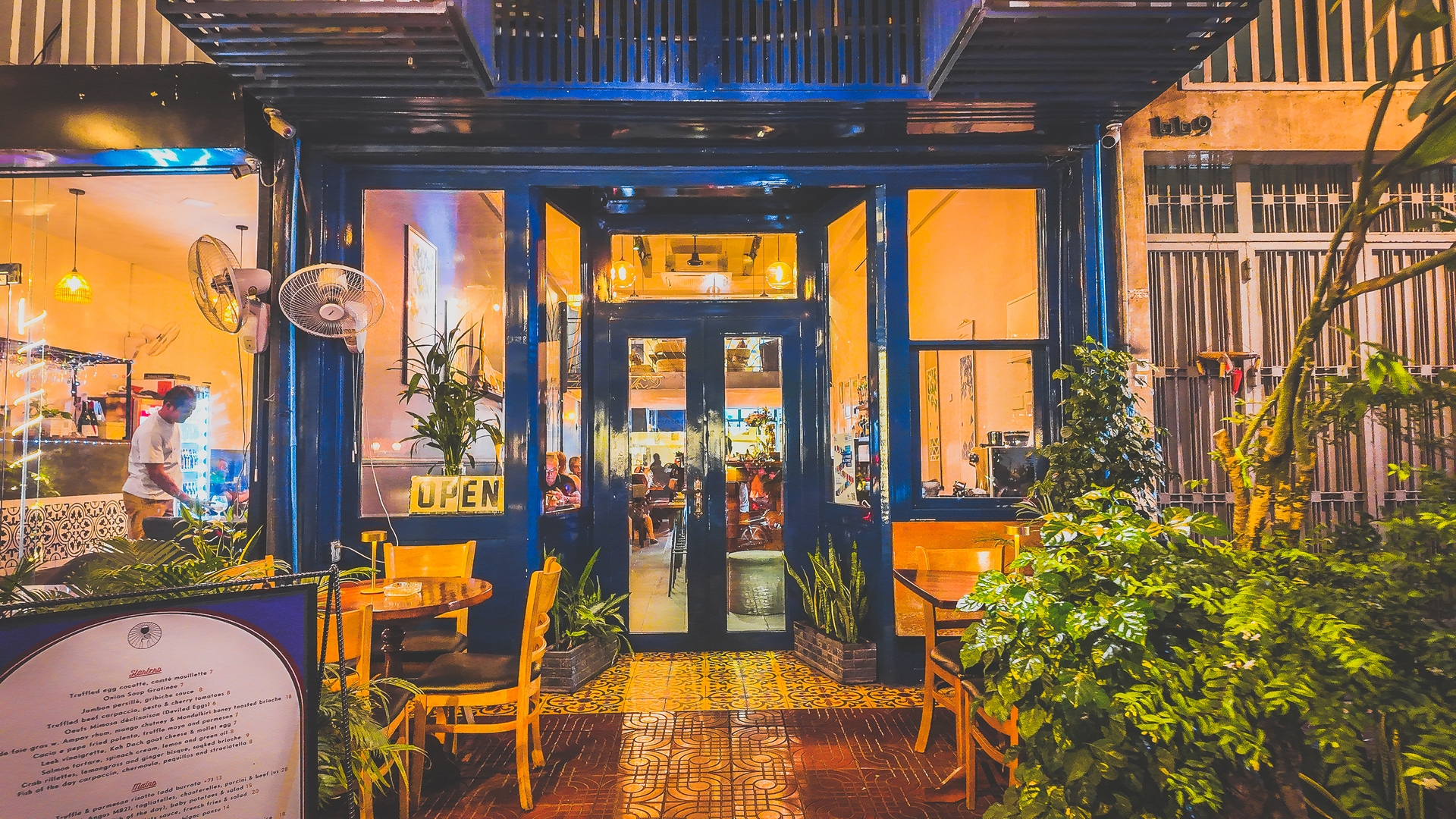
Established in March 2018 by French chef and restaurateur Aude Moulard, Pépé Bistro was conceived as a place where tradition and contemporary creativity could comfortably coexist. Having settled in Phnom Penh after her time at the French Embassy, Aude has created more than simply a restaurant. Pépé has the character of a gathering place, somewhere friends and families can come together over generous cooking, good wine and unhurried conversation.
Its culinary identity draws on authentic French and international cuisine, interpreted with a contemporary sensibility. The à la carte menu changes every three months, while a daily three-course lunch and Saturday specials introduce a welcome element of seasonality and discovery. The intention is not to reinvent French gastronomy, but to approach its familiar foundations with imagination and a certain lightness of touch.
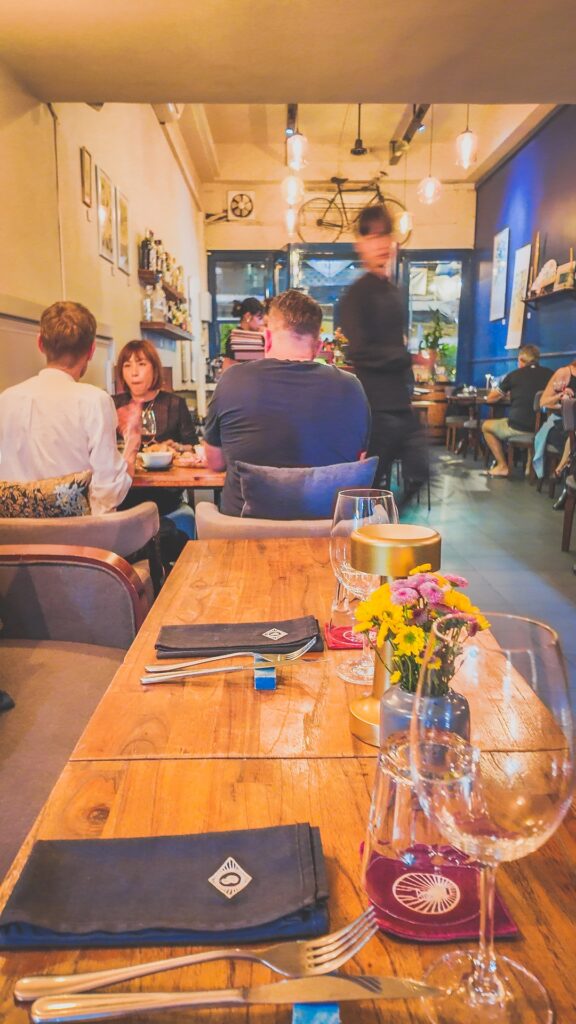
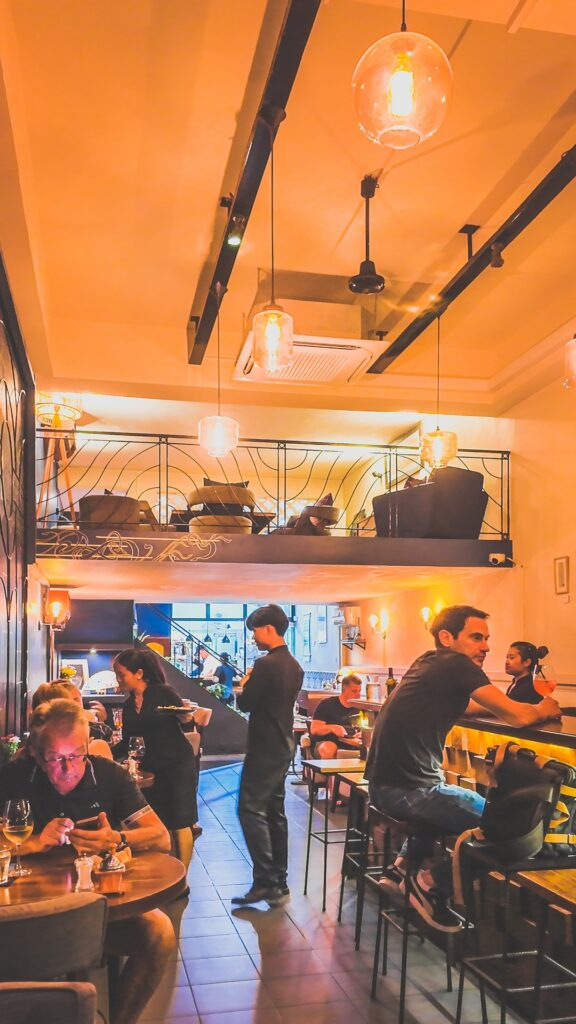
French Bistro Spirit, Cambodian Warmth
The personality of Pépé Bistro is inseparable from the people behind it. Aude is joined by Marie, the restaurant’s longtime manager, who maintains its distinctly French character, and Head Chef Heng, whose cooking has shaped the kitchen since its early days. Working alongside his wife, Srey Lin, who brings a natural warmth to the hospitality, Heng forms part of a team that gives the restaurant its particularly personal atmosphere.
There is something appealing about this continuity. In an industry where restaurants can frequently feel defined by changing concepts and revolving culinary personalities, Pépé has been built around a close-knit team with a shared sense of ownership. The service philosophy is similarly considered: professional without being stiff, attentive without becoming intrusive.
Aude’s entrepreneurial interests have also extended beyond the restaurant. In 2021, she and two friends established Tatie’s, a venture inspired by the French word for auntie. It has since expanded to a second location, opening in 2023, and brings together artisanal bakeries, handcrafted pastries and an assortment of homemade cheeses. Cheese-making, in particular, reflects Aude’s personal passion. The project offers an interesting extension of the Pépé philosophy, with the same affection for French food traditions and the craftsmanship behind them.
A convivial beginning
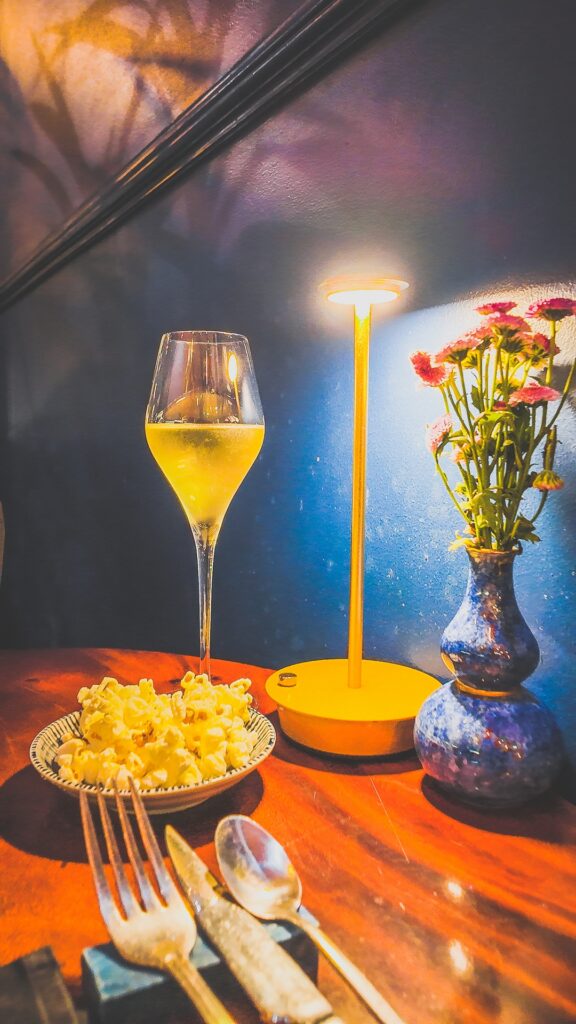
The meal begins with an unexpectedly playful gesture: complimentary popcorn. It is an informal opening that immediately establishes the restaurant’s relaxed bistro personality, setting aside some of the ceremony associated with more formal dining rooms. There is no need for elaborate introductions when something as simple as a bowl of popcorn can set the table at ease.
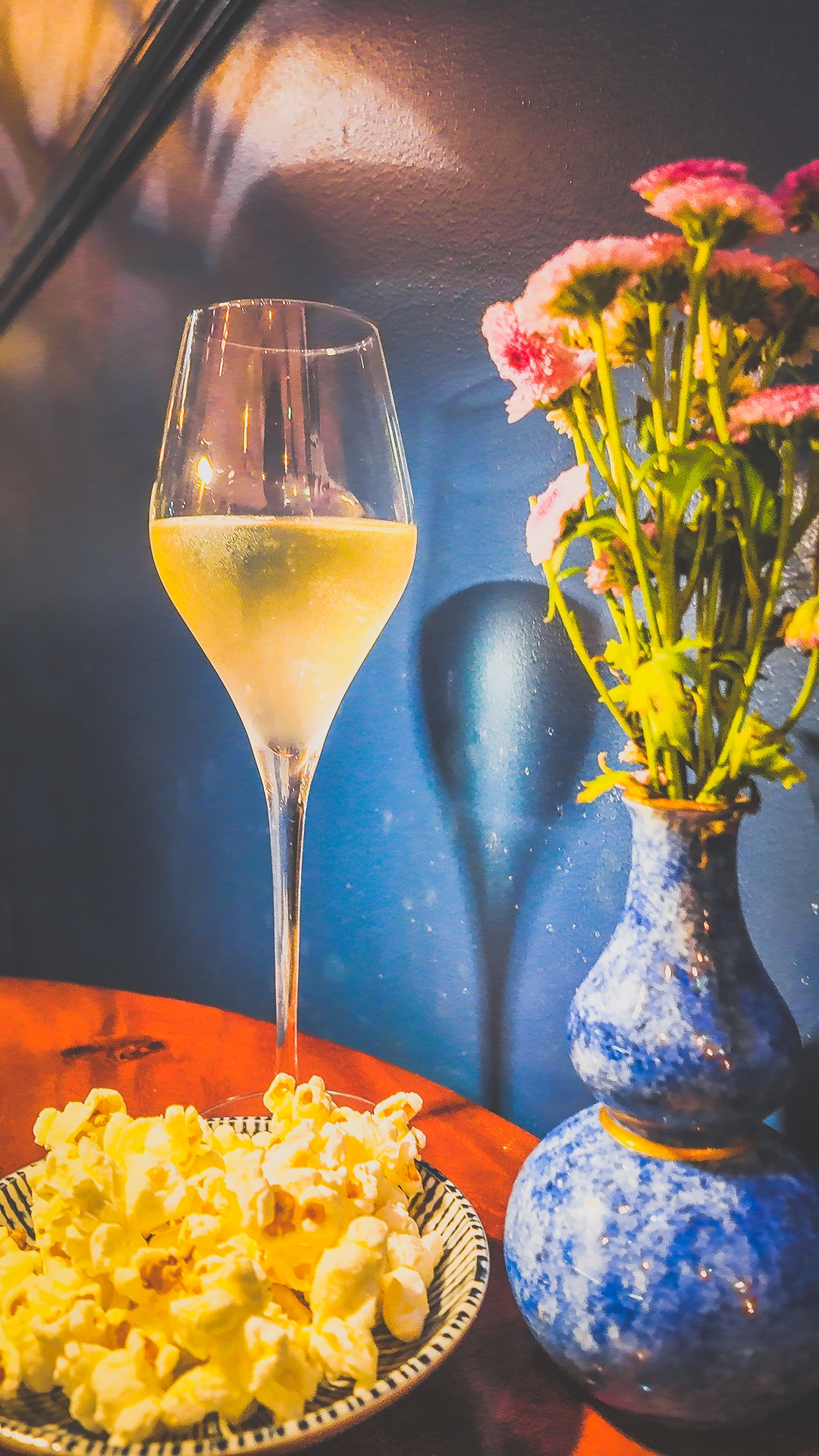
For an aperitif, a glass of Prosecco Brut made from Glera grapes, from the Prosecco DOC appellation in Veneto, provides a natural introduction. Its sparkling character and refreshing acidity offer an inviting counterpoint to the richness of the dishes that follow, preparing the palate without overwhelming it.
Truffled Egg Cocotte, Comté Mouillette
Baked eggs in a truffled cream, strips of cheesy bread for dipping
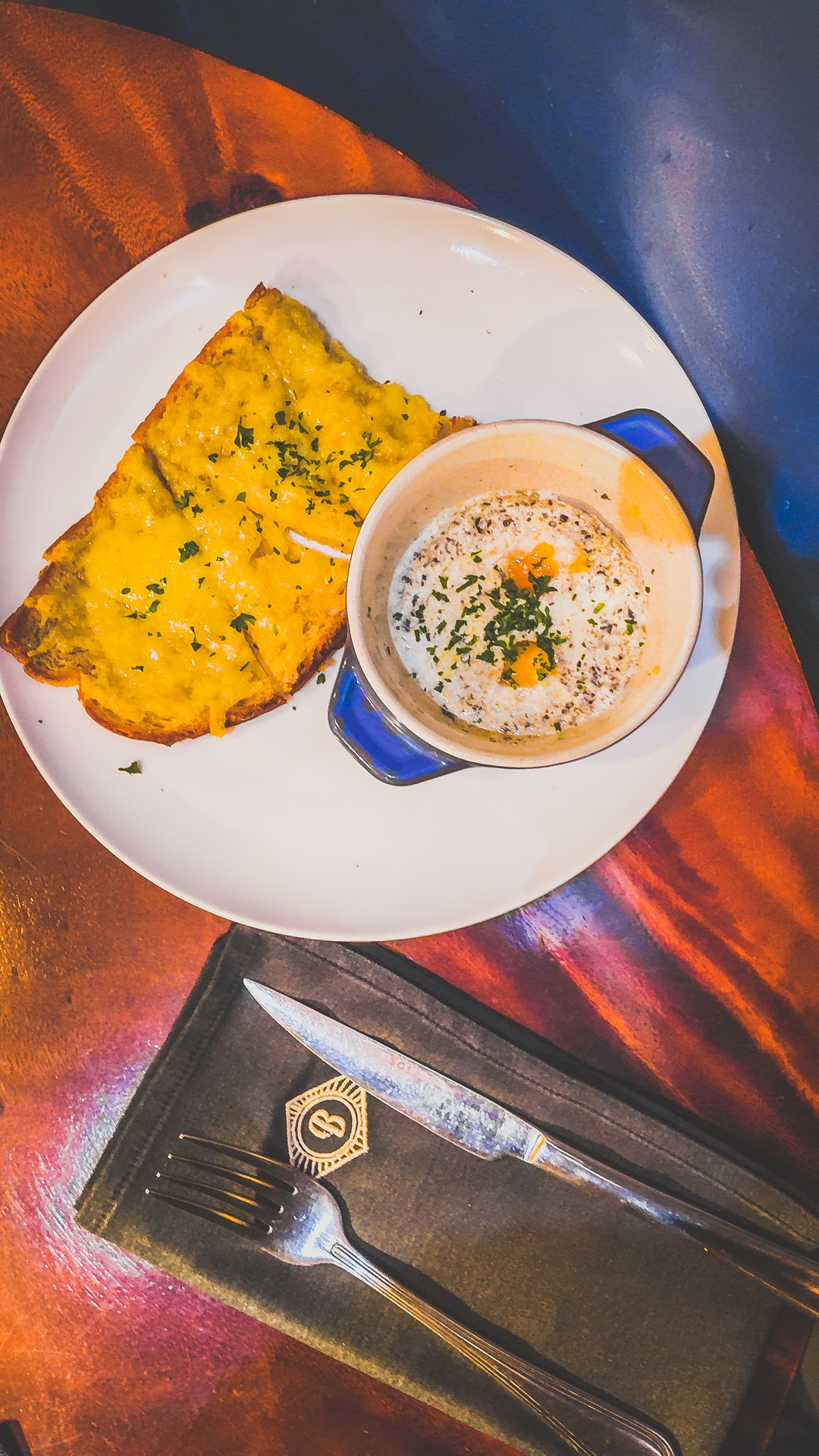
The truffled egg cocotte is a particularly comforting expression of French bistro cooking. Baked eggs are presented in a rich truffled cream, accompanied by strips of Comté-laced bread, or mouillettes, intended for dipping. It is an arrangement that draws on the pleasure of simple ingredients treated with care: eggs, cream, cheese and the unmistakable allure of truffle. The bread provides an essential textural counterpoint, inviting the diner to break into the cocotte and gather up its contents.
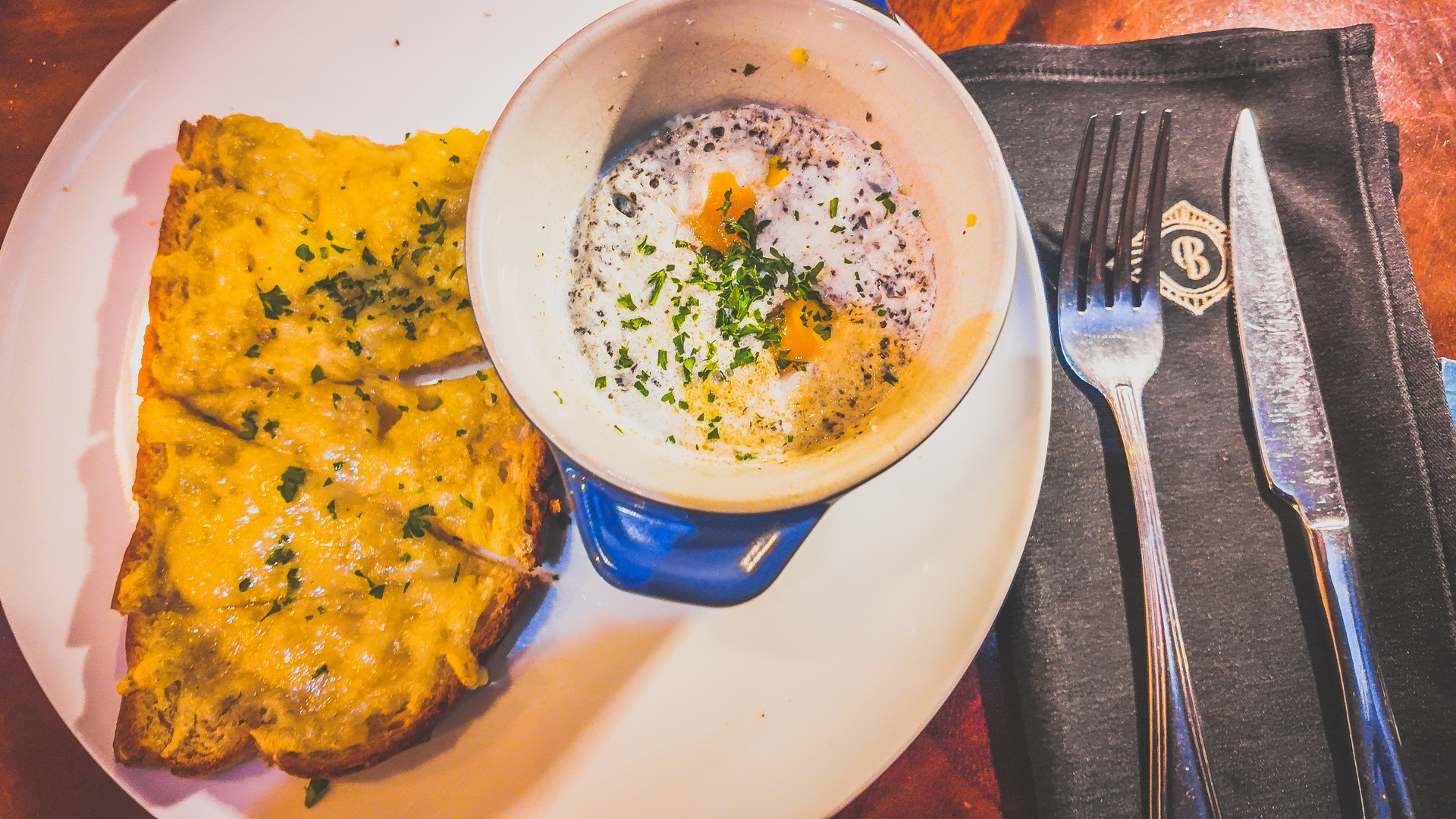
On the palate, the appeal lies in the interplay between the soft, yielding eggs and the creamy sauce, with truffle lending its characteristic earthy, deeply savoury aroma. The Comté mouillettes introduce a more pronounced dairy richness, their cheesy character complementing the delicacy of the eggs. Each dip brings together the silky consistency of the cocotte and the comforting chew of the bread, making this a dish best enjoyed slowly.
There is an almost nostalgic quality to the preparation. It recalls the sort of dish one might encounter in a neighbourhood bistro in France, where the pleasure of eating is found not in complexity but in the quality of the ingredients and the satisfaction of a well-judged combination. It is an inviting beginning, particularly for diners who appreciate the more comforting side of French cuisine.
Suggested Wine Pairing: Prosecco Brut, Glera, Prosecco DOC, Veneto, Italy
The Prosecco brings a welcome lift to the richness of the egg and truffled cream. Its lively acidity helps refresh the palate, while the effervescence cuts through the creamy texture and prevents the cheese from becoming overwhelming. The contrast is particularly pleasing: the wine’s freshness provides a lighter counterpoint to the cocotte’s savoury depth, while the dish, in turn, gives the sparkling wine a more substantial gastronomic context.
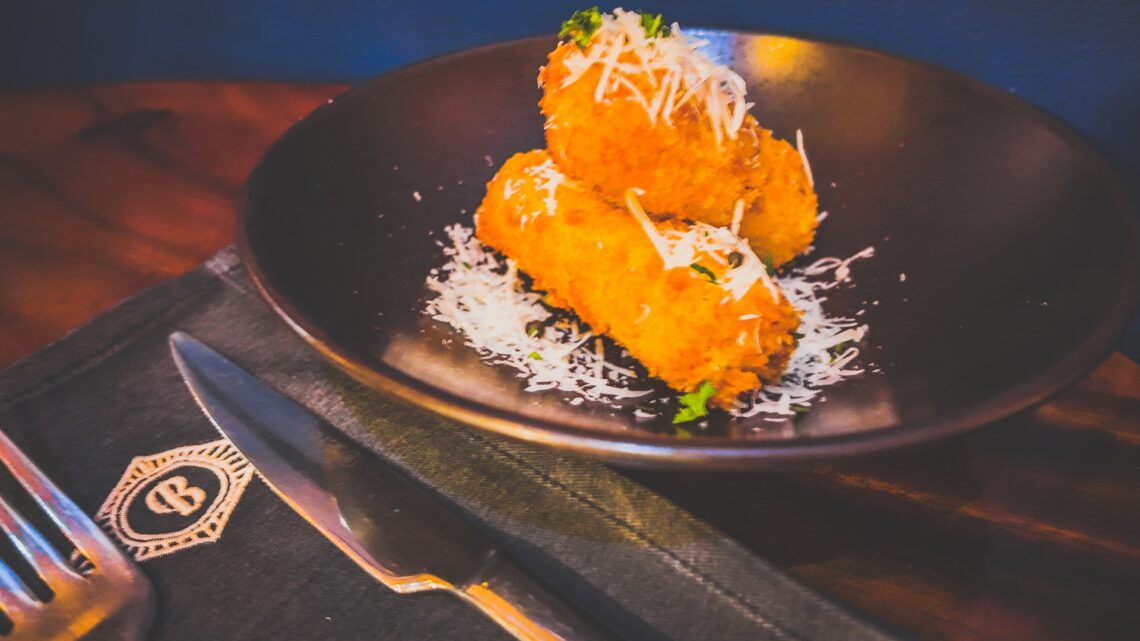
Cacio e Pepe Fried Polenta
Parmesan and truffle mayo
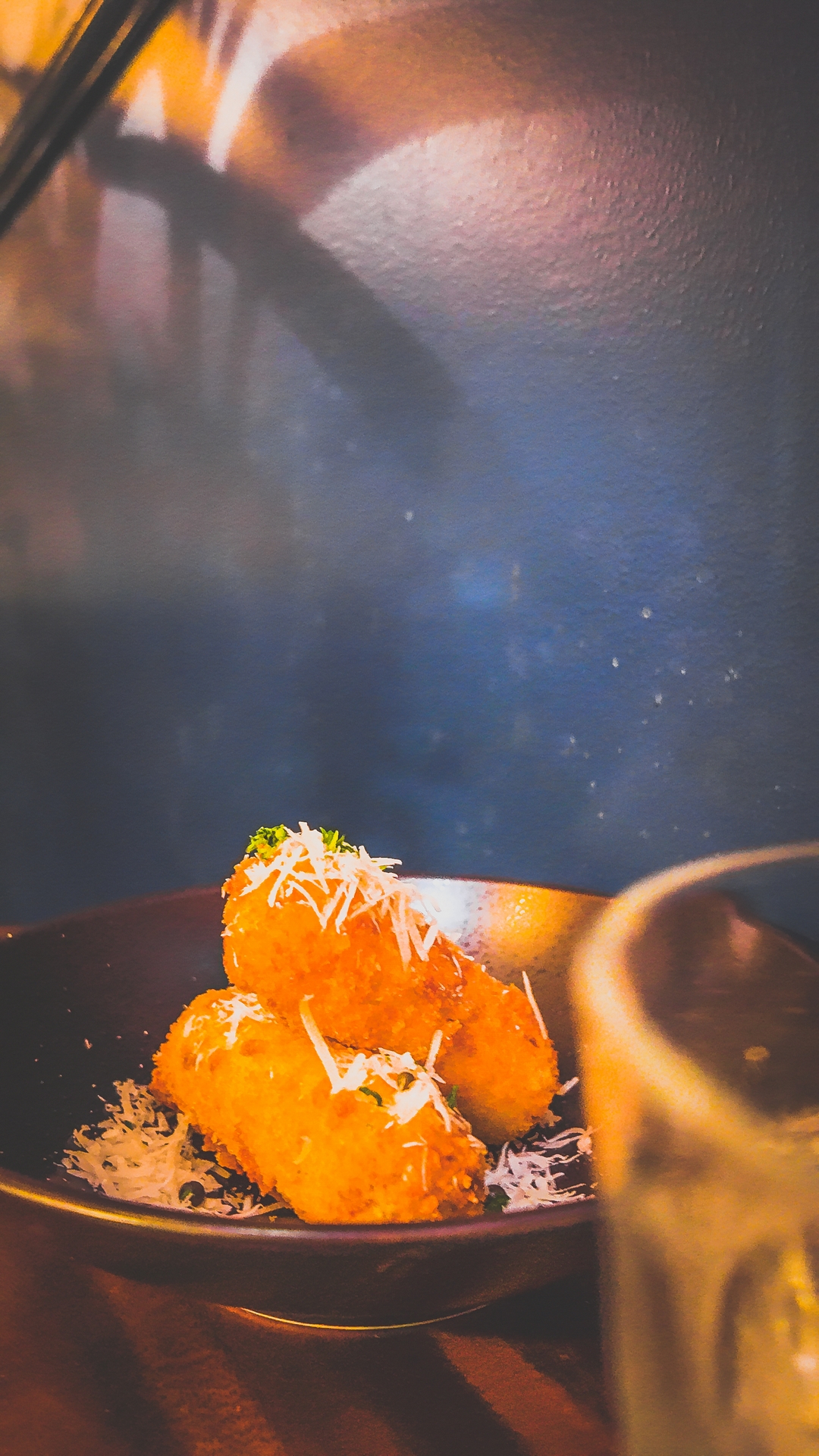
A playful interpretation of a Roman classic, the cacio e pepe fried polenta takes its inspiration from the celebrated combination of cheese and black pepper, translating it into a crisp, moreish preparation. The polenta is fried and served with Parmesan and truffle mayonnaise, bringing together the rustic character of Italian cornmeal cooking and the indulgence of a creamy accompaniment. It is a dish that borrows from the language of Italian comfort food while remaining entirely at home within Pépé’s broader French and international repertoire.
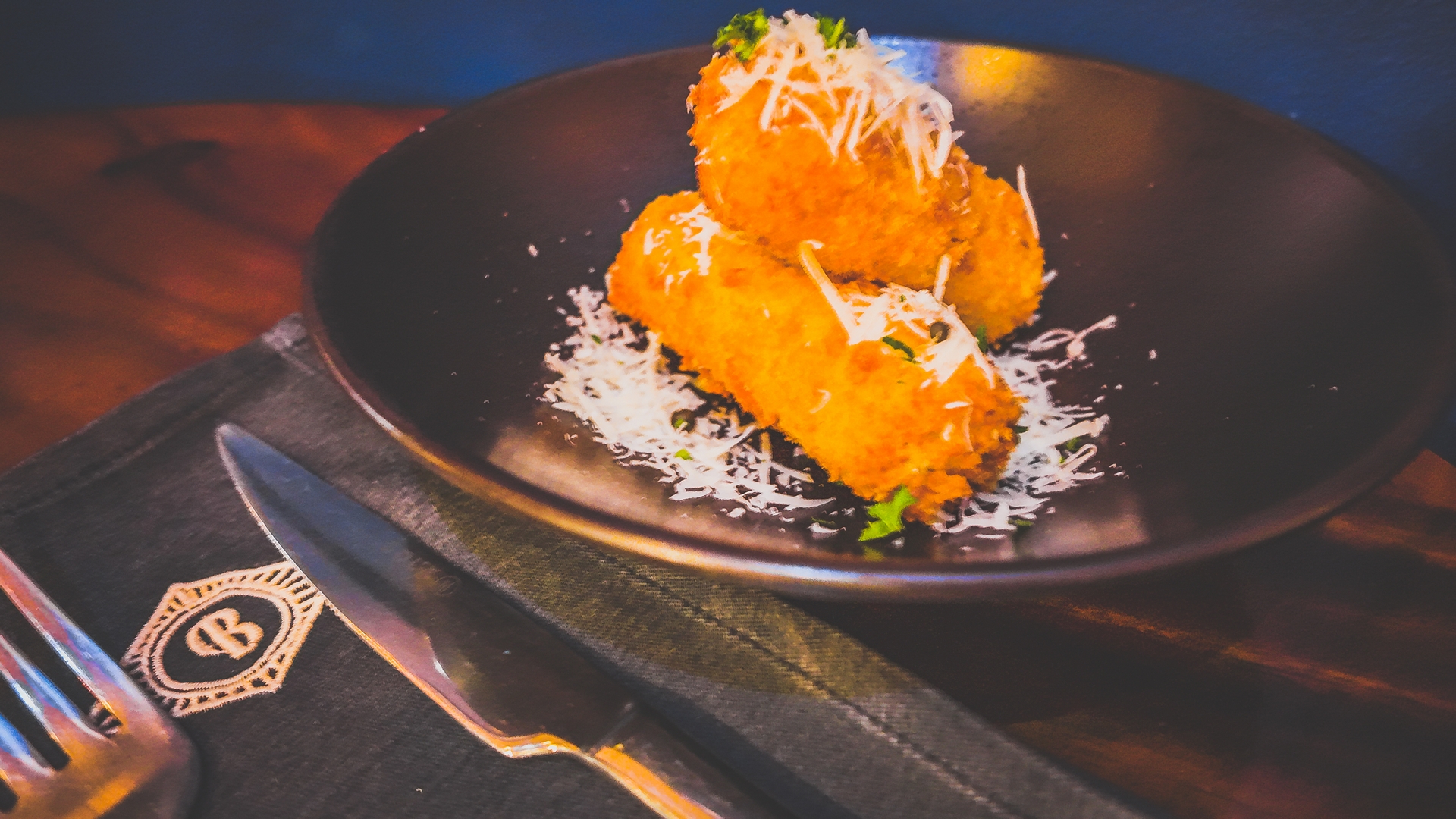
The pleasure here is one of contrasts. The fried polenta offers a more substantial, textured bite, while the Parmesan introduces a concentrated savoury quality. The truffle mayonnaise adds creaminess and an earthy aromatic dimension, bringing a certain indulgence to what might otherwise be a straightforward preparation. The combination evokes the spirit of cacio e pepe without attempting a literal reproduction, allowing the familiar flavours to take on a different form.
There is an appealing informality to the dish. It is the sort of preparation that encourages sharing, conversation and another glass of wine, rather than demanding the diner’s full attention. In a menu that draws from several culinary traditions, it also illustrates the freedom with which Pépé approaches its cooking.
Suggested Wine Pairing: Prosecco Brut, Glera, Prosecco DOC, Veneto, Italy
The Prosecco’s effervescence is particularly useful here, lifting the creamy truffle mayonnaise and cleansing the palate after the fried polenta. Its refreshing acidity provides contrast to the Parmesan’s savoury intensity, while the bubbles help keep each mouthful feeling light. The pairing favours freshness over weight, making it an enjoyable accompaniment to a dish with several layers of richness.
ot
Domaine de Rochebin, Chardonnay, Mâcon-Villages AOP, Burgundy, France
For a still-wine alternative, the Chardonnay offers a different direction. Its appeal lies in the natural affinity between Chardonnay and the creamy, savoury elements of the dish. The wine’s acidity helps balance the Parmesan and mayonnaise, while its fuller palate gives it sufficient presence alongside the fried polenta. Where the Prosecco brings brightness and effervescence, the Burgundy offers a more measured, textural partnership, allowing the dish’s richness to linger a little longer.
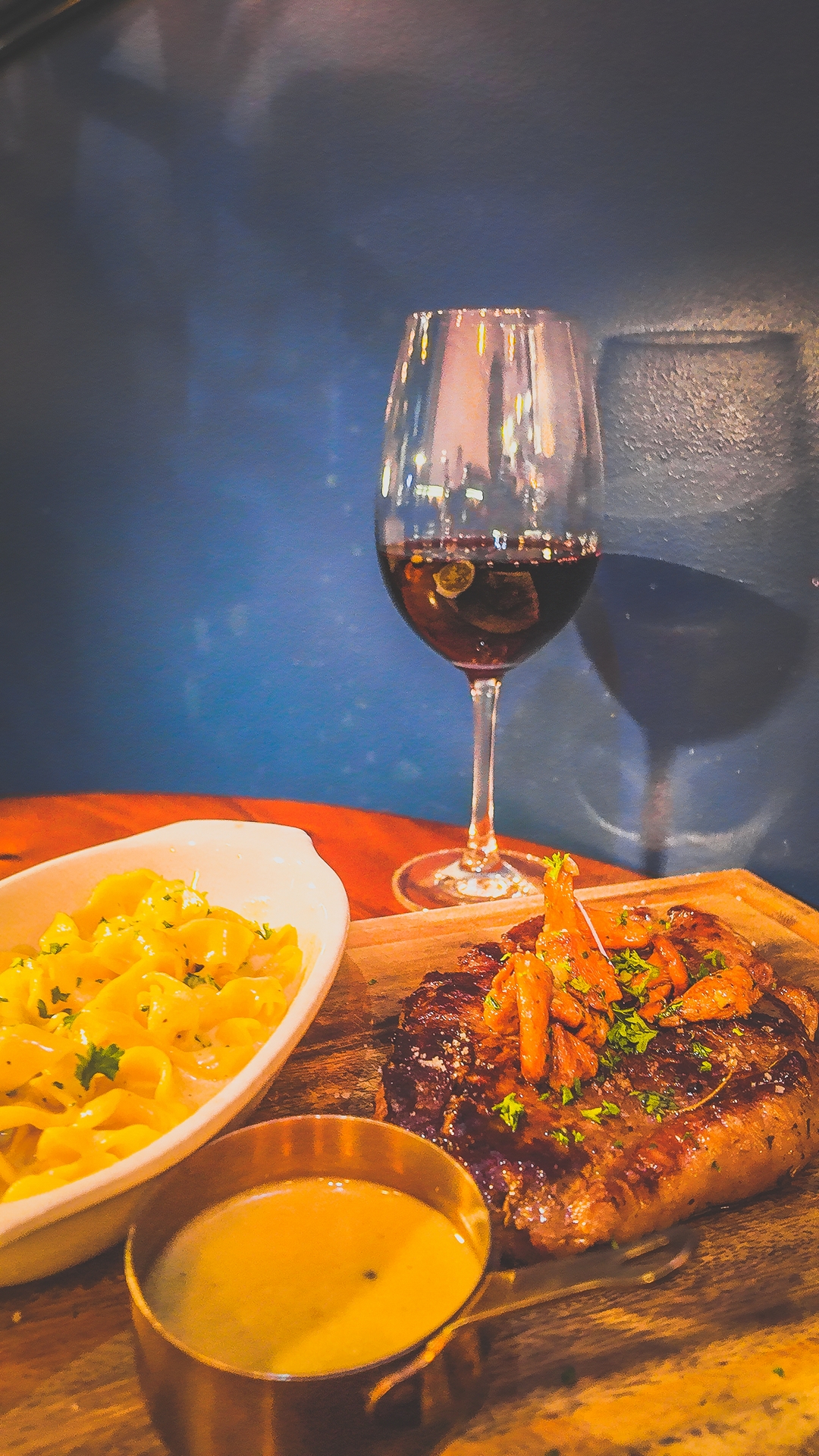
Black Angus Faux-Filet
Creamy tagliatelle, sauteed chanterelles, beef and porcini jus
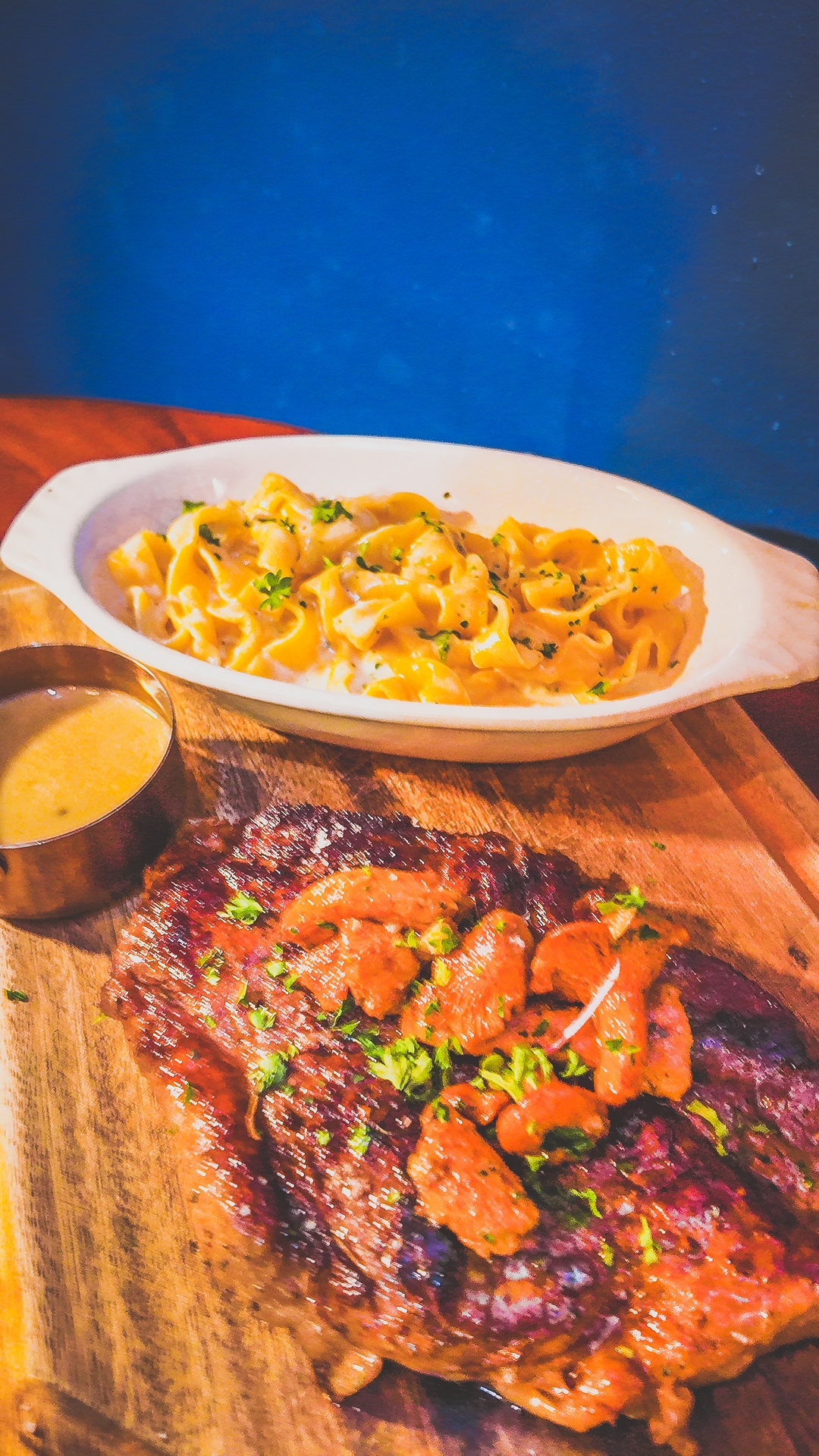
The main course turns to a more recognisably French bistro preparation: Black Angus faux-filet, specified as MB2, served with creamy tagliatelle, sautéed chanterelles and a beef and porcini jus. The composition is generous without being unnecessarily elaborate. The sirloin provides the centrepiece, while the pasta introduces a comforting element and the chanterelles bring the distinctive character of wild mushrooms. The porcini-infused beef jus completes the plate, drawing the individual components together through a concentrated savoury foundation.
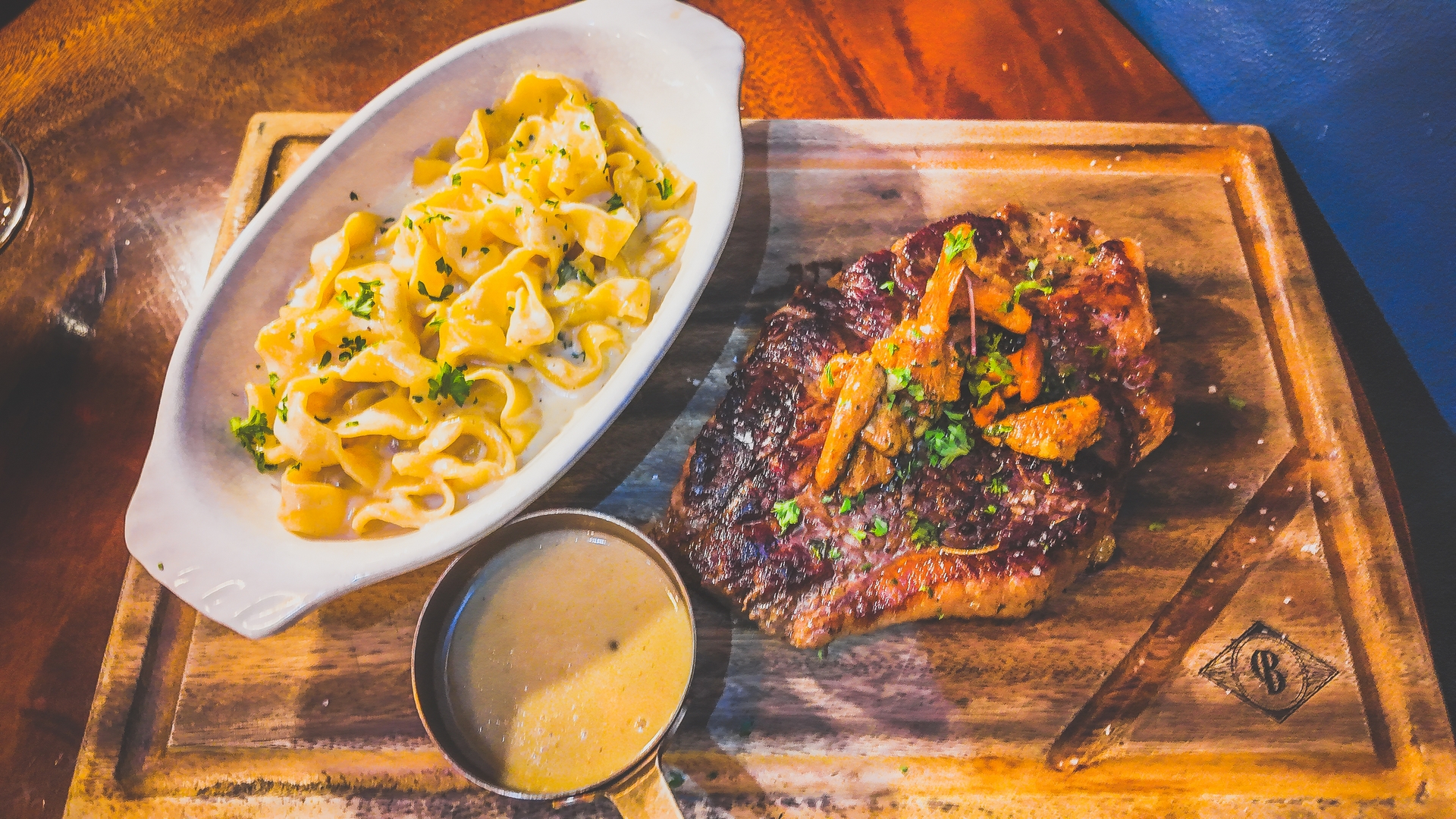
The combination speaks to the pleasures of earthy, deeply savoury cooking. The beef brings its characteristic richness, complemented by the creamy tagliatelle, while the chanterelles contribute a woodland dimension that lends the dish greater aromatic depth. The porcini jus reinforces these flavours, creating a sense of continuity between the meat and mushrooms. There is a pleasing logic to the composition: the richness of the beef, the softness of the pasta and the more pronounced character of the mushrooms all belong to the same flavour conversation.
It is a dish that sits comfortably within the French bistro tradition, where a good cut of beef, a thoughtfully prepared sauce and a satisfying accompaniment can be all that is required. Rather than pursuing unnecessary complexity, the preparation embraces the pleasures of familiar ingredients and generous flavours. For diners drawn to the more substantial side of contemporary European cooking, it provides a natural centrepiece to the meal.
Suggested Wine Pairing: Château Haut-Mangaud, Merlot–Malbec, Côtes de Bourg AOP, Bordeaux, France
The Bordeaux blend is a fitting choice for the beef. Merlot brings a softer, more rounded fruit character, while Malbec contributes additional structure and depth. Together, they provide a wine with sufficient presence to stand alongside the sirloin and its concentrated beef and porcini jus. The darker fruit profile complements the savoury character of the meat and mushrooms, while the wine’s tannic structure offers a useful counterpoint to the richness of the creamy tagliatelle. As the meal progresses, the combination of beef, woodland flavours and Bordeaux becomes particularly evocative of the traditional French table.
Cherry & Black Sesame Pavlova
Cherry compotée, meringue, sesame ice-cream and mascarpone espuma
The Cherry & Black Sesame Pavlova brings a more contemporary sensibility to the conclusion of the meal. The familiar meringue-based dessert is accompanied by cherry compotée, black sesame ice cream and mascarpone espuma. It is an interesting combination of European dessert tradition and ingredients that introduce a more distinctive flavour profile. The cherry provides the fruit-led centrepiece, while black sesame brings a deeper, more savoury counterpoint. Mascarpone espuma completes the composition with an airy dairy element.
The dessert plays on contrasting textures and flavours. Pavlova offers the characteristic crispness of meringue, giving way to a lighter interior, while the cherry compotée contributes a fruity intensity and a gentle tartness. The black sesame ice cream introduces a nutty, roasted dimension, its deeper flavour tempering the sweetness of the meringue and fruit. The mascarpone espuma provides a delicate creaminess, softening the transitions between the different elements without making the dessert feel excessively heavy.
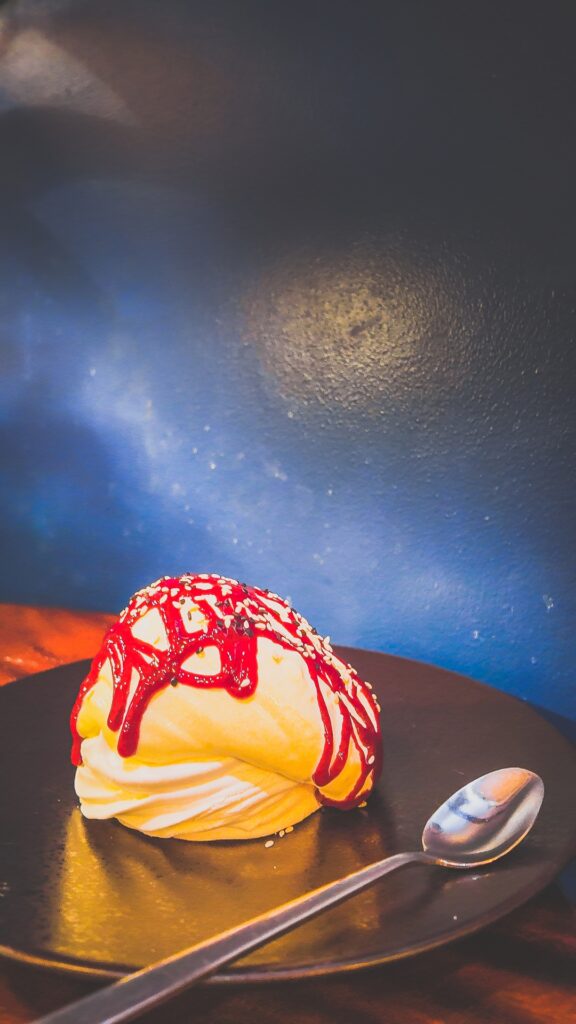
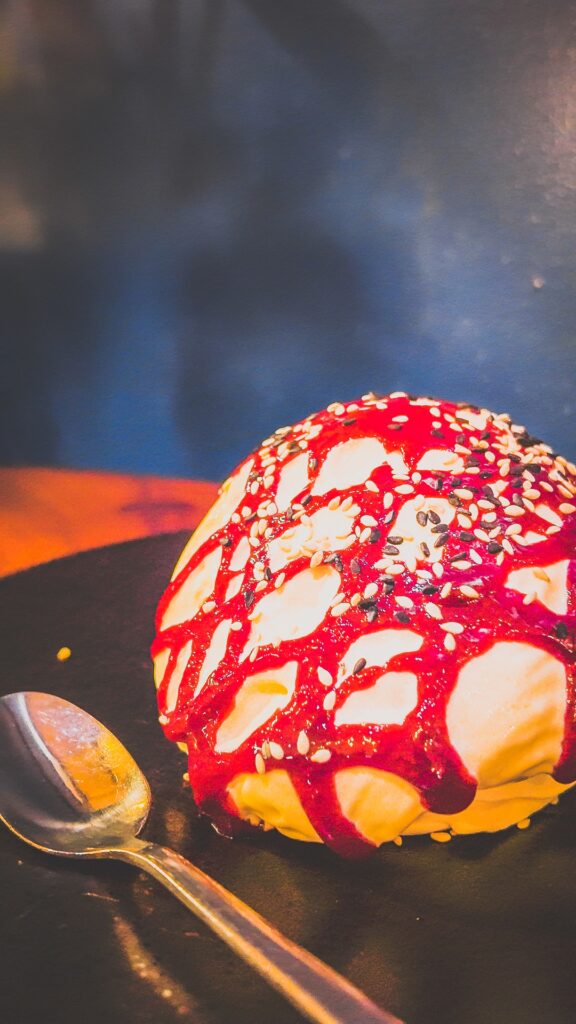
It is a thoughtful way to conclude the meal. Rather than relying solely on sweetness, the dessert finds its interest in the dialogue between fruit, sesame and dairy. The black sesame is particularly welcome, lending the familiar pavlova format a more individual character. It leaves the palate with something more interesting than a straightforward sugary finish, bringing the meal to a close with a little contrast and personality.
The French Art of Lingering
The lingering aroma of truffle, the richness of a beautifully prepared sauce, the gentle clink of wine glasses and the easy hum of conversation create an atmosphere that feels wonderfully removed from the hurried world outside. At Pépé Bistro, the experience unfolds with an appealing ease, moving from the comforting richness of French bistro cooking to more playful contemporary interpretations, with a thoughtfully chosen glass of wine never far from the table. The truffled cream of the egg cocotte, the savoury warmth of the Black Angus with chanterelles and porcini, and the contrasting sweetness and nuttiness of the cherry and black sesame pavlova leave their own impressions, each contributing to a meal that feels generous without being overwrought.
Beyond the food, it is the human warmth that gives Pépé its character. There is a sense of familiarity in the way the restaurant is run, from Aude’s original vision to the close-knit team that has helped shape its identity over the years. French in its culinary sensibility, yet unmistakably at home in Phnom Penh, it possesses the sort of conviviality that makes a dining room feel lived in rather than merely designed.
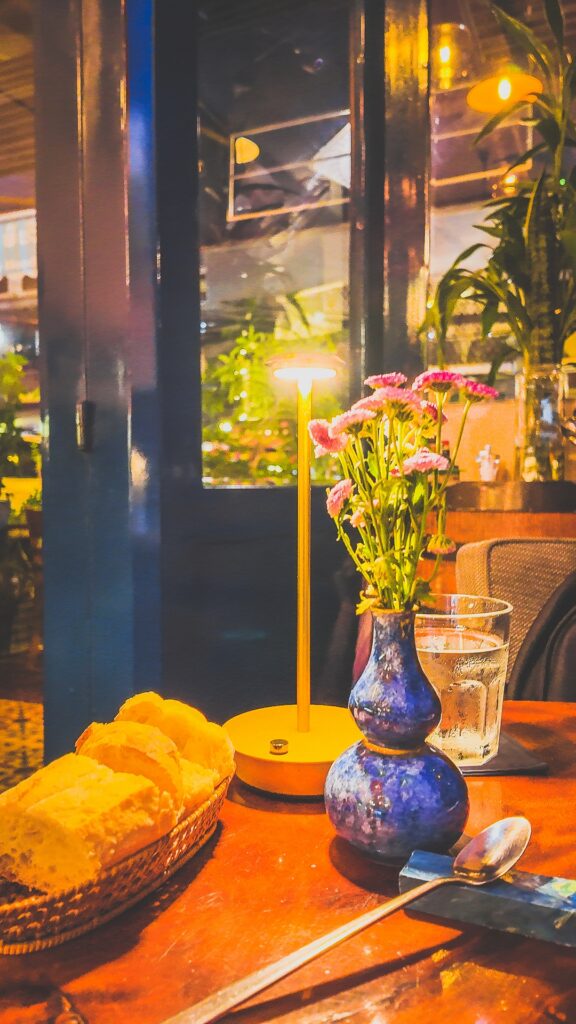
Outside, Street 13 continues its gentle urban theatre. The National Museum is just around the corner, the Royal Palace a short stroll away, and the city’s evening traffic carries on with its familiar energy. Yet inside, over the last sip of wine and perhaps a little conversation that has outlasted the meal, there is a welcome sense of having found one’s own corner of the city.
Some restaurants are remembered for a particular dish; others for the atmosphere that gathers around the table. Pépé Bistro manages to leave something of both: the flavour of a well-made French meal and the warmth of an evening that one wishes had lasted just a little longer.
Pépé Bistro
223, Street 13, Sangkat Chey Chom Neas 12206 Phnom Penh
Tel: +855 (0) 87 911 871