The Art of a Luxury Family Staycation at Sheraton Johor Bahru
Johor Bahru is not a city that whispers.
Beyond the Causeway, the atmosphere becomes denser and more animated. Traffic folds in upon itself; motorcycles thread through the congestion; shopfronts, weathered façades and exuberant signage accumulate along the streets in a visual palimpsest of old and new. The tropical air hangs warm over the pavement, carrying the mingled aromas of roadside kitchens, rain, petrol and something sweet caramelising over heat.
After Singapore’s immaculate choreography, the contrast can be invigorating.
It can also be exhausting.
Which is precisely why a refined Johor Bahru staycation requires a certain discernment. The pleasure is not necessarily in finding more to do, but in knowing when to withdraw from the city’s kinetic energy. A morning might be spent navigating its shops and restaurants; an afternoon could dissolve into heat, traffic and retail; and by early evening, the most appealing prospect may be somewhere cool, quiet and beautifully composed.
For families, this distinction becomes even more pronounced.
The ideal hotel should function as a kind of private counterpoint to the city: somewhere the temperature falls, the acoustics soften and the day’s accumulated friction begins to evaporate. There should be a pool without another car journey, somewhere for children to disappear into play, food available without elaborate planning, a proper bar for the adults and, above all, rooms with enough generosity to accommodate four people without making them feel as though they are living on top of one another.
The finest family staycations are not defined by an excess of activity.
They are defined by the ease of moving between activity and repose.
Where to Stay
Sheraton Johor Bahru
Sheraton Johor Bahru emerges as a study in contrast.
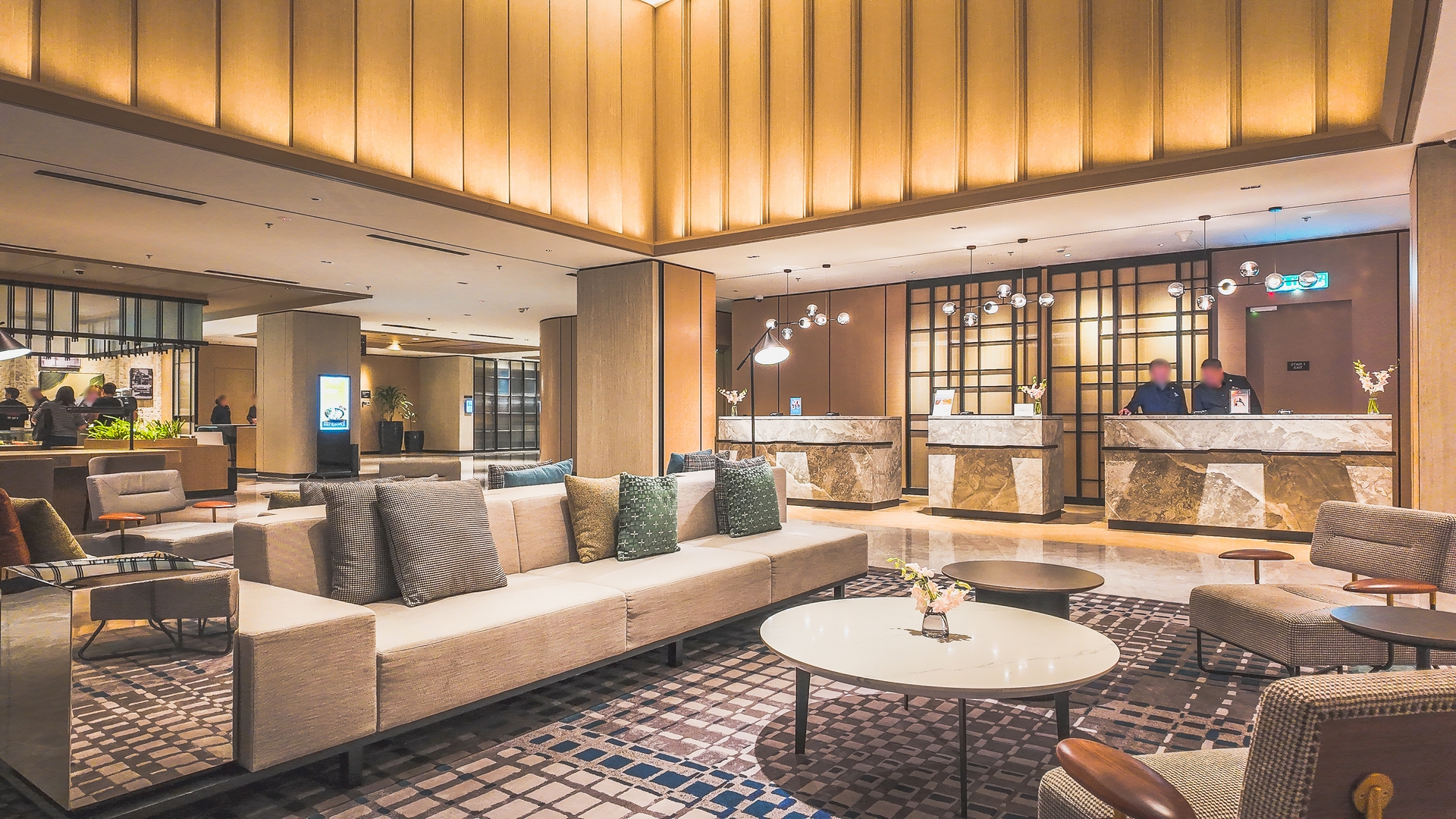
The movement of the city falls away behind the doors and the atmosphere becomes cooler, quieter, more deliberate. There is marble with its faint mineral luminosity, timber with a warmer grain, polished surfaces catching the changing light. Chinese porcelain artefacts — qilin, fans and other decorative forms — punctuate the interiors with flashes of a more traditional visual language.
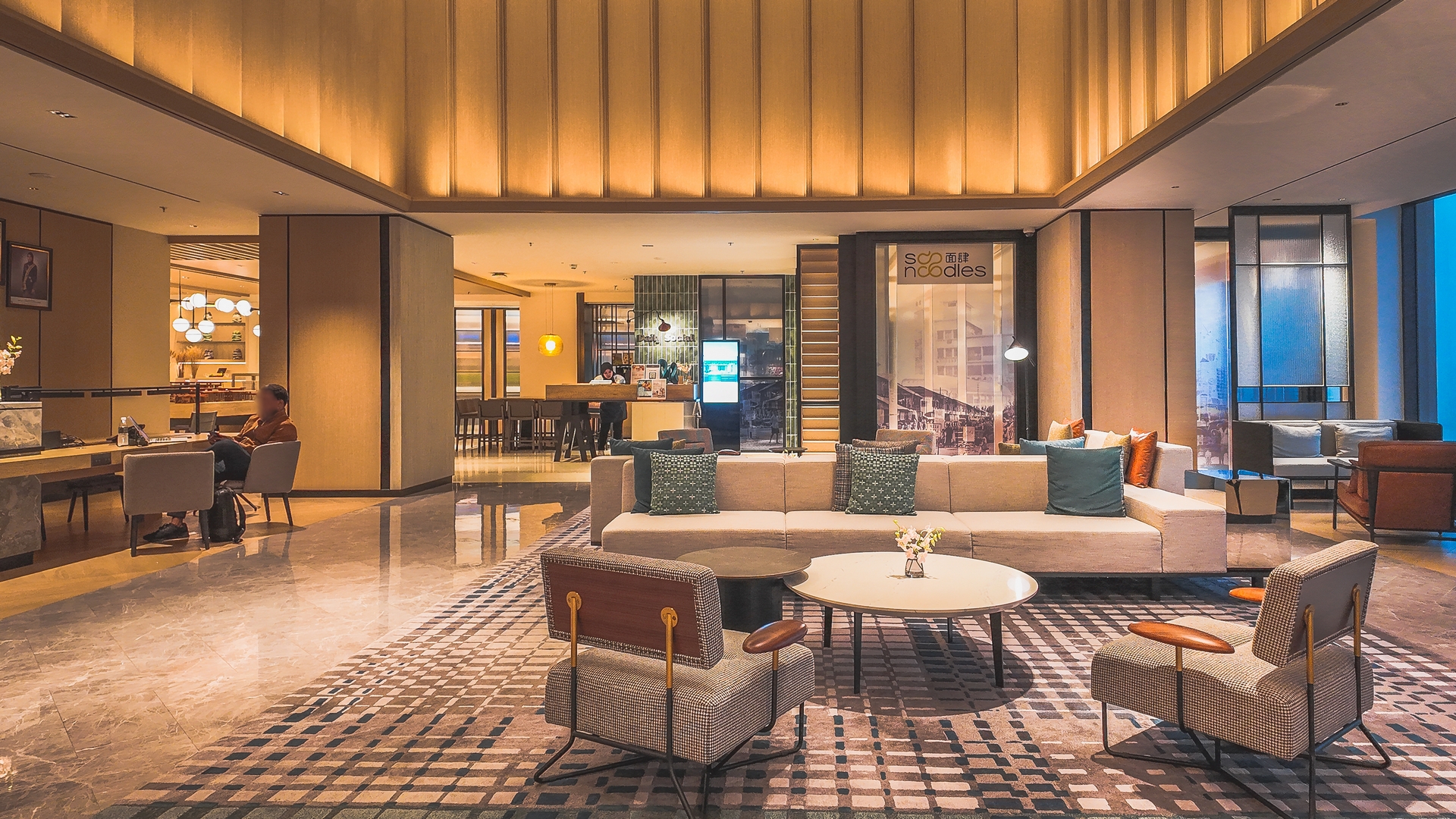
The effect is composed without being precious.
It is also a hotel that rewards staying in.
The Deluxe Suite
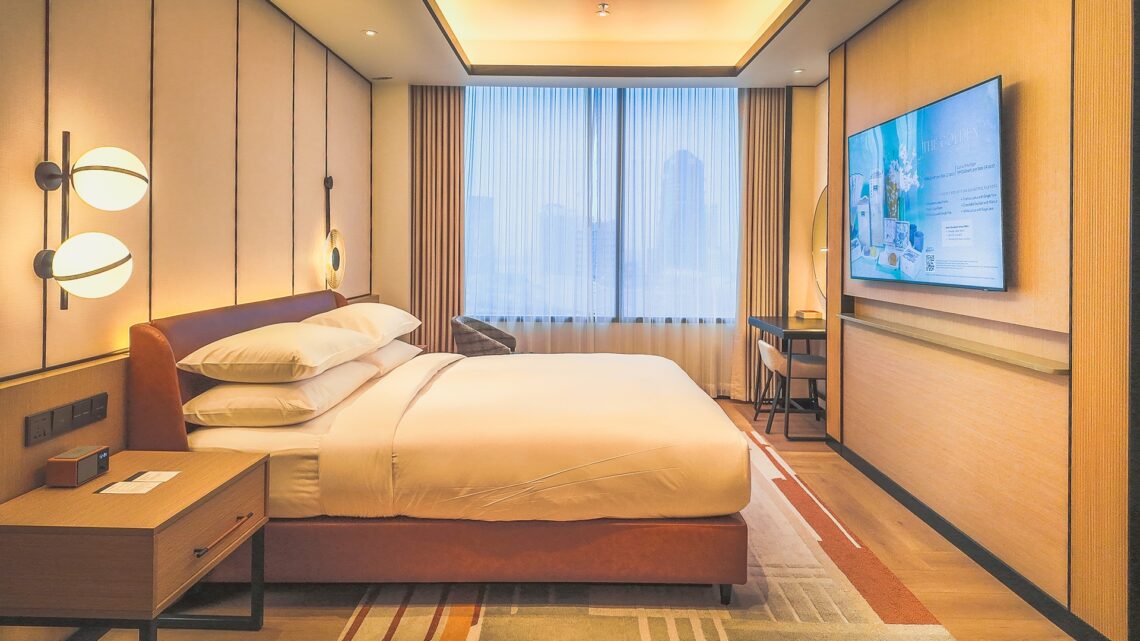
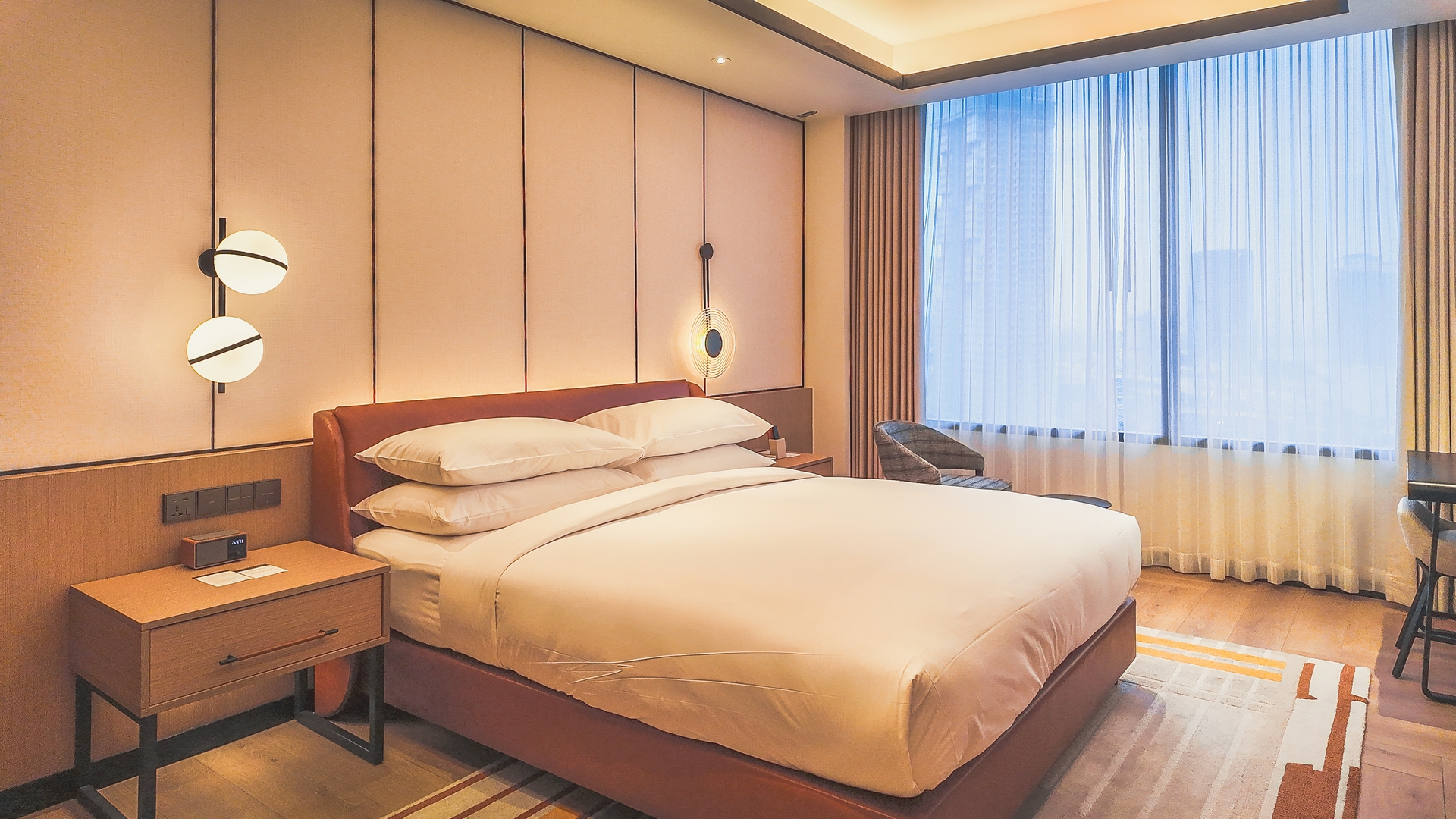
The Deluxe Suite is more naturally suited to couples, offering a considered balance of intimacy, generous proportions and domestic ease.
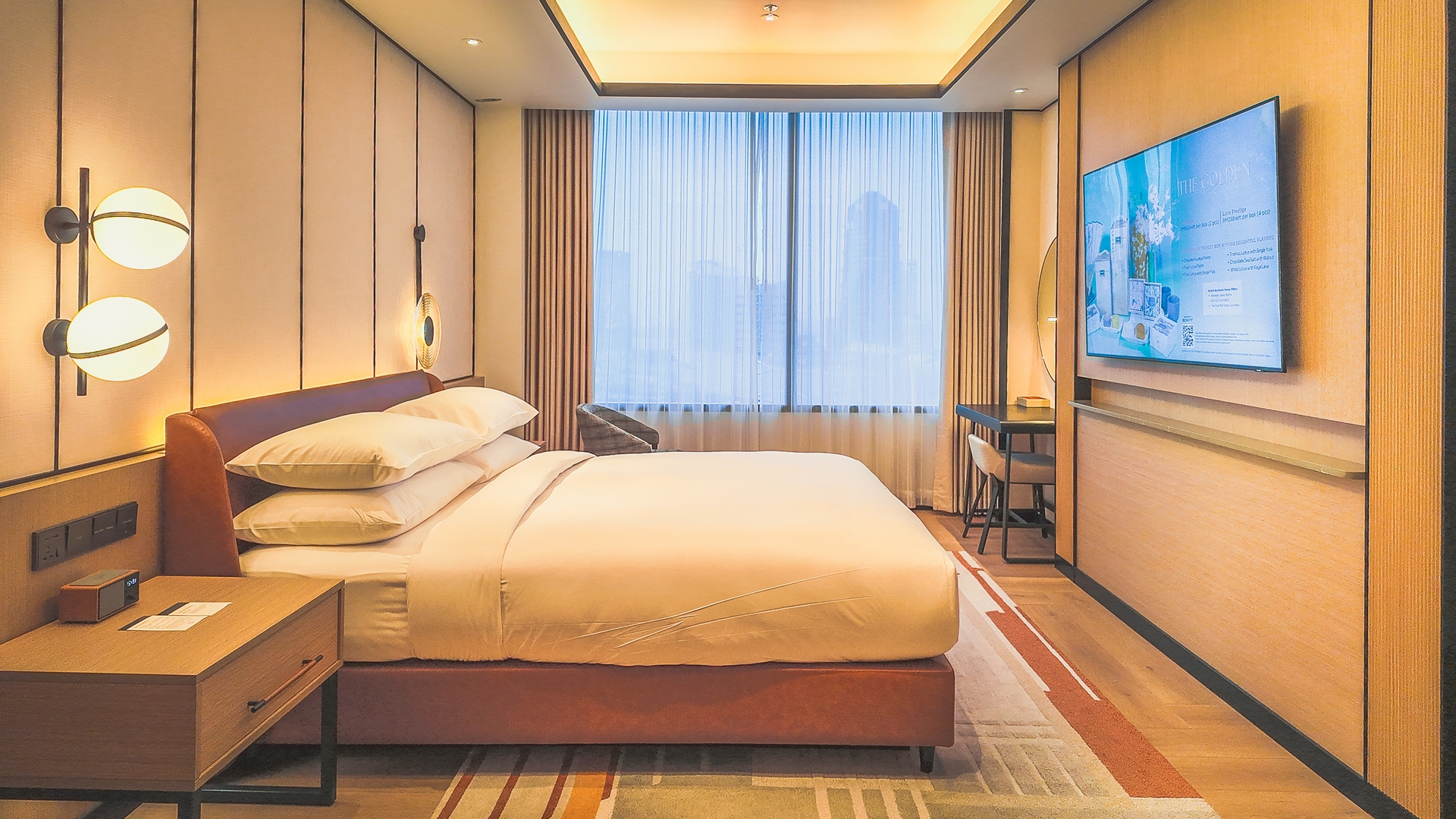
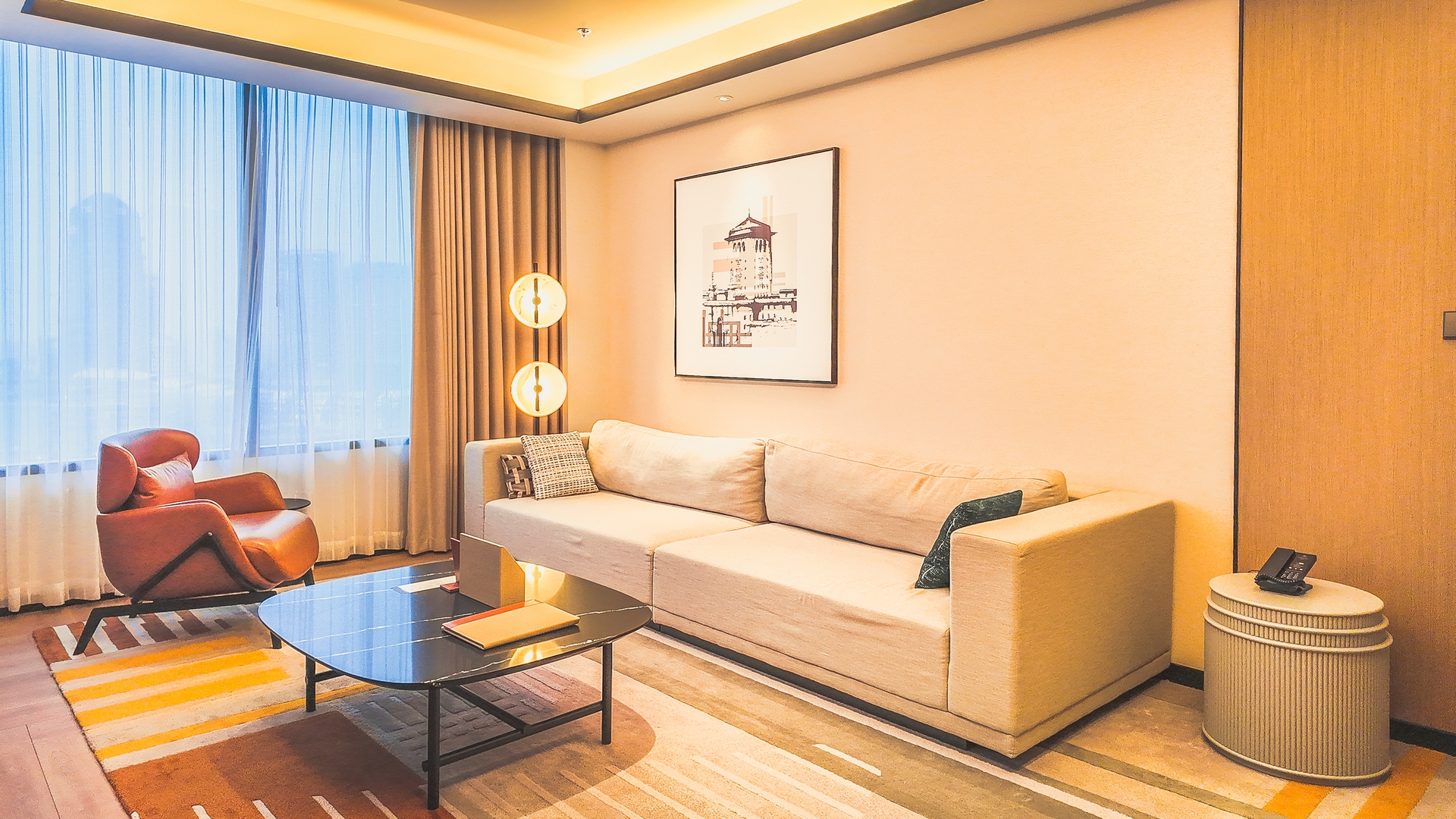
A king bed anchors the bedroom, while an unusually generous sofa accommodates four or five people, lending the living area the character of a proper drawing room rather than an enlarged sleeping chamber.
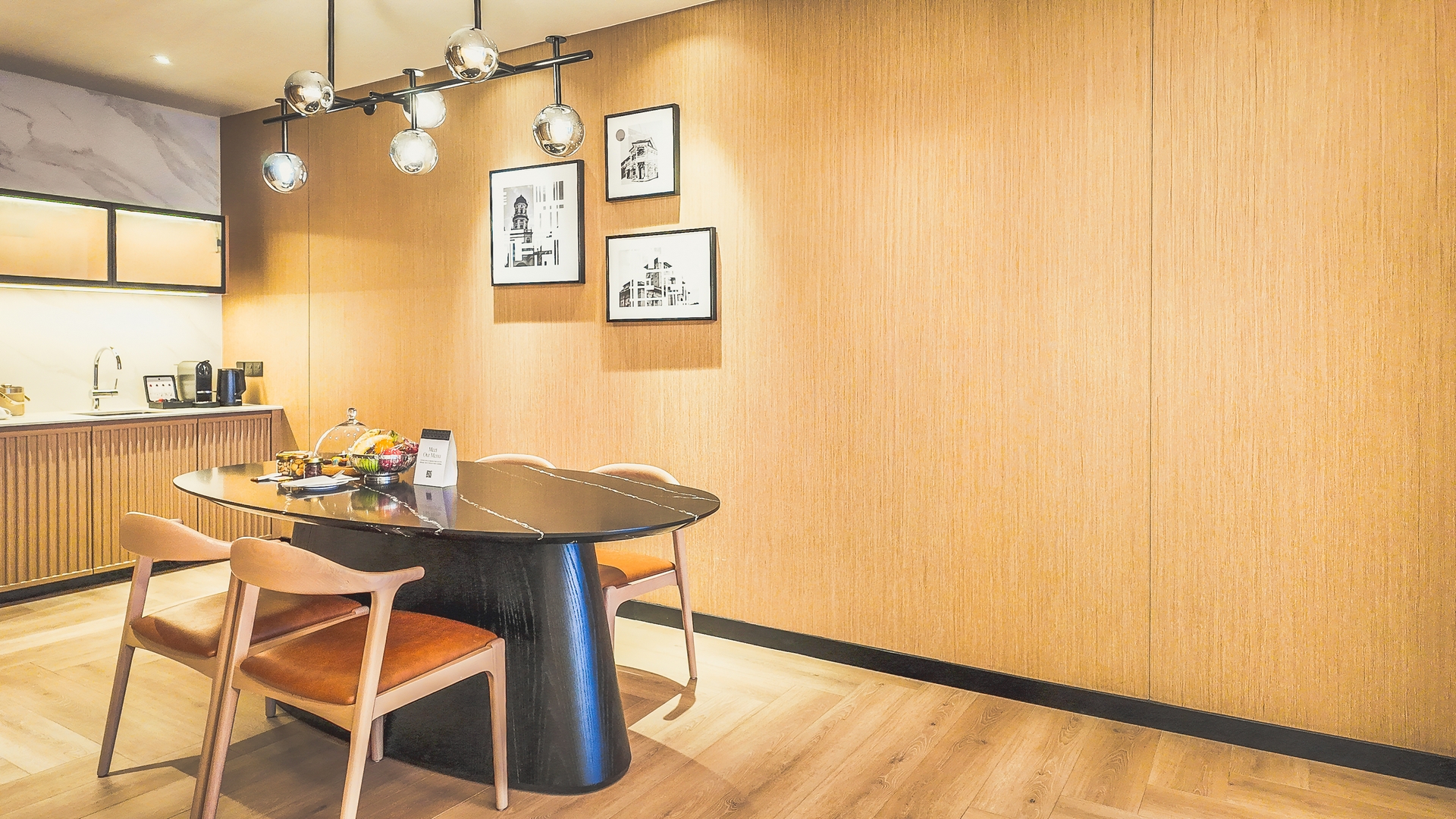
A dining table for four occupies its own distinct space, allowing breakfast, coffee or an evening drink to unfold at a remove from the bed. There is a certain pleasure in this separation: the quiet luxury of being able to inhabit a room in several different ways without one function intruding upon another.
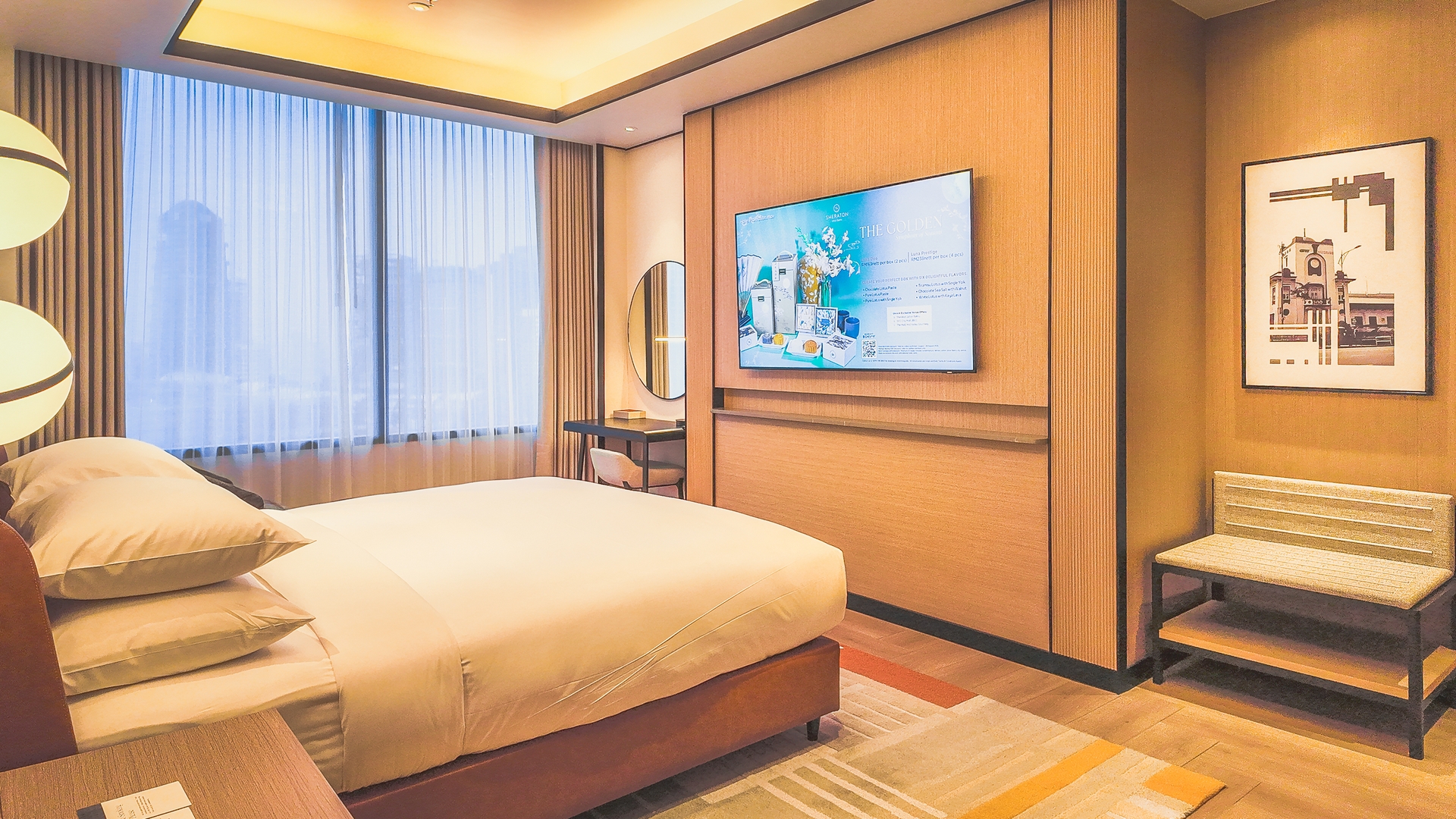
The distinction is not merely spatial. Compared with the Deluxe Room, the suite introduces a dresser and full-length mirror, small but consequential additions that lend the bedroom a more considered, residential sensibility.
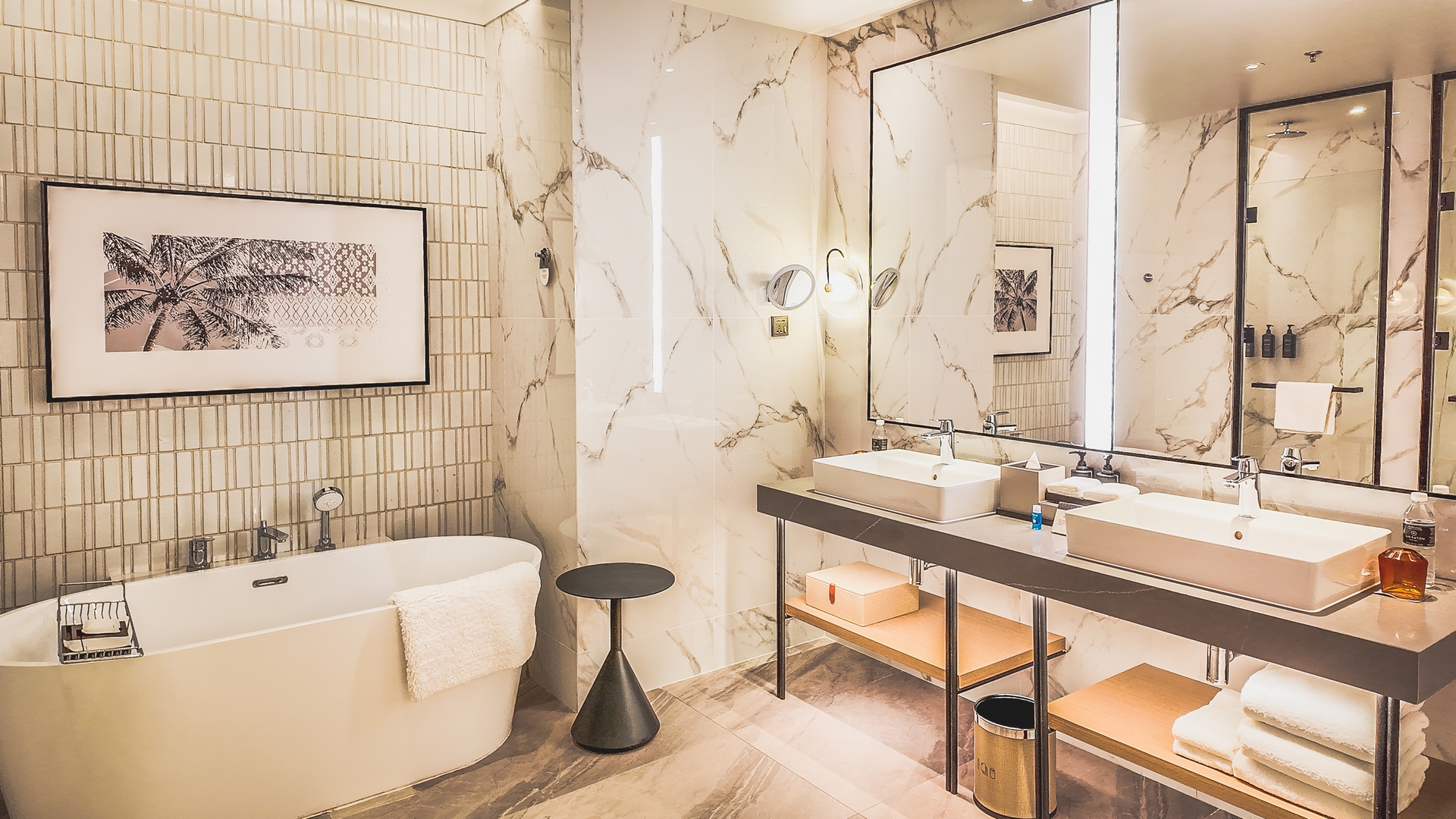
The bathroom, too, is more generously appointed, with a double vanity that allows two people to prepare for the day without negotiating for space.
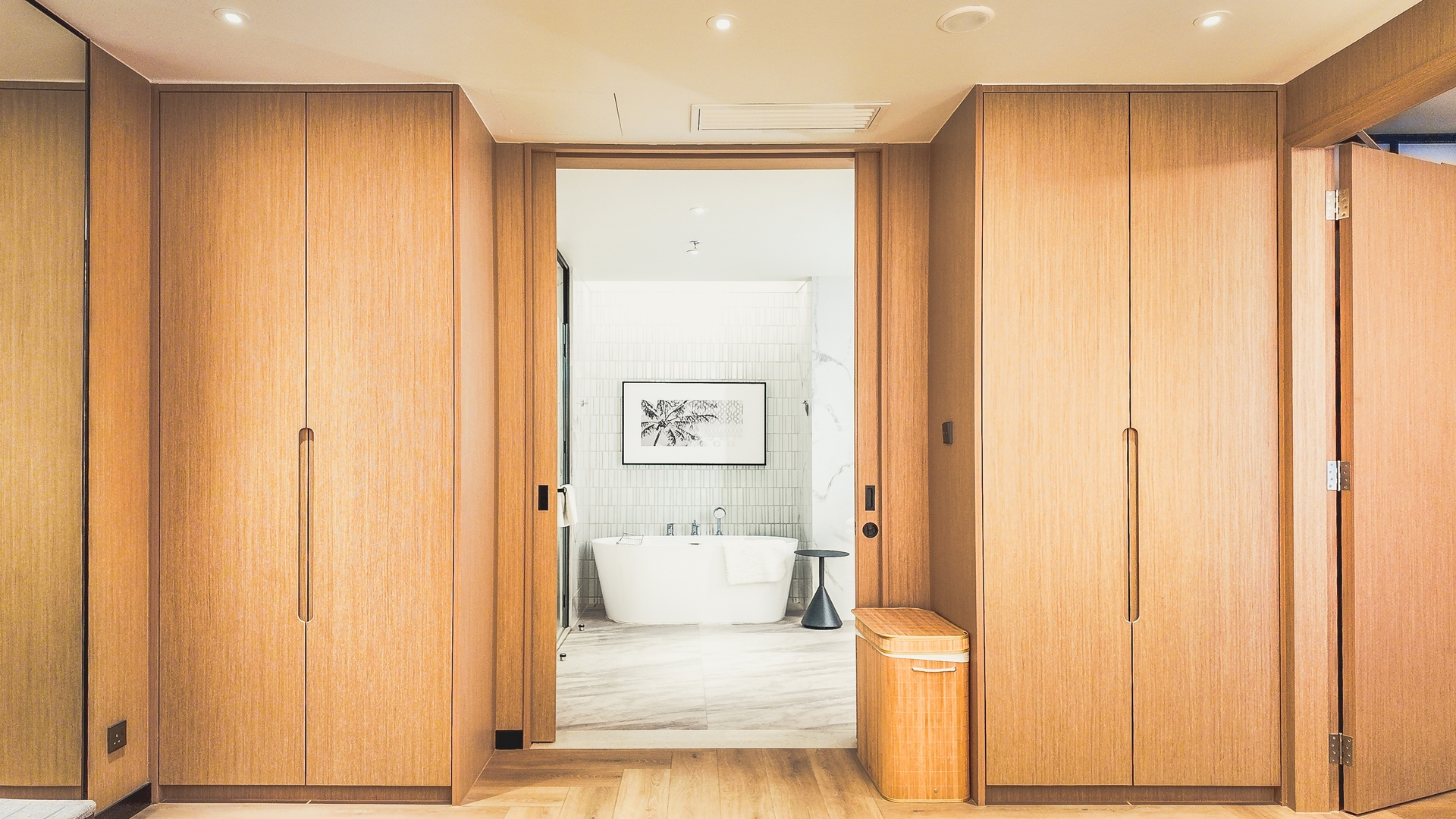
A bathtub offers the prospect of a lingering soak, while a separate powder room sits discreetly apart — for the use of guests so your private bath remains private.
Two televisions, one in the bedroom and another in the living room, further reinforce the suite’s thoughtful separation of spaces. One guest can settle in for a film while the other follows a different programme elsewhere, an unassuming convenience that makes shared accommodation feel considerably more private. It is a practical detail, certainly, but one that speaks to a broader understanding of how people actually live in a room.
There is also the reassuring matter of upkeep. A year on, the suite remains remarkably immaculate, its cleanliness as impeccable as before and its furnishings having withstood the passage of time with commendable composure. In hospitality, where even well-appointed interiors can begin to betray the wear of successive occupants, such sustained condition is no small achievement. The room retains its freshness without appearing untouched or precious; its comforts remain intact, its finishes well preserved.
It is not a theatrical kind of luxury, nor does it rely on spectacle. Its appeal lies instead in the intelligence of its proportions, the understated warmth of its wood-rich interiors and the uncommon pleasure of finding a room that continues to feel as well cared for a year later as it did at the outset.
The Deluxe Suite understands that true comfort is rarely a matter of excess. More often, it is the result of getting the details exactly right.
Family Suites
Families travelling with younger children may prefer the family suites, where bunk beds give the room an altogether different character.
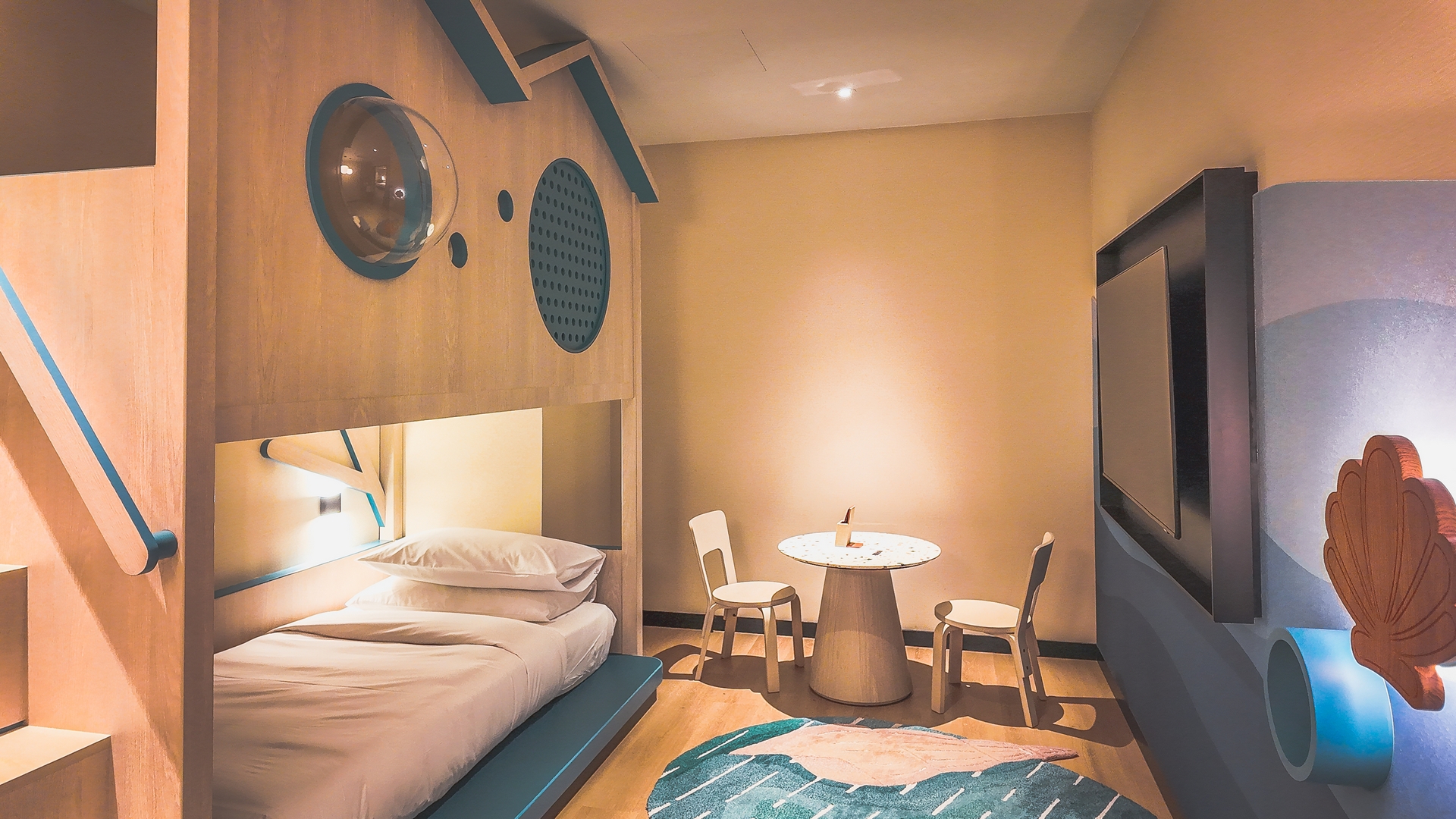
The appeal is partly practical and partly psychological. A bunk bed turns sleeping into an event; children choose their territory, arrange their possessions beside the pillow and retreat into the small enclosed world of their berth.
The suites also have an additional bathroom with bathtub, which introduces a welcome degree of separation between the family’s morning and evening rituals.
There is something pleasingly domestic about the arrangement, despite being unmistakably hotel accommodation.
The children have their corner.
The adults have theirs.
And the bathroom count does some of the work that family travel so often asks of architecture.
Connecting Rooms
For families with older children, connecting rooms offer a more mature configuration.
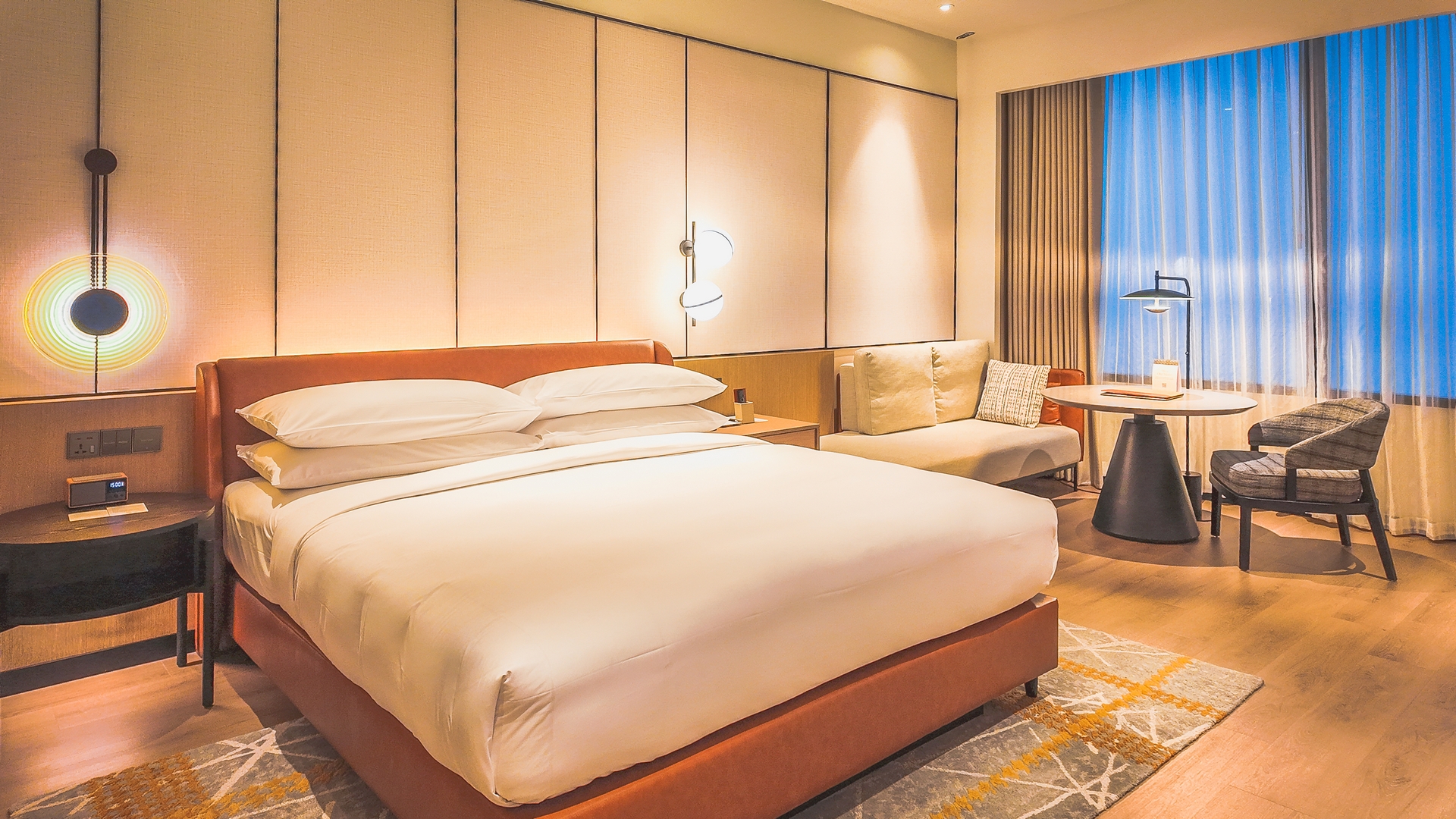
One room is arranged with a double or king bed, while the adjoining room contains two single beds. The connecting door remains the quiet link between the two spaces.
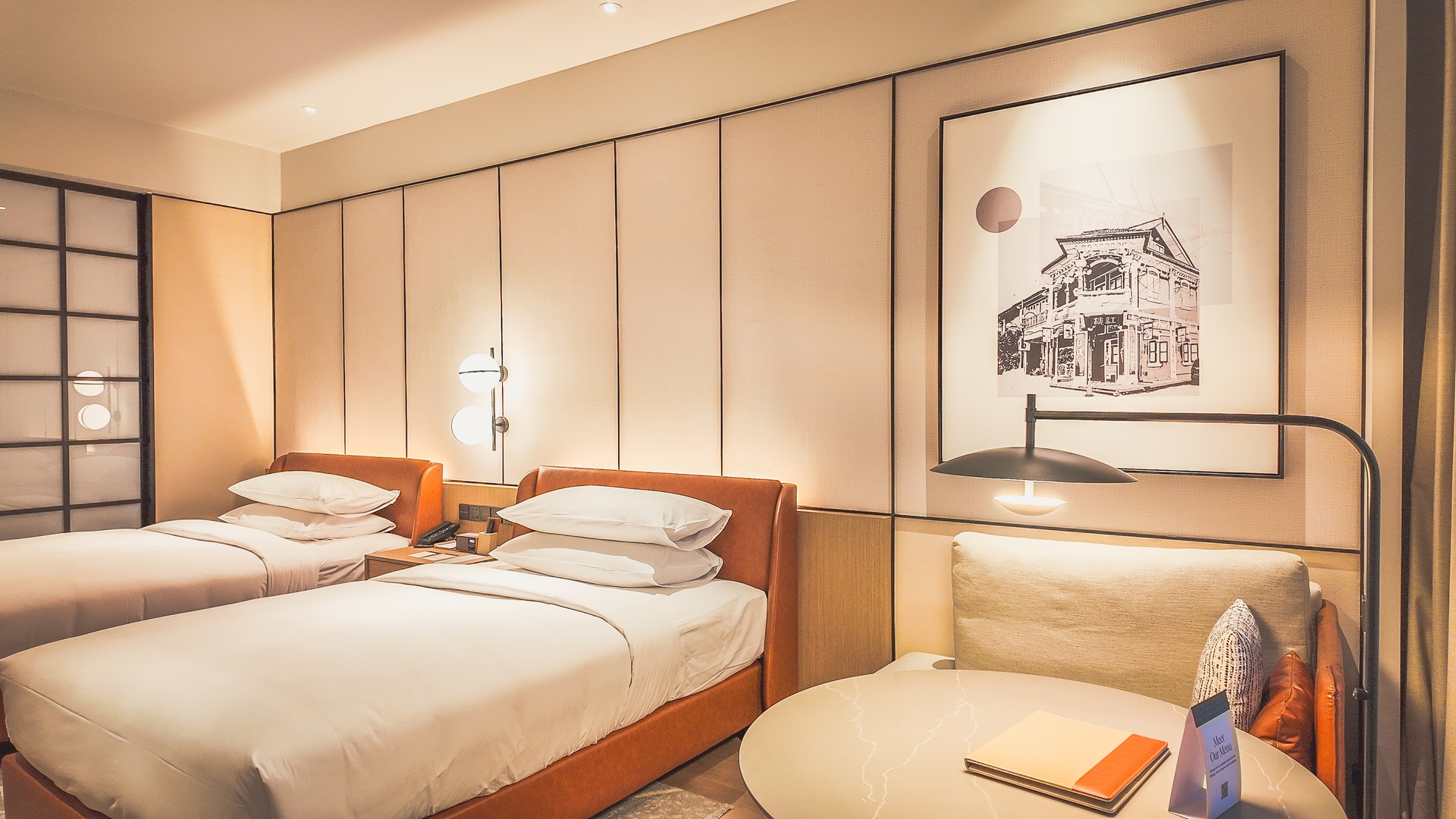
It is an arrangement that acknowledges the changing geography of family life.
Teenagers can retreat into their own room, stay up later, arrange their belongings as they please and enjoy the small freedoms of having a space that belongs to them. Parents, meanwhile, retain the privacy of their own room.
There is still a sense of togetherness.
It simply has a door between it.
Where to Eat
Daily Social
Breakfast at Daily Social is expansive in the way a family breakfast ought to be.
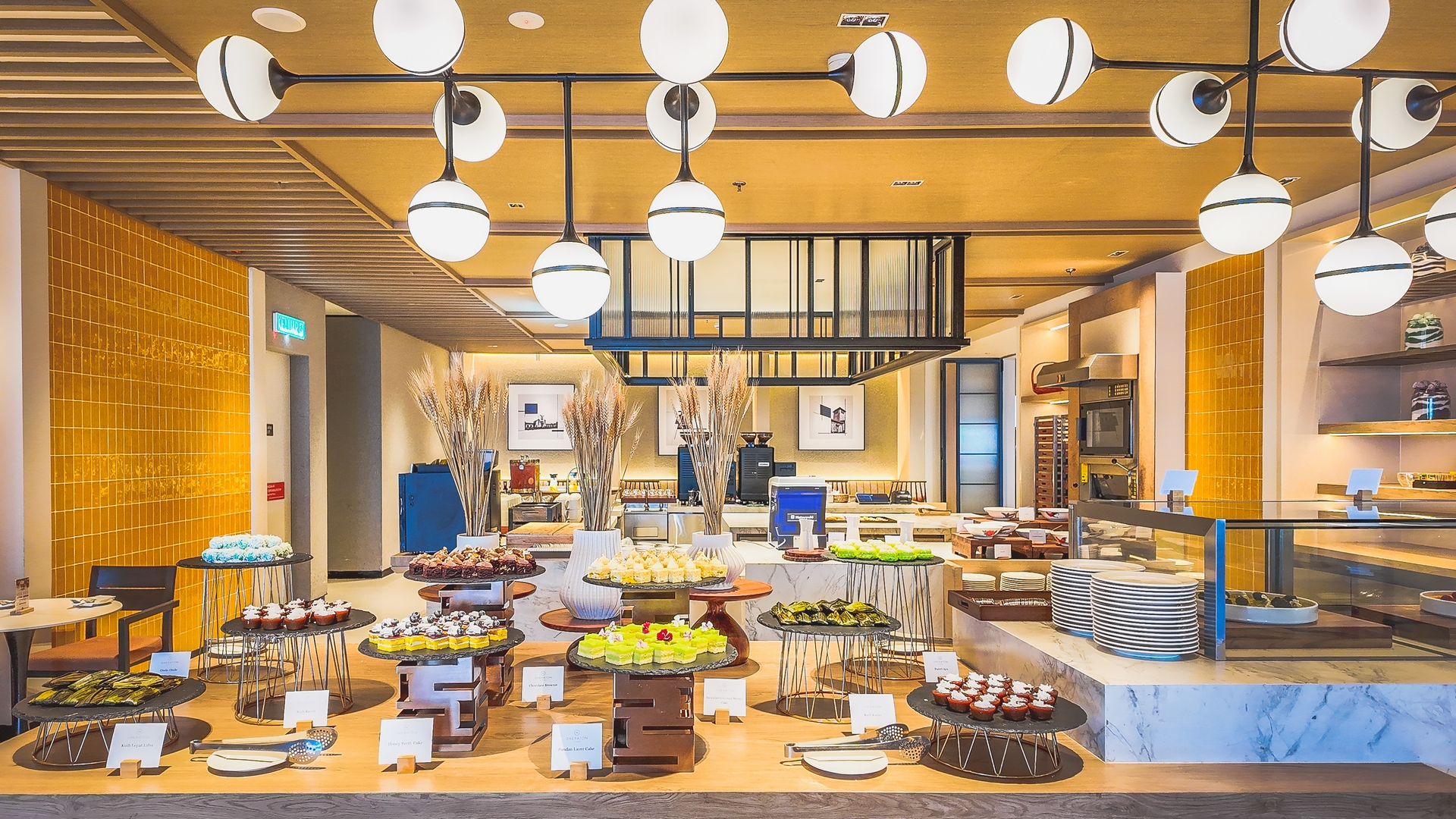
The buffet moves between Western, Malay, Chinese and Indian selections without making a great distinction between them. Eggs, sausages and hash browns sit alongside fried noodles, chicken in soy sauce, vegetables with oyster sauce and dim sum, while dal and prata provide another direction entirely.
It is a generous, polyglot breakfast.
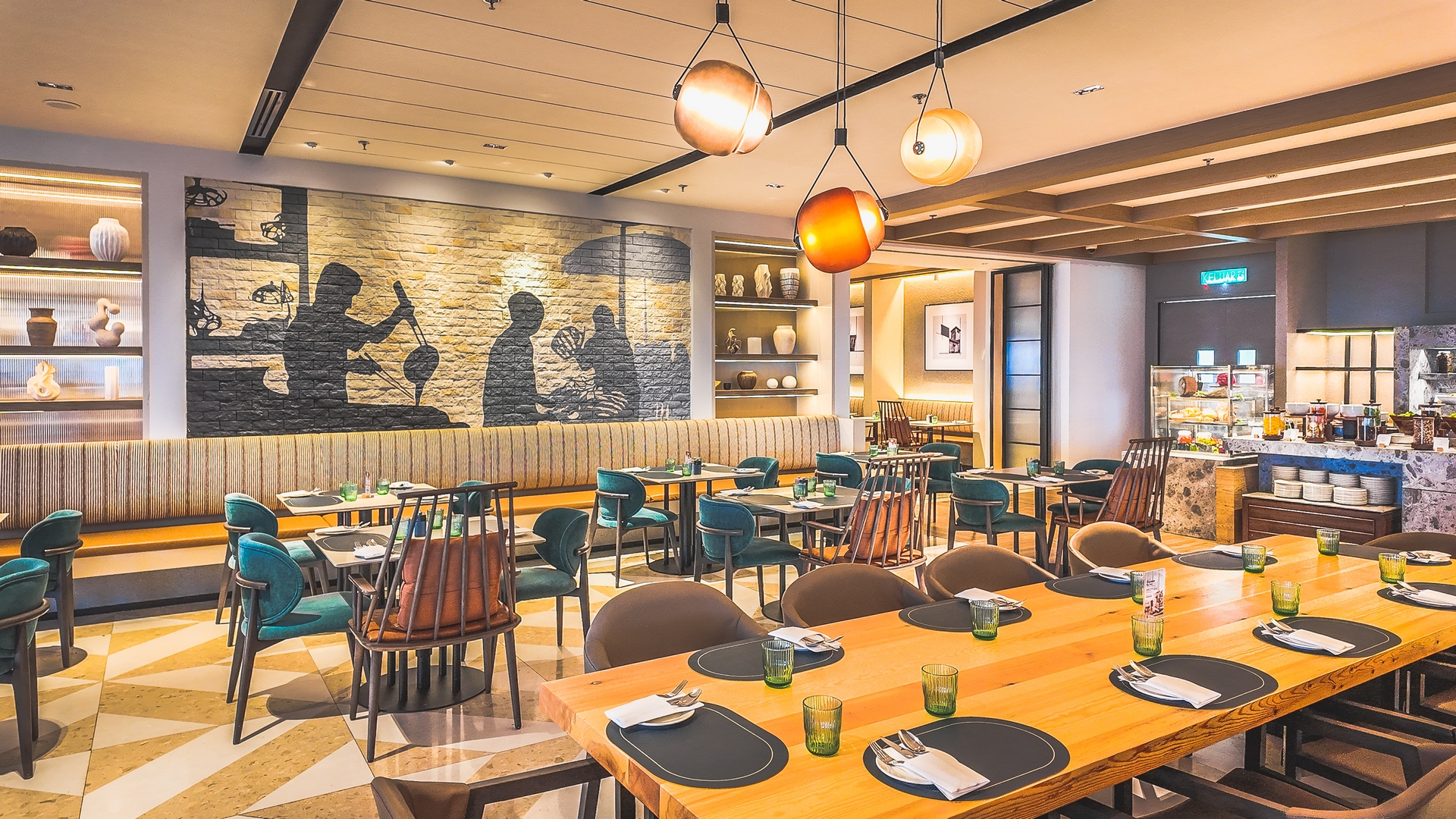
The appeal is not simply the range but the absence of negotiation. Everyone can follow their own appetite. One person may want something familiar and savoury; another may prefer something spiced and aromatic; children can return repeatedly to whichever corner has captured their attention.
The room has a lively energy on weekends, when breakfast becomes less of a quiet meal and more of a communal ritual.
Club room guests have another option, taking breakfast in the Club Lounge or Daily Social from 6.30am to 10.30am.
Daily Social, One Year On
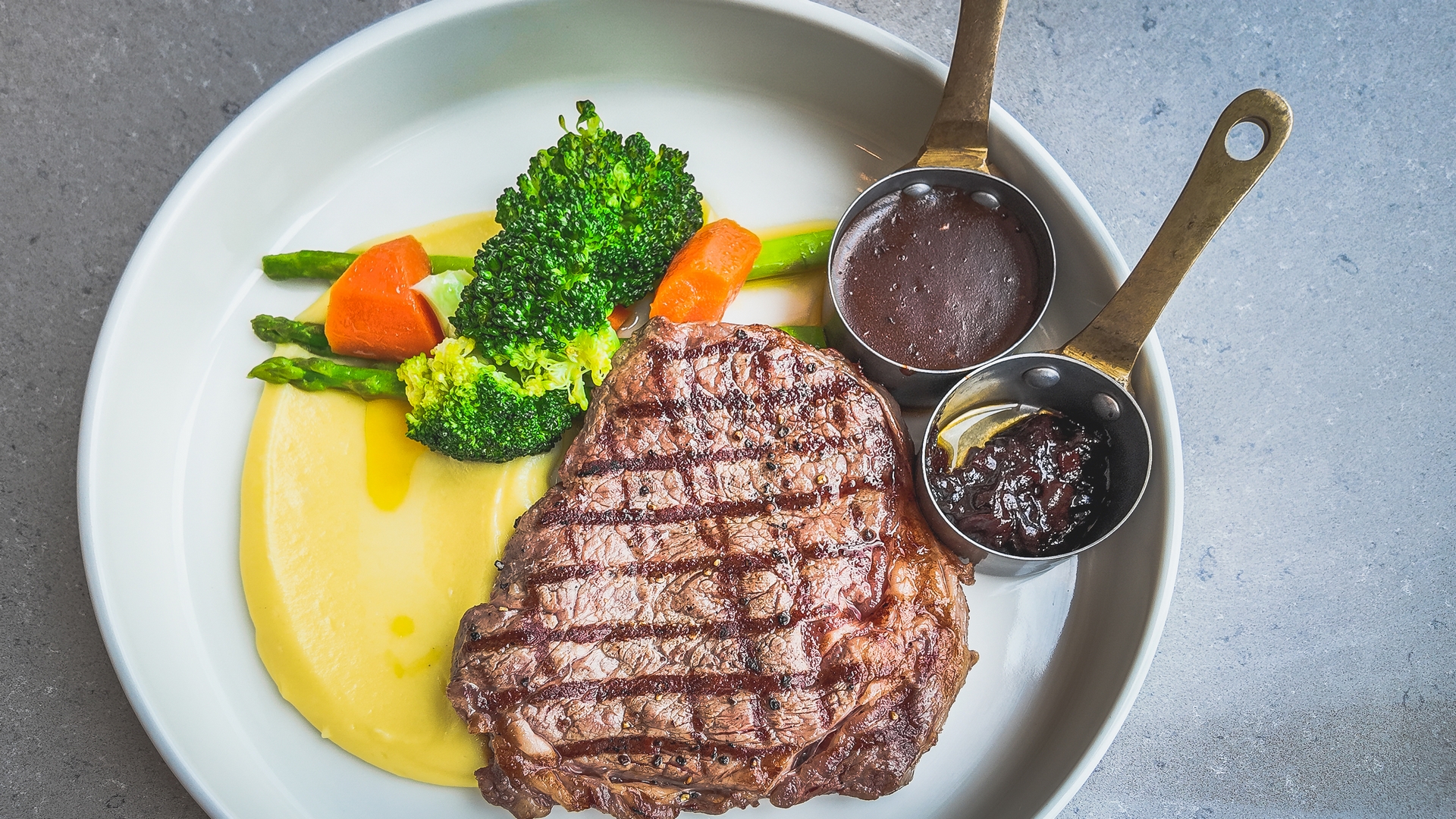
The restaurant has also broadened its menu beyond the principal buffet offerings, introducing sandwiches and wraps alongside perennial hotel favourites such as fish and chips.
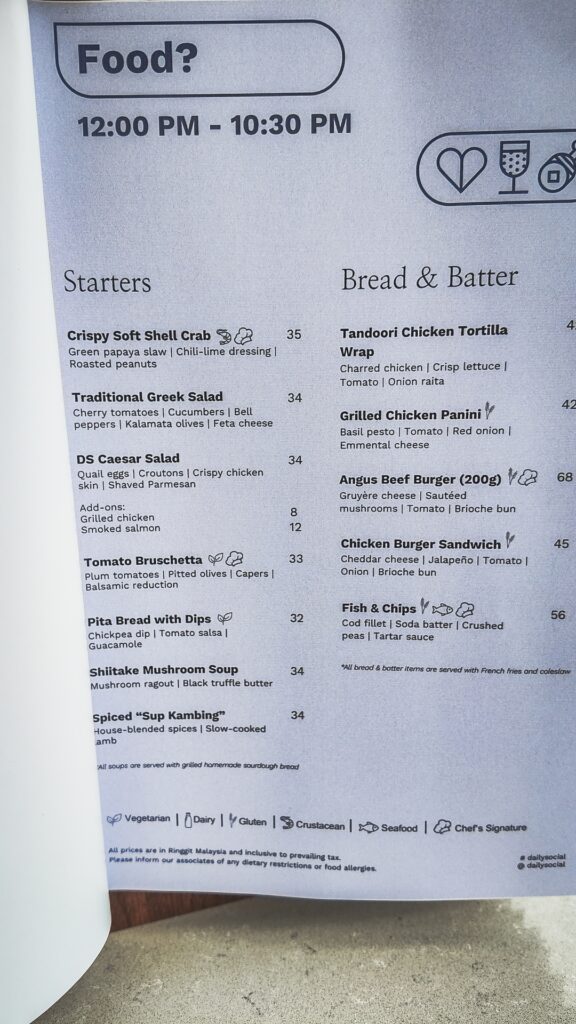
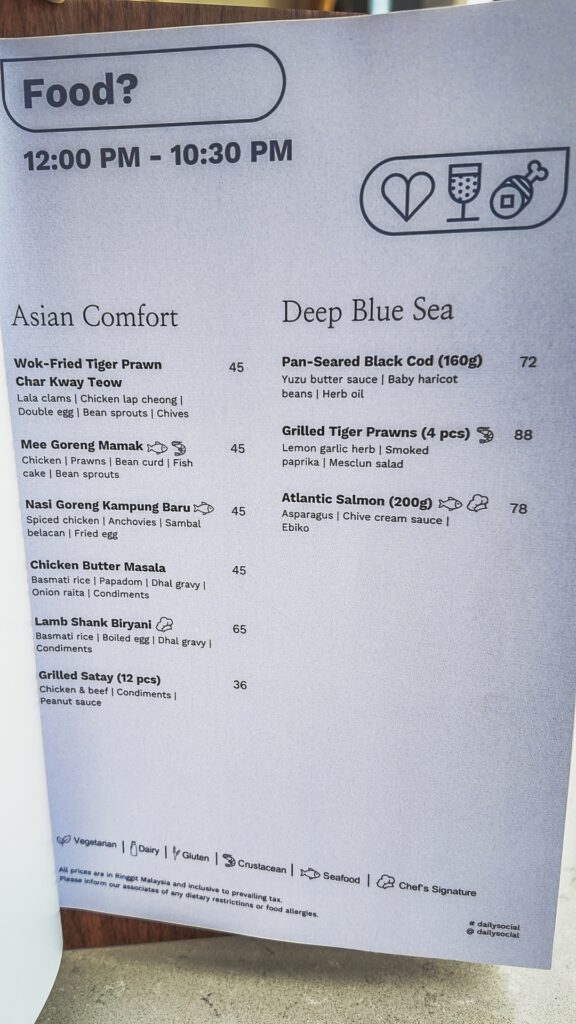
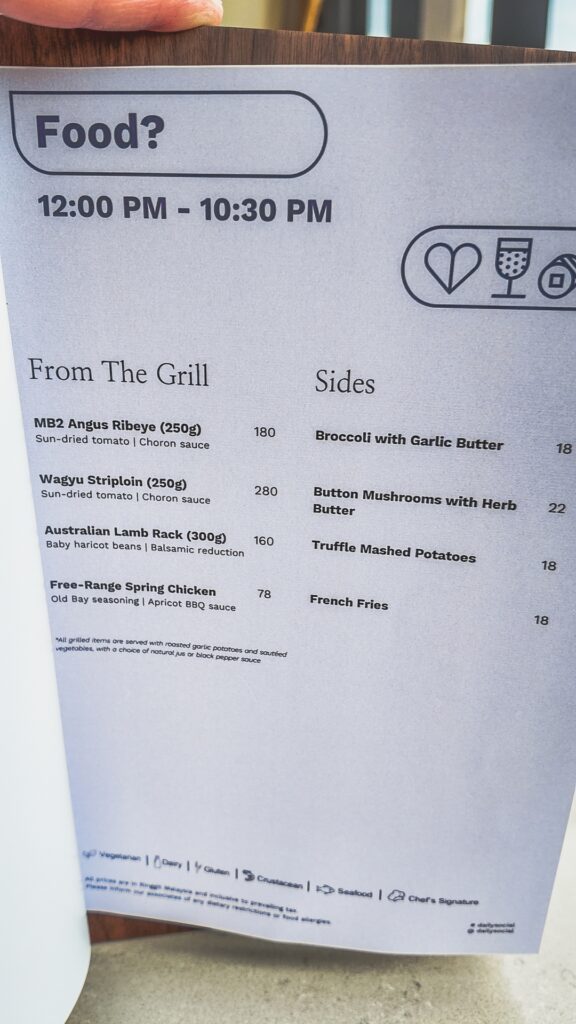
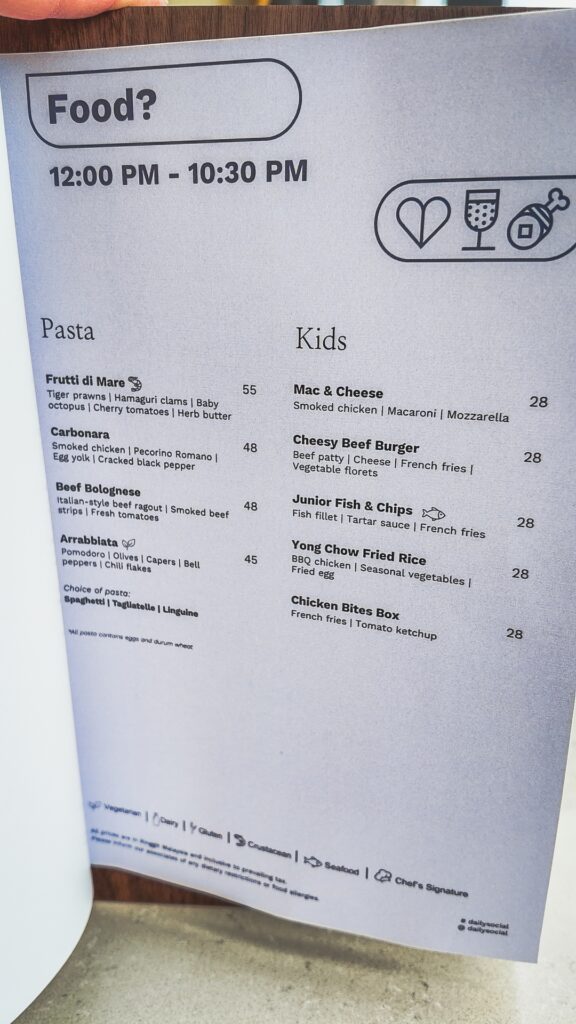
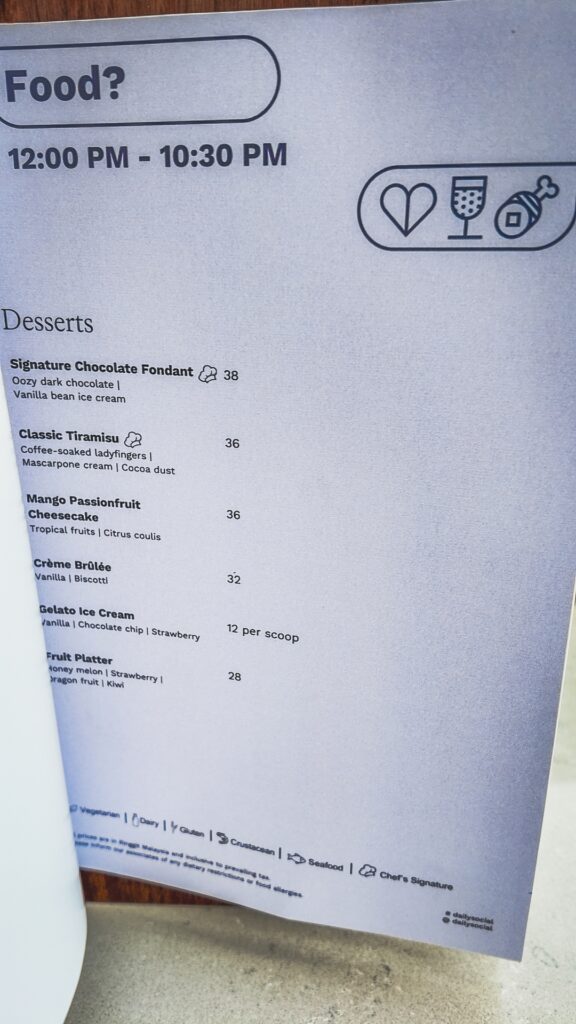
Friday and Saturday evenings bring the dinner buffet, from 6.30pm to 10pm.
Saturday afternoon is devoted to buffet hi-tea from 12.30pm to 3.30pm.
Sunday moves into brunch, served from 12.30pm to 3.30pm, with the buffet priced at RM138 nett per adult, RM98 for senior citizens aged 60 and above, and RM69 for children aged six to 12.
The Sunday format has a pleasing lack of urgency about it.
By then, nobody should really be in a hurry.
Soo Noodles
Soo Noodles genuinely earns the designation of a noodle bar.
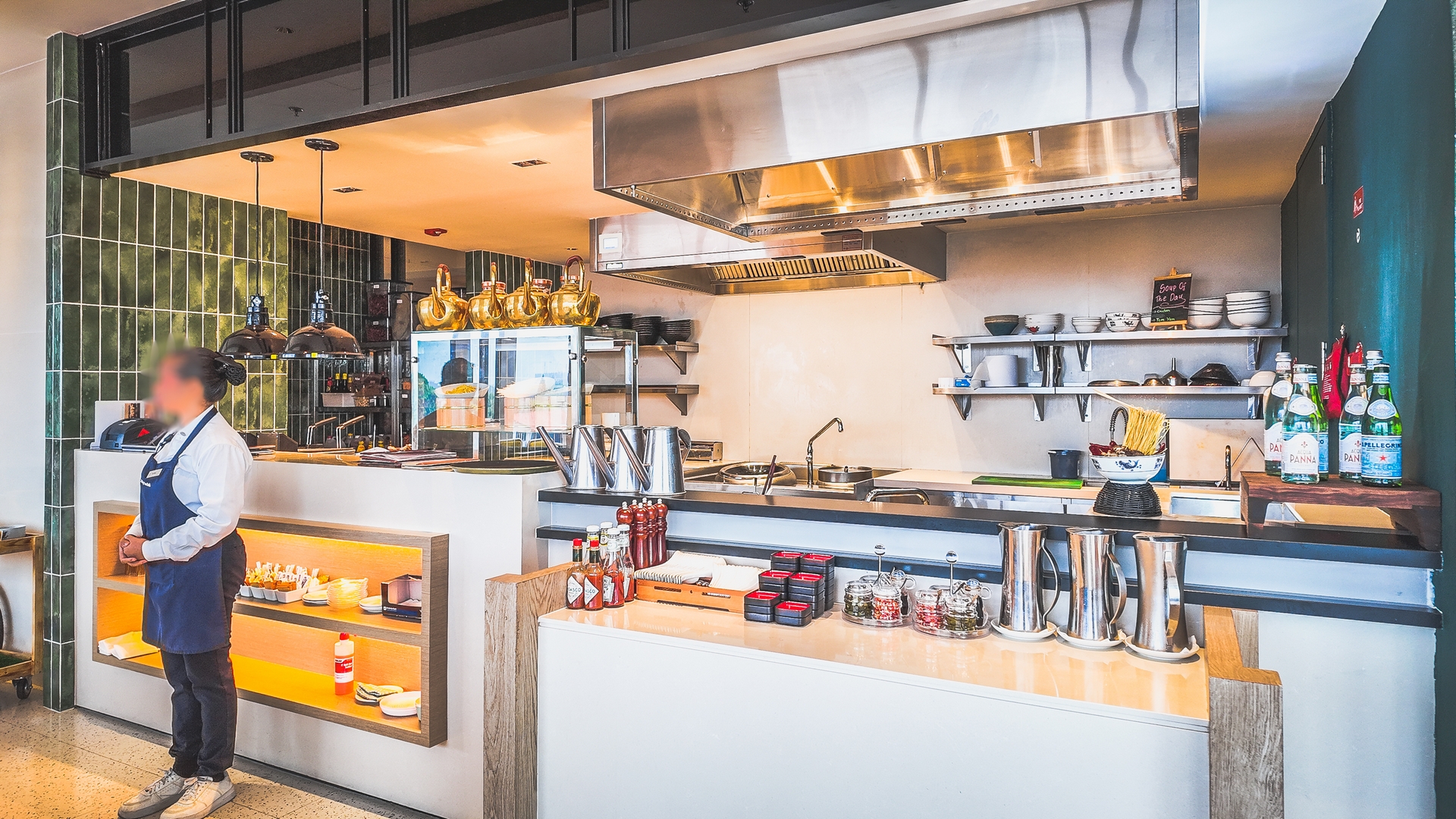
The noodles themselves are not handmade, but that hardly seems the point. In the spotless open kitchen, every component is treated separately: proteins, vegetables, garnishes and broth are individually cooked before the bowl is assembled with almost architectural precision. Nothing is simply ladled together. Each element arrives at its intended temperature and texture, then finds its place.
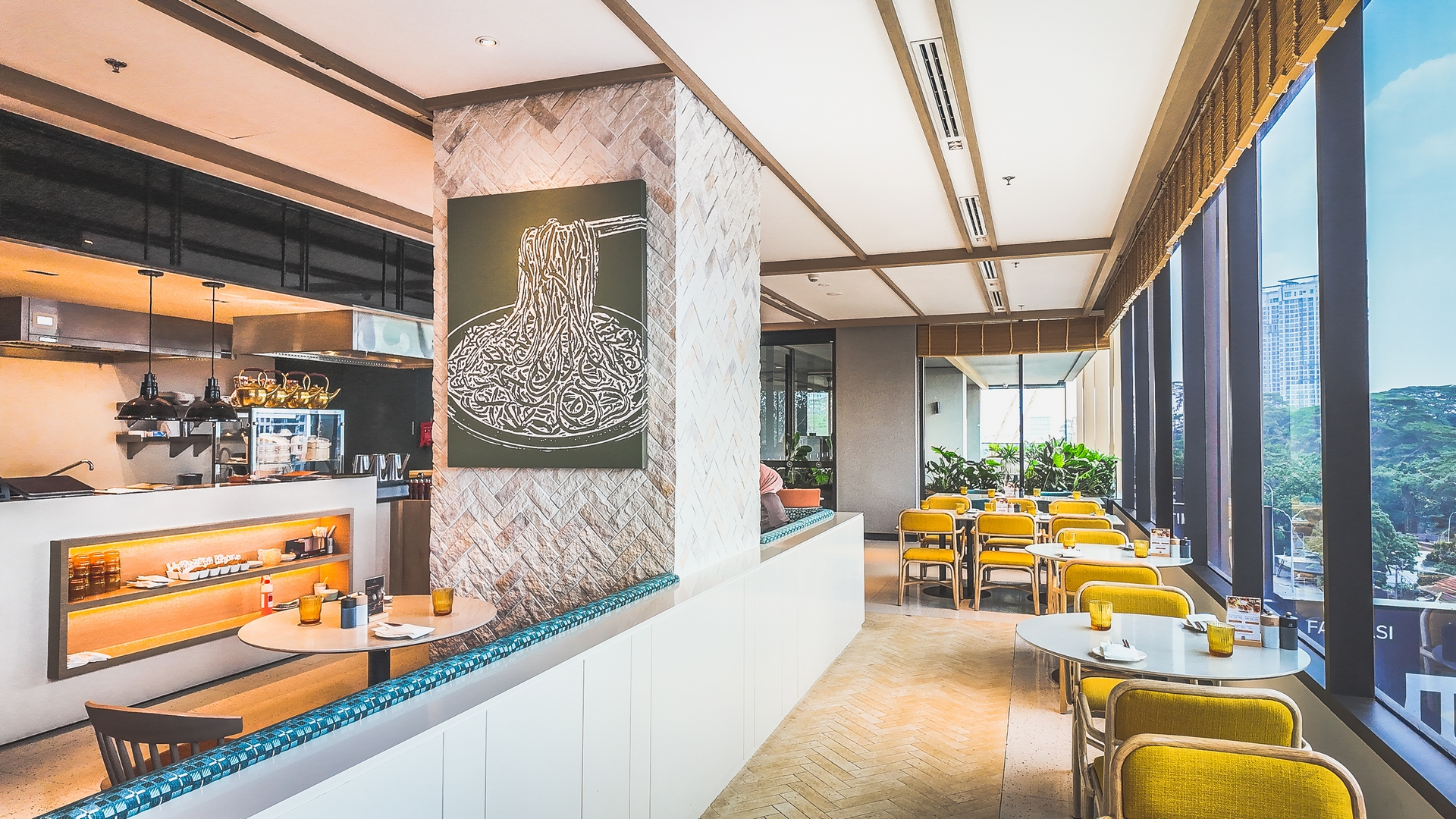
There is a small piece of theatre at the table, too. Once the bowl has been set before you, the server pours the hot broth over the ingredients, releasing a sudden plume of steam and fragrance. The dish seems to assemble itself in front of you.
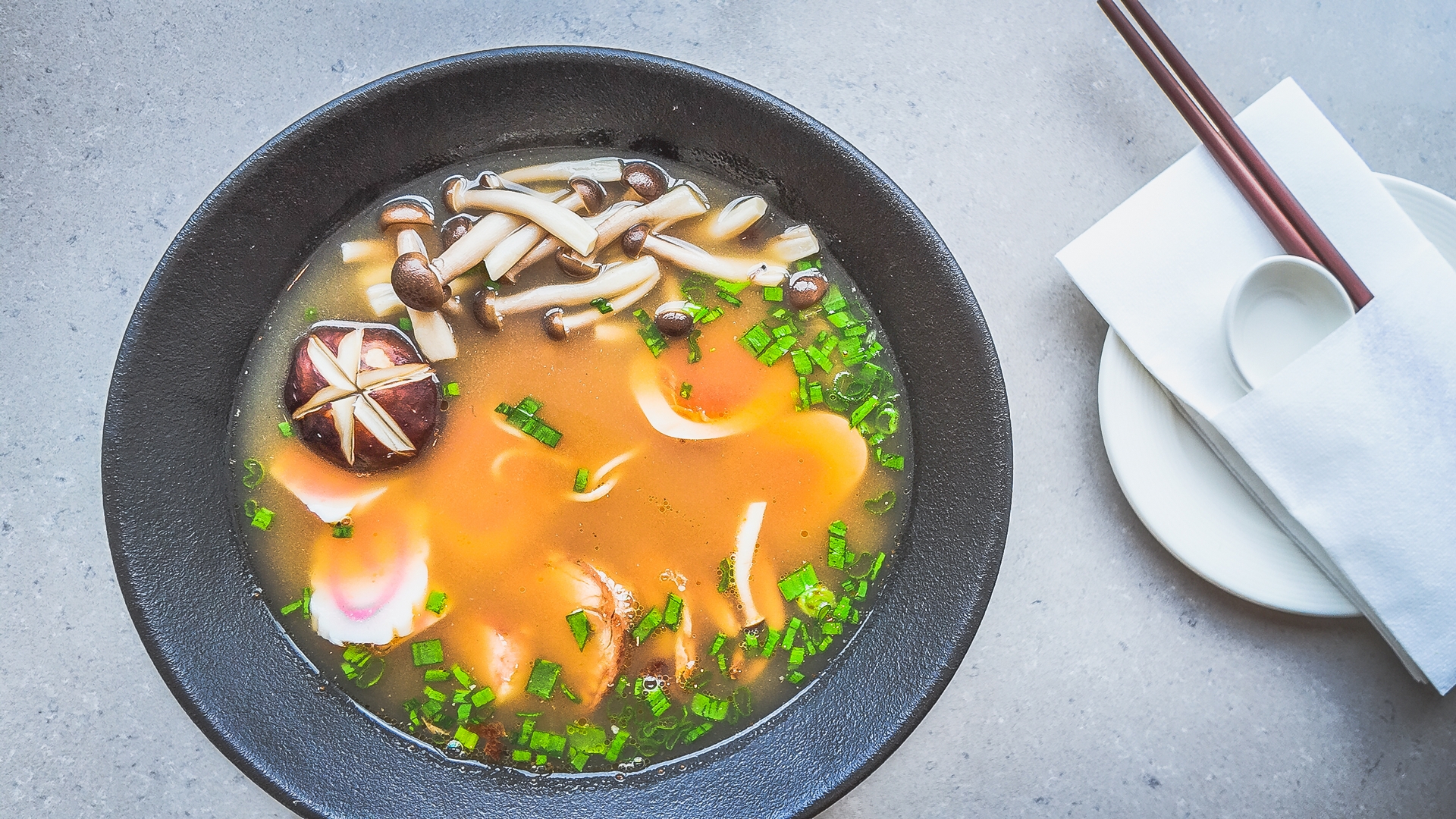
Chicken Tonkotsu
The Chicken Tonkotsu, RM38, arrives with chicken roulade, mushroom, narutomaki, ebiko roe and shoyu egg arranged neatly over the noodles before the slow-boiled chicken broth is poured in. Steam rises immediately, carrying the warm savouriness of the broth and the earthy aroma of mushroom.
The broth is rich and creamy, with a rounded umami depth and a velvety texture that clings to the noodles. The chicken roulade adds substance, while the shoyu egg brings a deeper savouriness and the ebiko roe occasional bursts of salinity. It is comforting without being particularly heavy, the different elements giving the bowl enough contrast to remain interesting to the final mouthful.
Nyonya Curry
The Nyonya Curry, RM34, has a more distinctly local character. Yellow noodles and rice vermicelli are layered with abalone, tiger prawn, chicken, long beans, bean curd puff, bean sprouts and egg, all gathered beneath a fragrant shrimp and coconut milk broth.
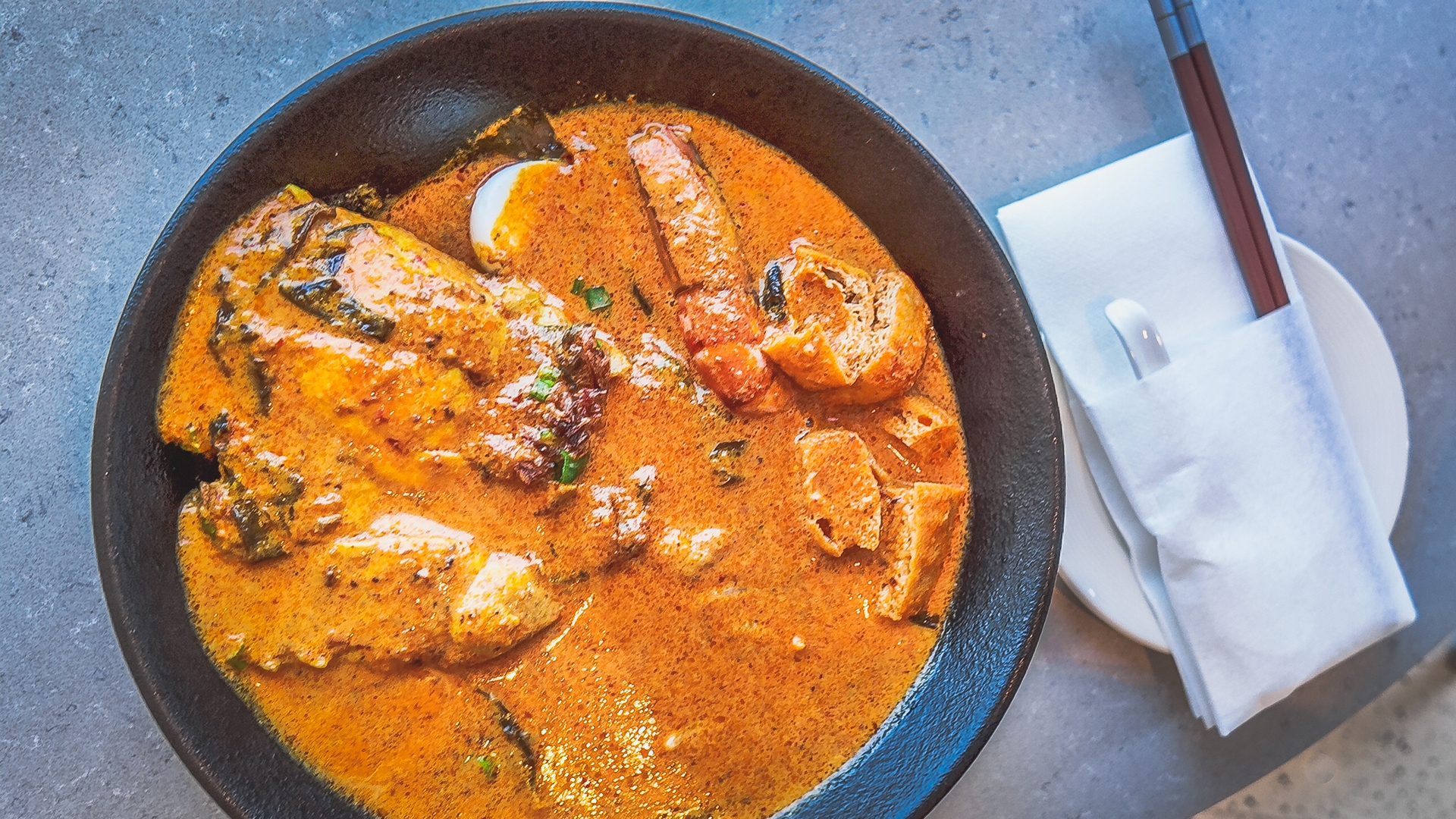
The broth is creamy and aromatic, with coconut providing a rounded richness while shrimp and gentle spice build a savoury depth beneath it. The bean curd puff absorbs the broth beautifully, while the vegetables and bean sprouts bring freshness and texture against the softer noodles. It is a generous bowl, redolent of Nyonya flavours without losing the clean, composed presentation of the kitchen.
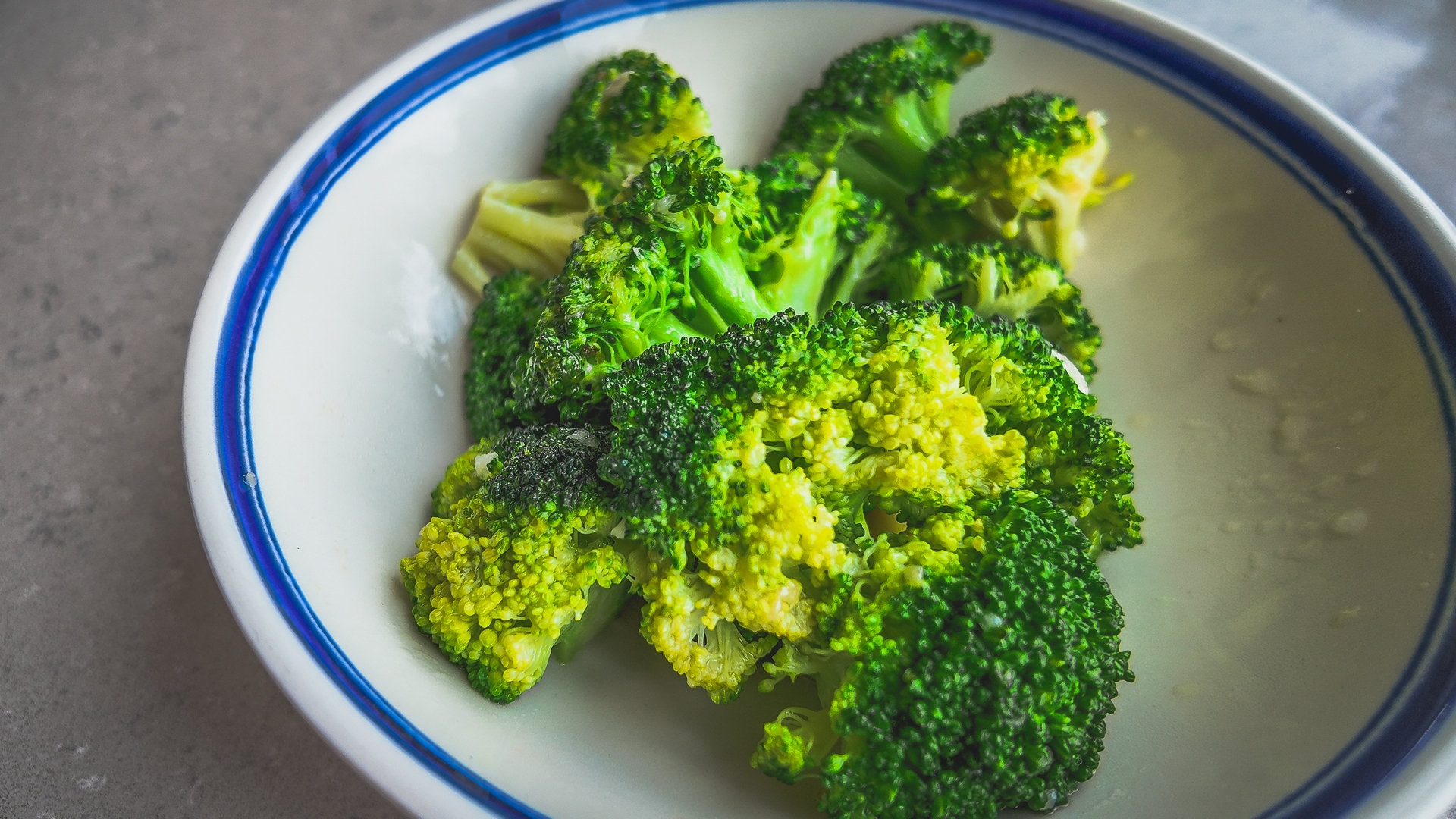
Among the sides are onsen egg, broccoli with garlic oil, braised mushroom with bok choy, fried chicken wantan, chicken bites with mala spice, chicken gyoza with ginger vinaigrette, fried prawn wantan, vegetable spring rolls, duck spring rolls and sautéed green beans with almond flakes.
The broccoli with garlic oil is an especially clean accompaniment to the richer bowls, retaining enough bite to interrupt the softness of the noodles and broth.
There is also prawn chilli sauce for those who prefer another measure of heat.
The pleasure of Soo Noodles is ultimately in the precision. Nothing is presented as rustic theatre; instead, the open kitchen allows the diner to watch the bowl being built, element by element, before the broth completes it at the table.
Where to Linger
&More
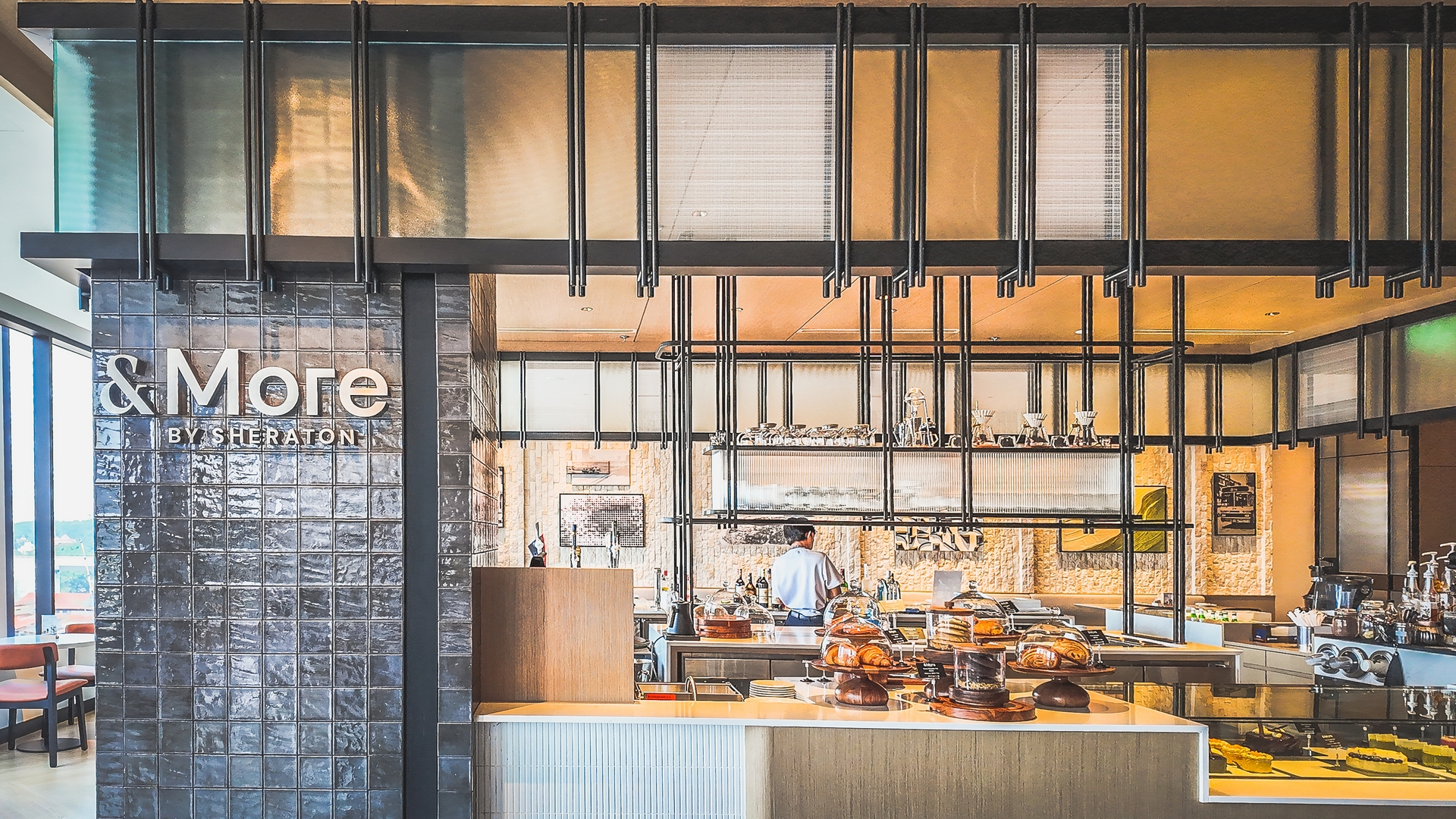
&More sits within the hotel’s more social register, a space that shifts almost imperceptibly as the day progresses.
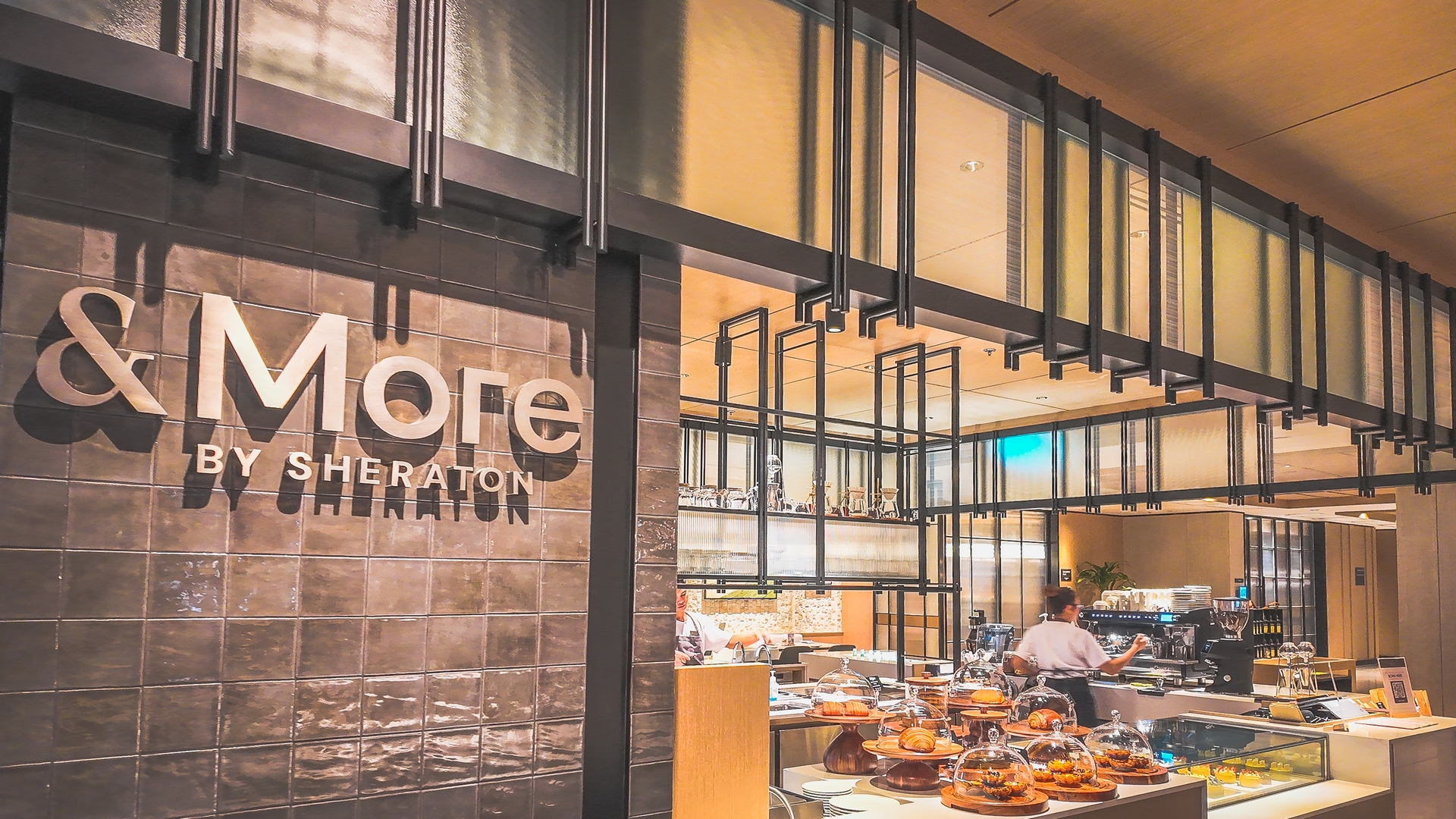
In the morning, it is populated by conference attendees working from the stations with power sockets, laptops open and coffee close at hand. Others occupy the couches for informal conversations, meetings or the particular kind of hotel idleness that involves nowhere urgent to be.
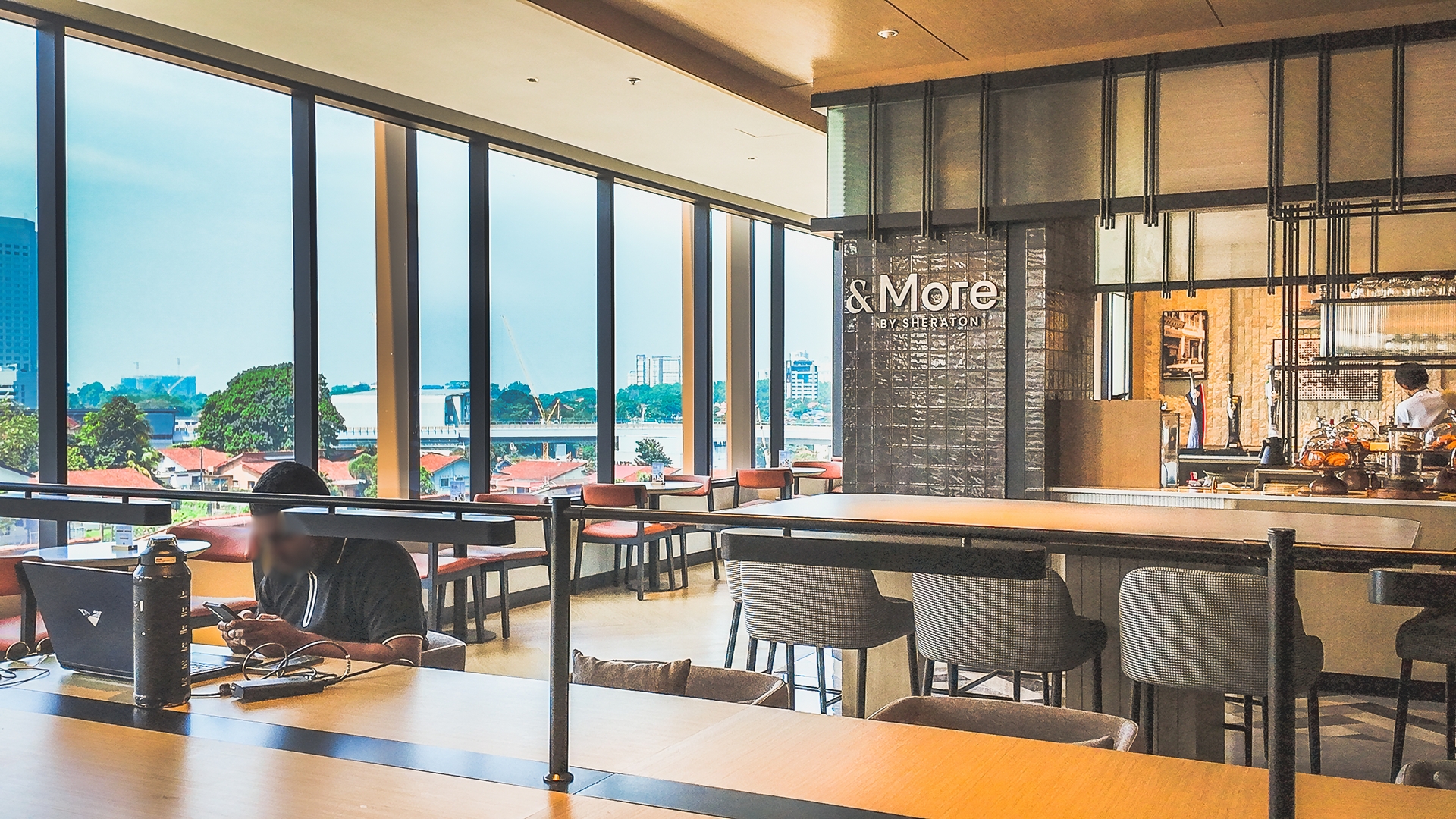
Wine and beer are now served as well.
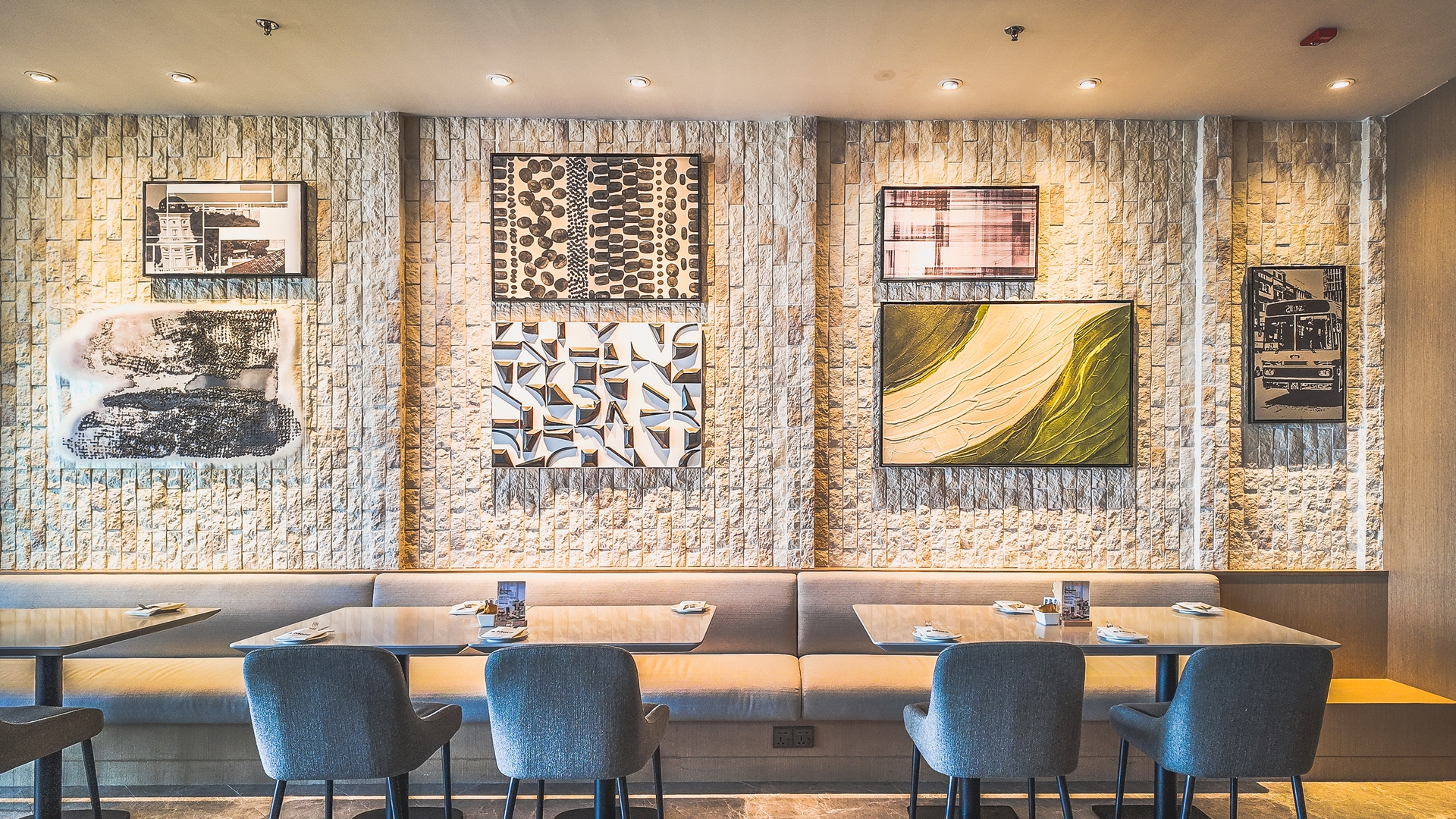
By afternoon, the working atmosphere begins to loosen. Conversations lengthen. The light changes. The lobby acquires the slower tempo of people who have decided to remain where they are.
The Signature Afternoon Tea is served here from Friday to Sunday, between 2pm and 5pm. The Asian-Western set for two is RM98 nett.
It is an agreeable hour in which to let the afternoon remain exactly that: an afternoon.
Where to Unwind
The Sixth-Floor Pool
The sixth floor is where the hotel acquires something closer to a resort atmosphere.
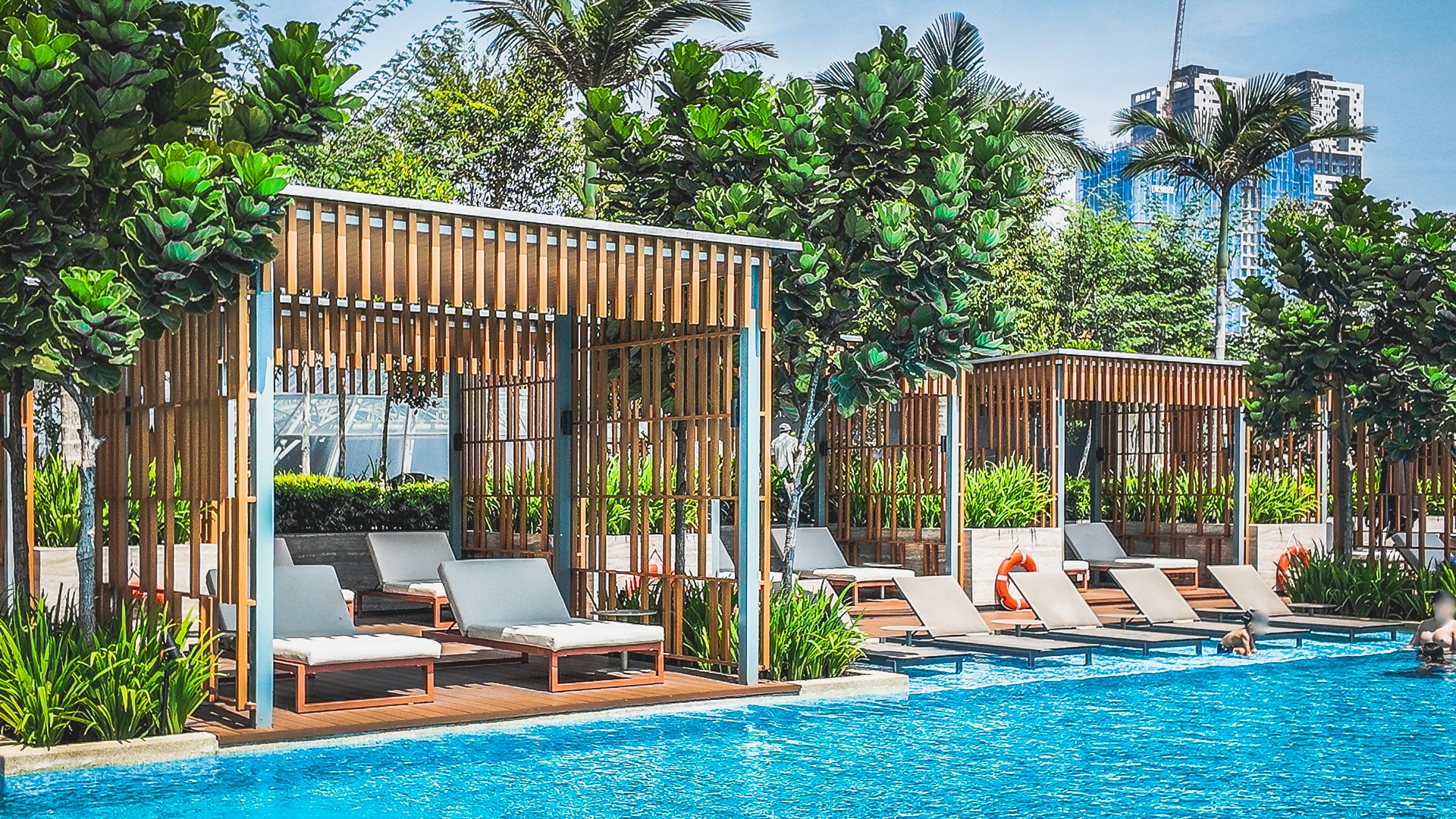
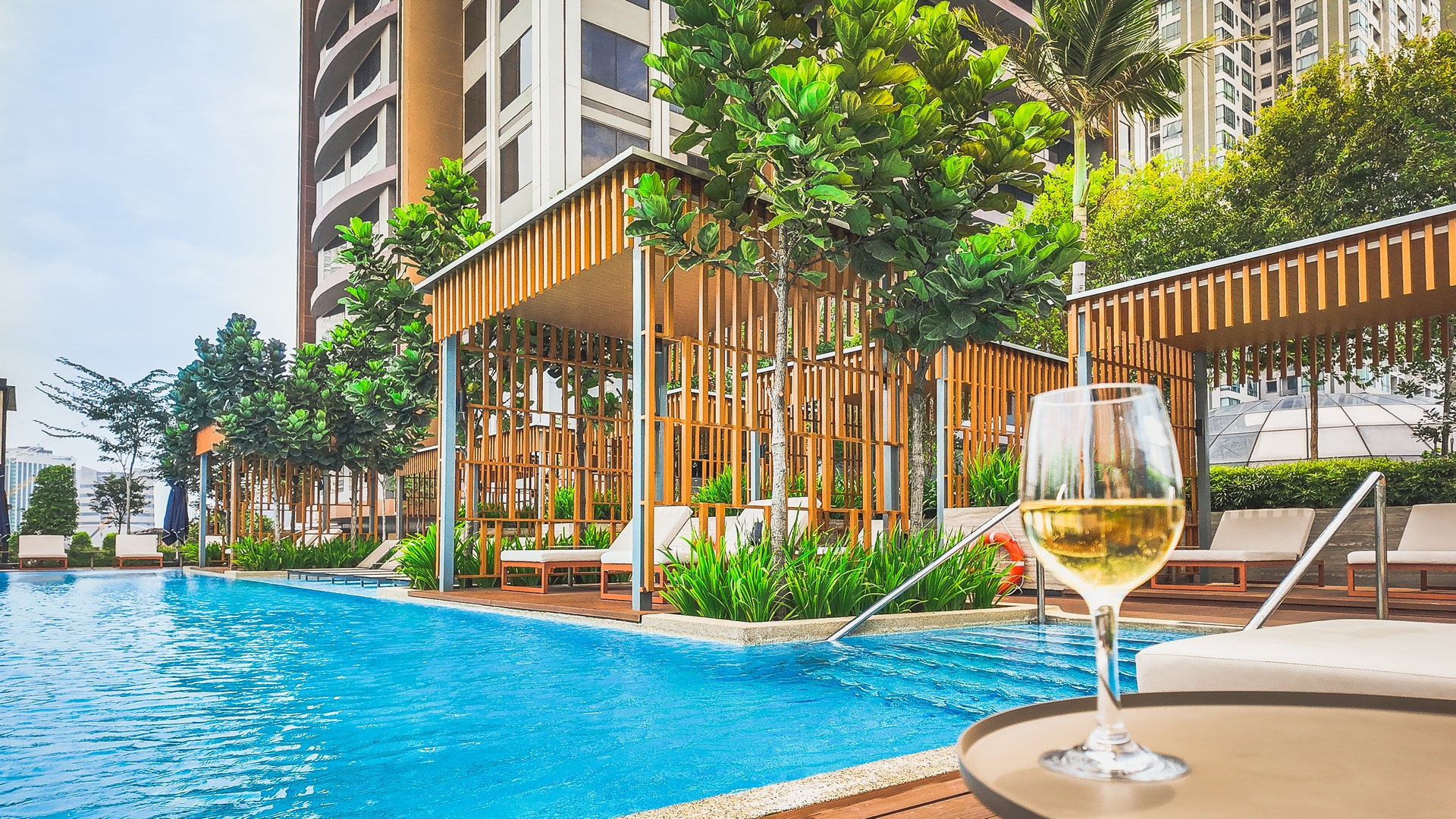
The pools sit above the city, with the adult pool and children’s pool occupying their own spaces around the deck. Cabanas offer shade during the strongest part of the afternoon, when the tropical sun turns the water almost white with reflected light.
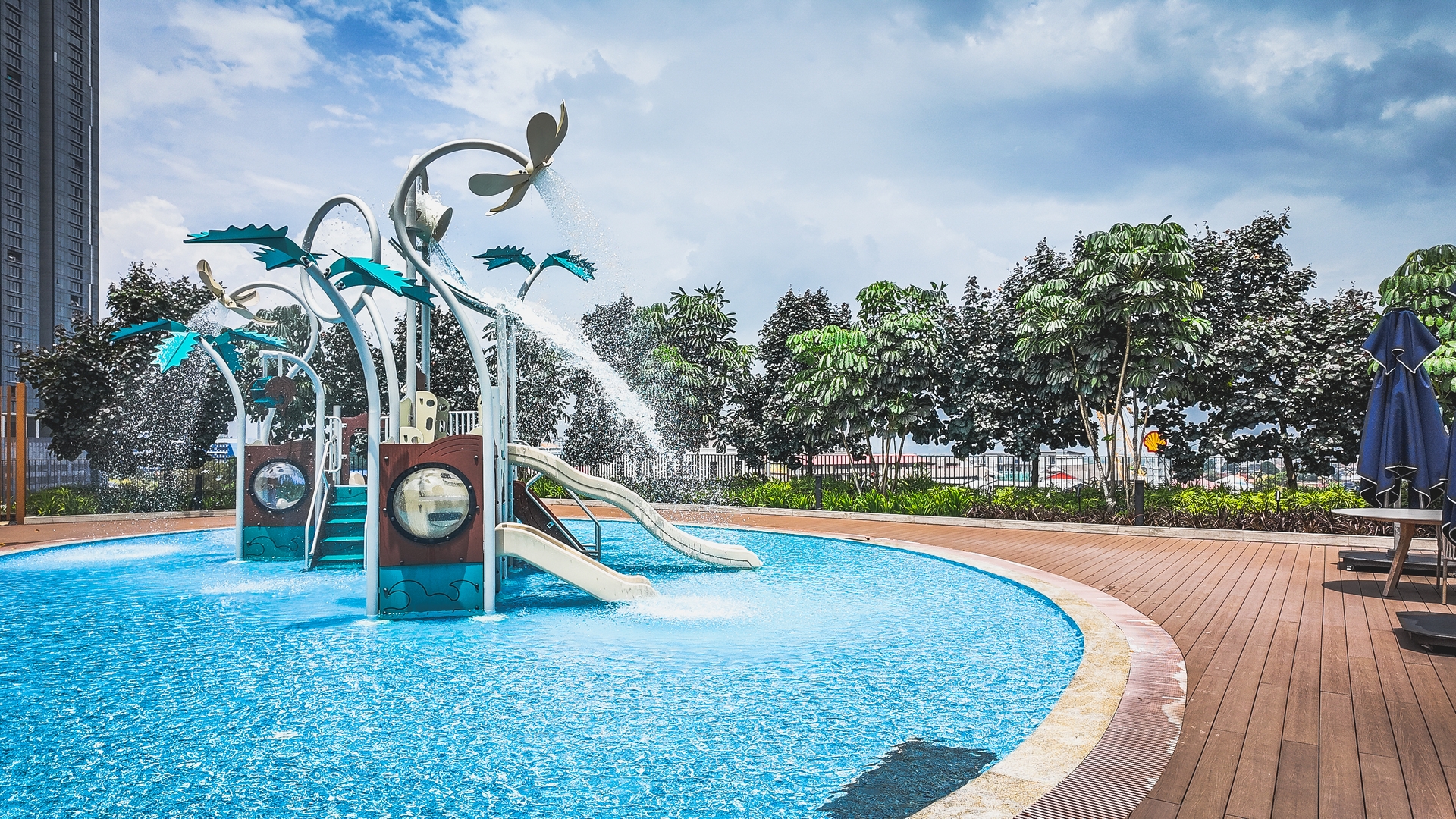
The children have the freedom to move between water and deck while parents remain close enough to watch without hovering.
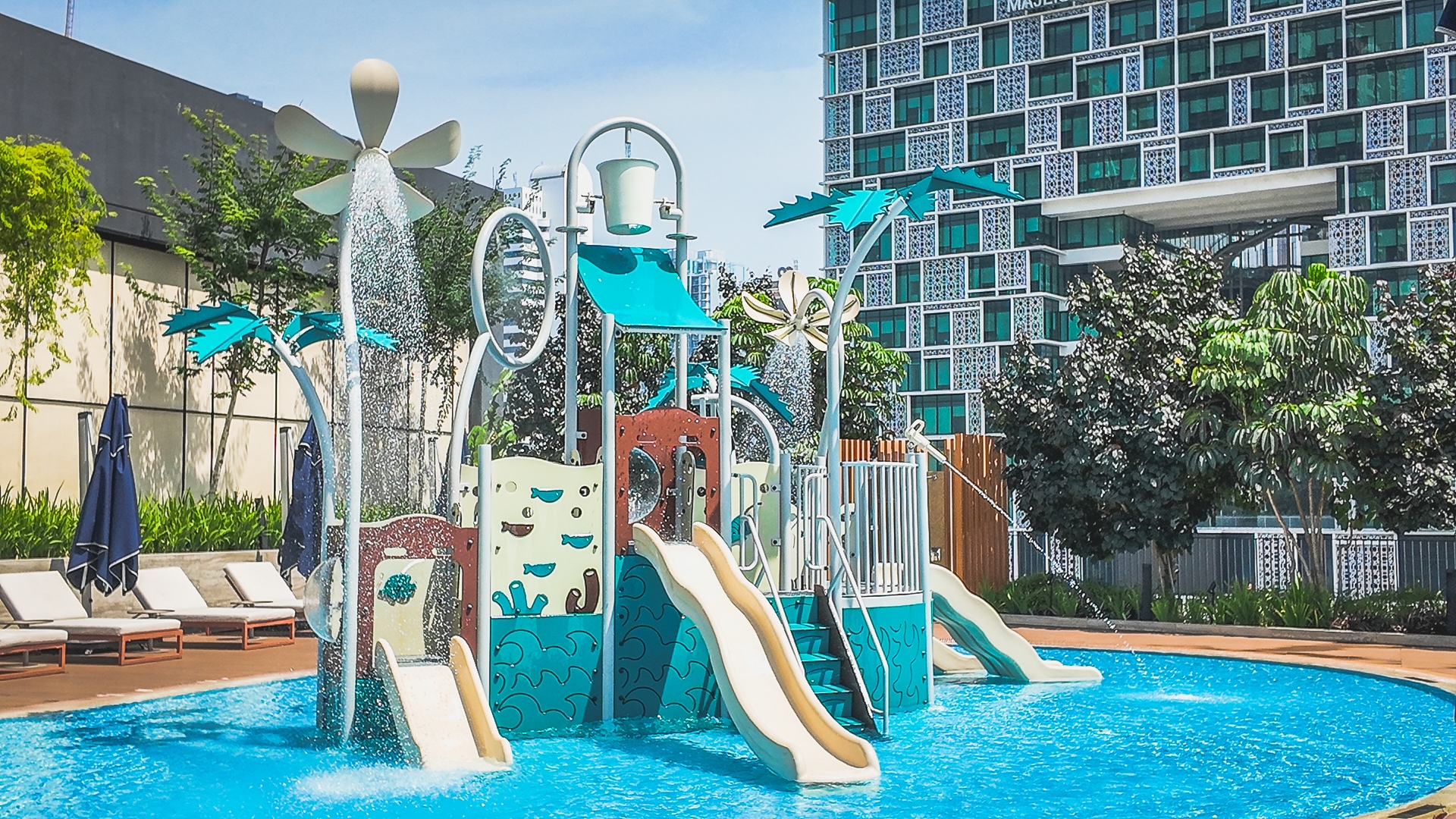
The pool bar now serves wine, cocktails and mocktails.
A chilled glass of Chardonnay beside the water, children absorbed in the kids’ pool nearby, has a certain understated decadence. Real Luxury. Priceless.
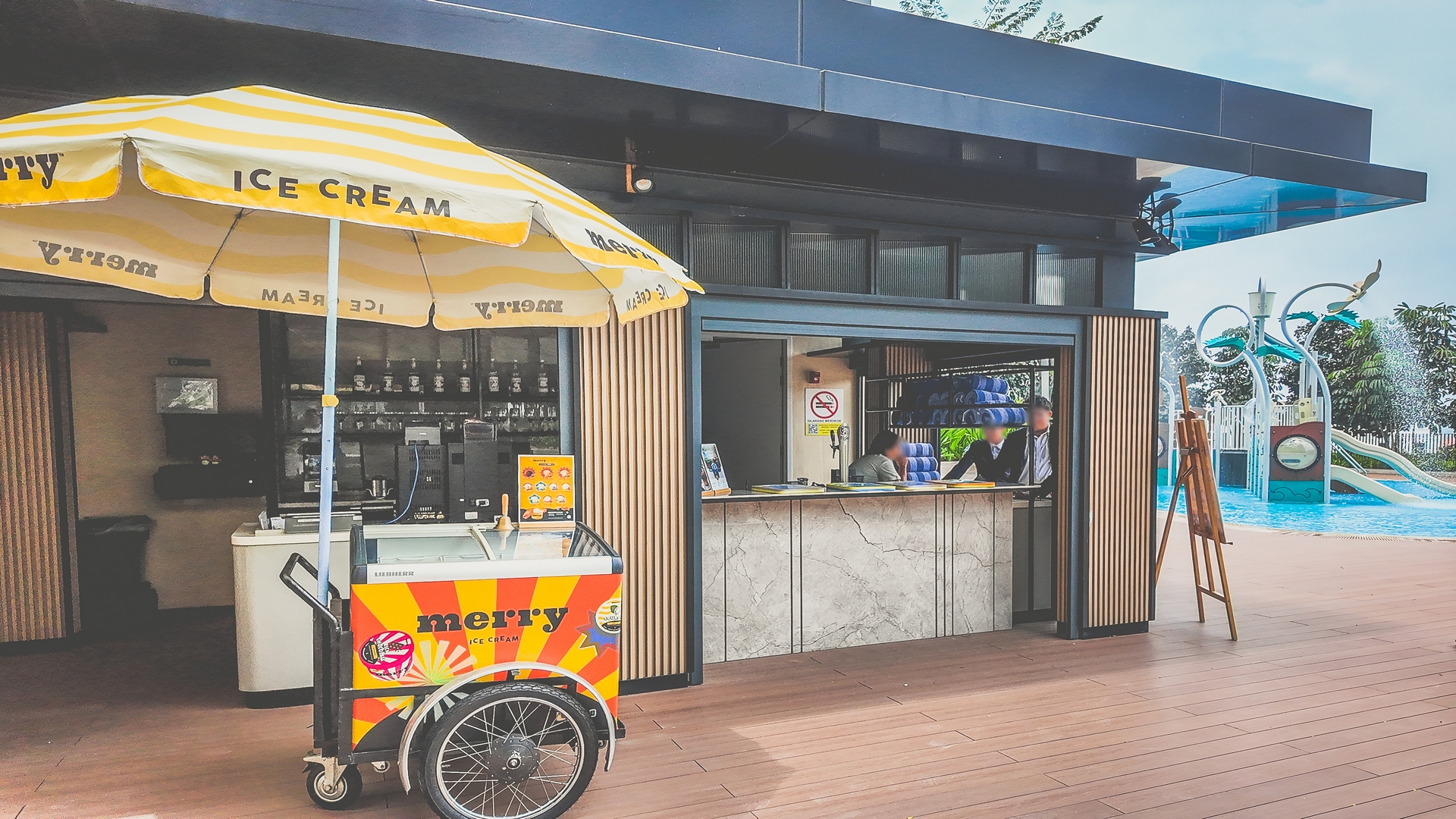
Ice cream is also available at the pool bar, which tends to be considerably more persuasive to younger guests.
No drama from kids. Priceless.
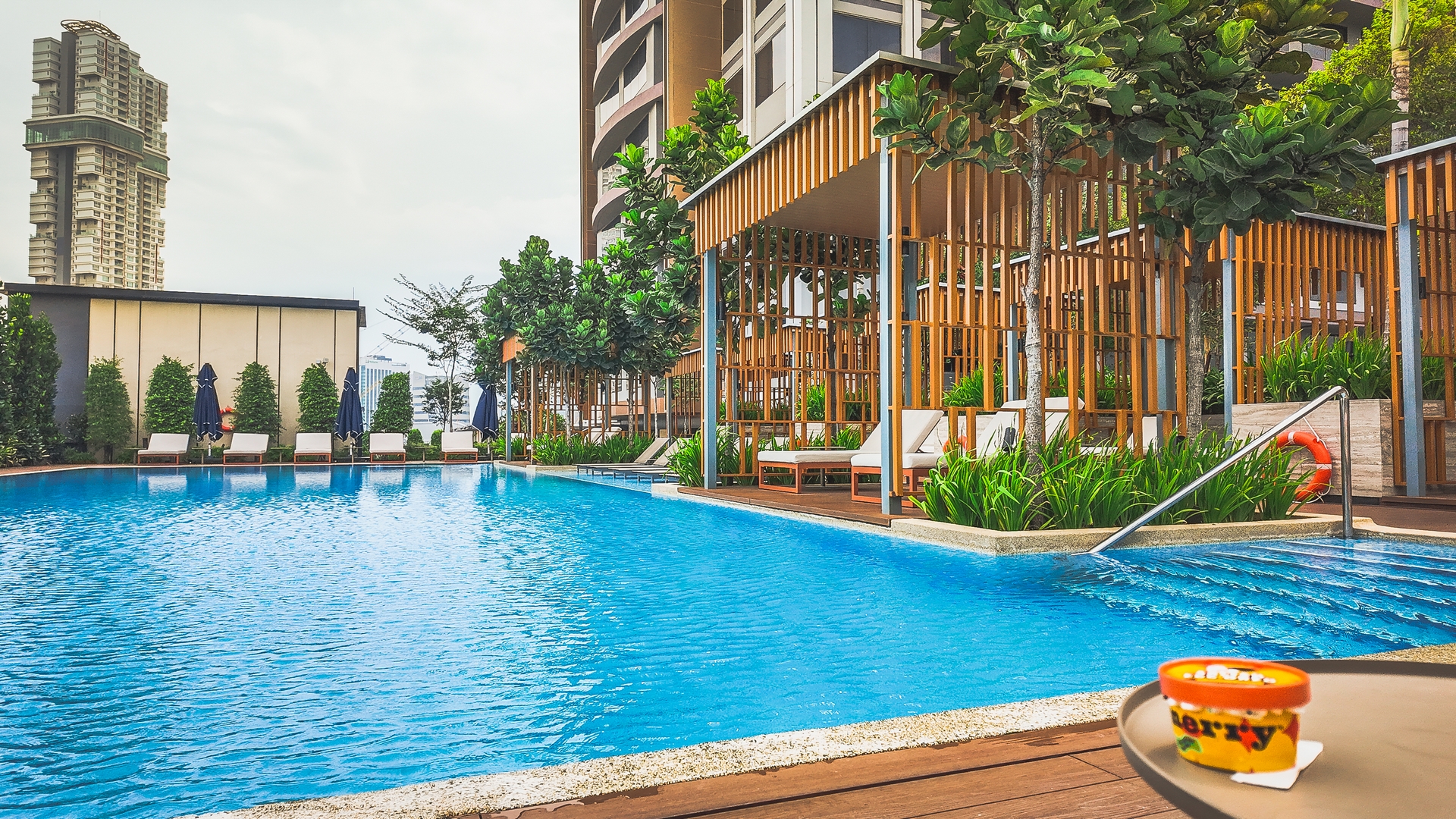
For a more deliberate Sunday by the water, the pool package for two adults and one child is RM320 nett. It includes Sunday brunch at Daily Social, access to the adult and children’s pools from 12.30pm to 6.30pm, towels and one non-alcoholic poolside drink per person.
It is an entire afternoon arranged around the simplest possible proposition: eat, swim, dry off, swim again.
The Club Lounge
The Club Lounge remains open around the clock, offering Club guests a quieter, more composed alternative to the hotel’s livelier public spaces.
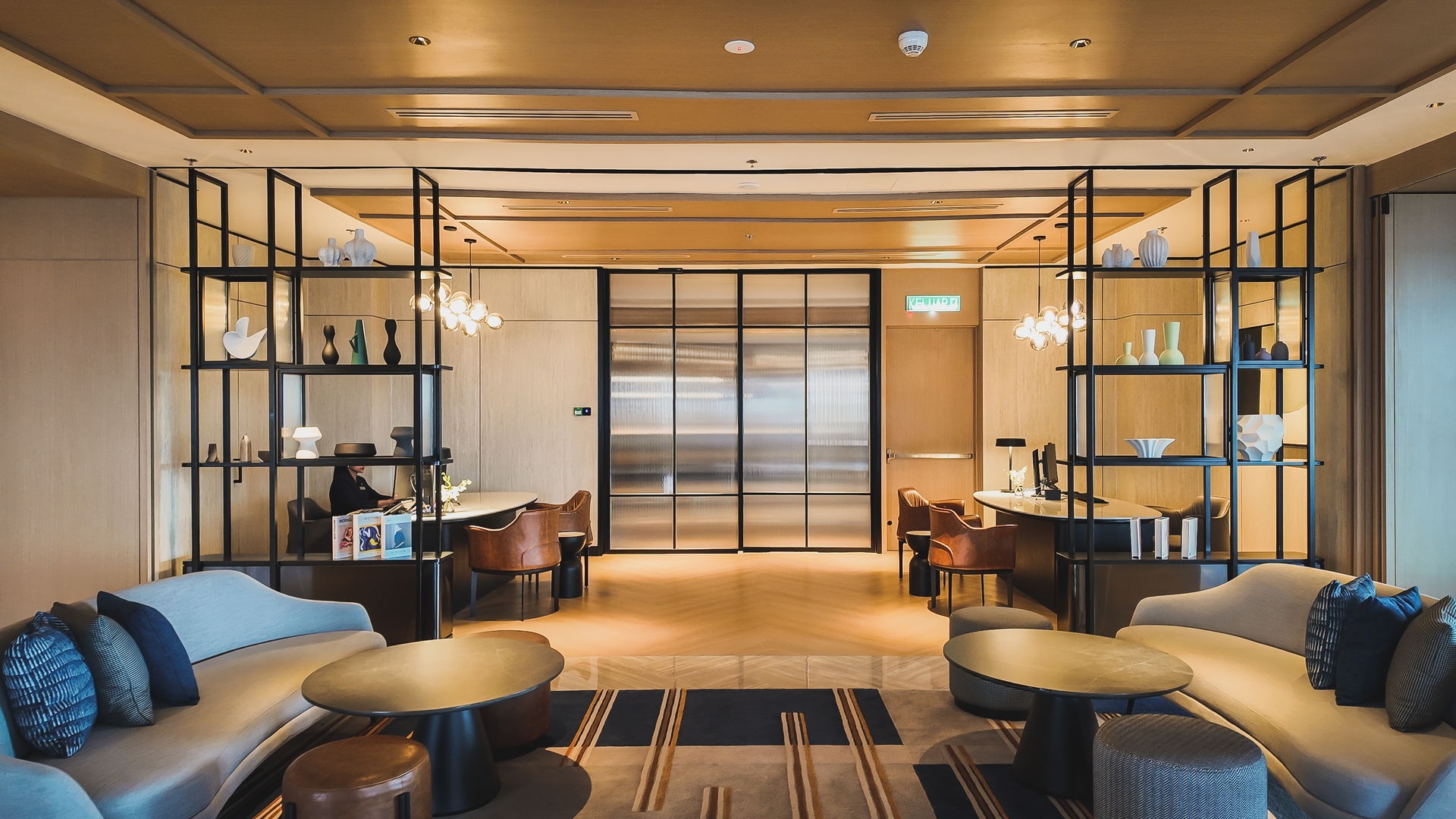
Throughout the day, cranberry and matcha cookies accompany the coffee service, providing small, welcome indulgences during those long, unhurried hotel afternoons. Coffee, soft drinks and hot milk remain available through the night, while a computer terminal offers a discreet corner for guests wishing to attend to work. After 10pm, when the lounge team has retired for the evening, assistance remains available through the main reception.
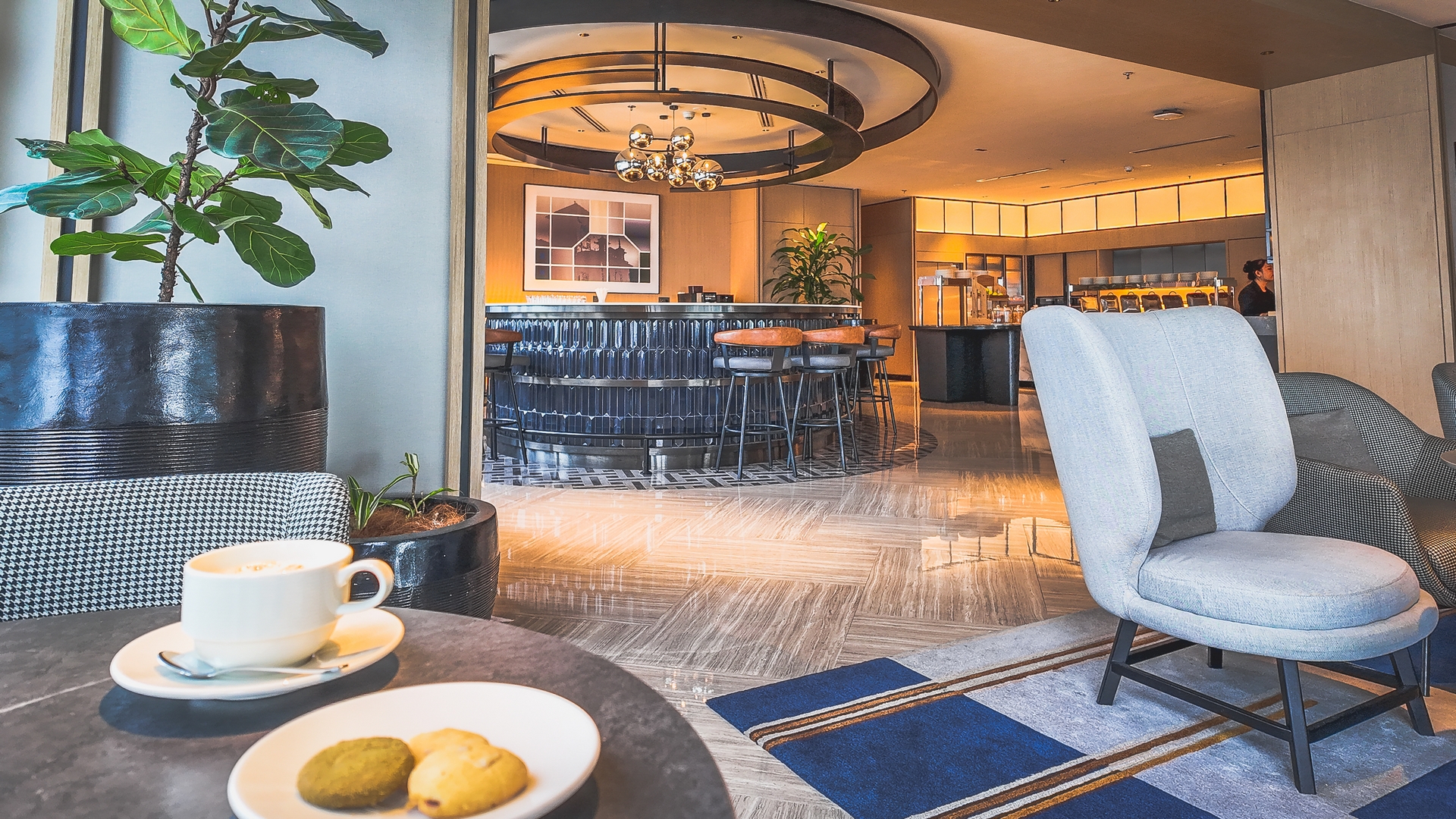
It is during cocktail hour, however, that the lounge reveals one of its more meaningful improvements over the past year.
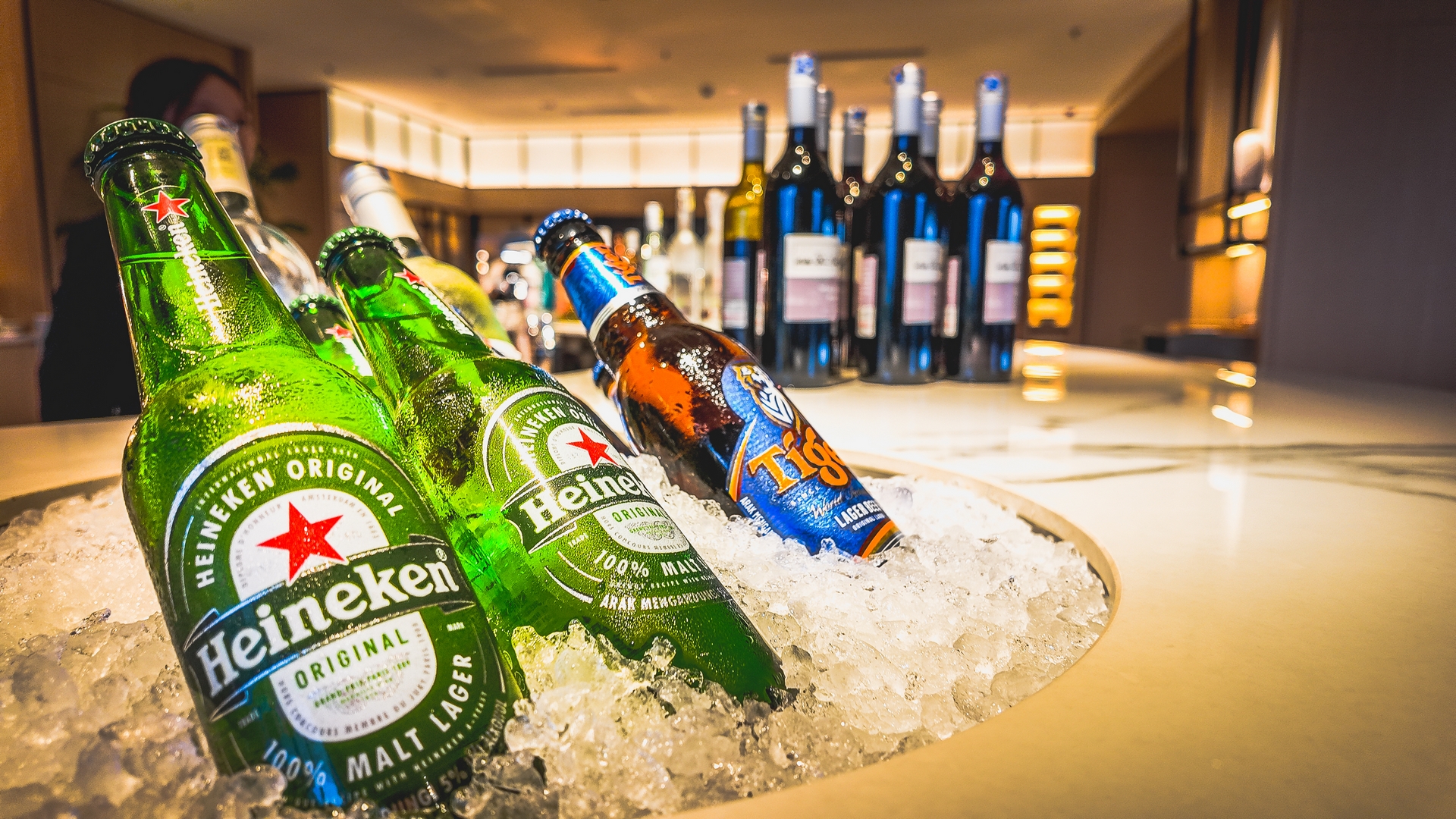
The evening service, from 5.30pm to 7.30pm, has become a more compelling proposition. The selection now places greater emphasis on protein, with a broader assortment of savoury dishes better suited to the leisurely pleasures of an aperitif. The offering feels more substantial, lending the transition from afternoon to evening a welcome sense of occasion.
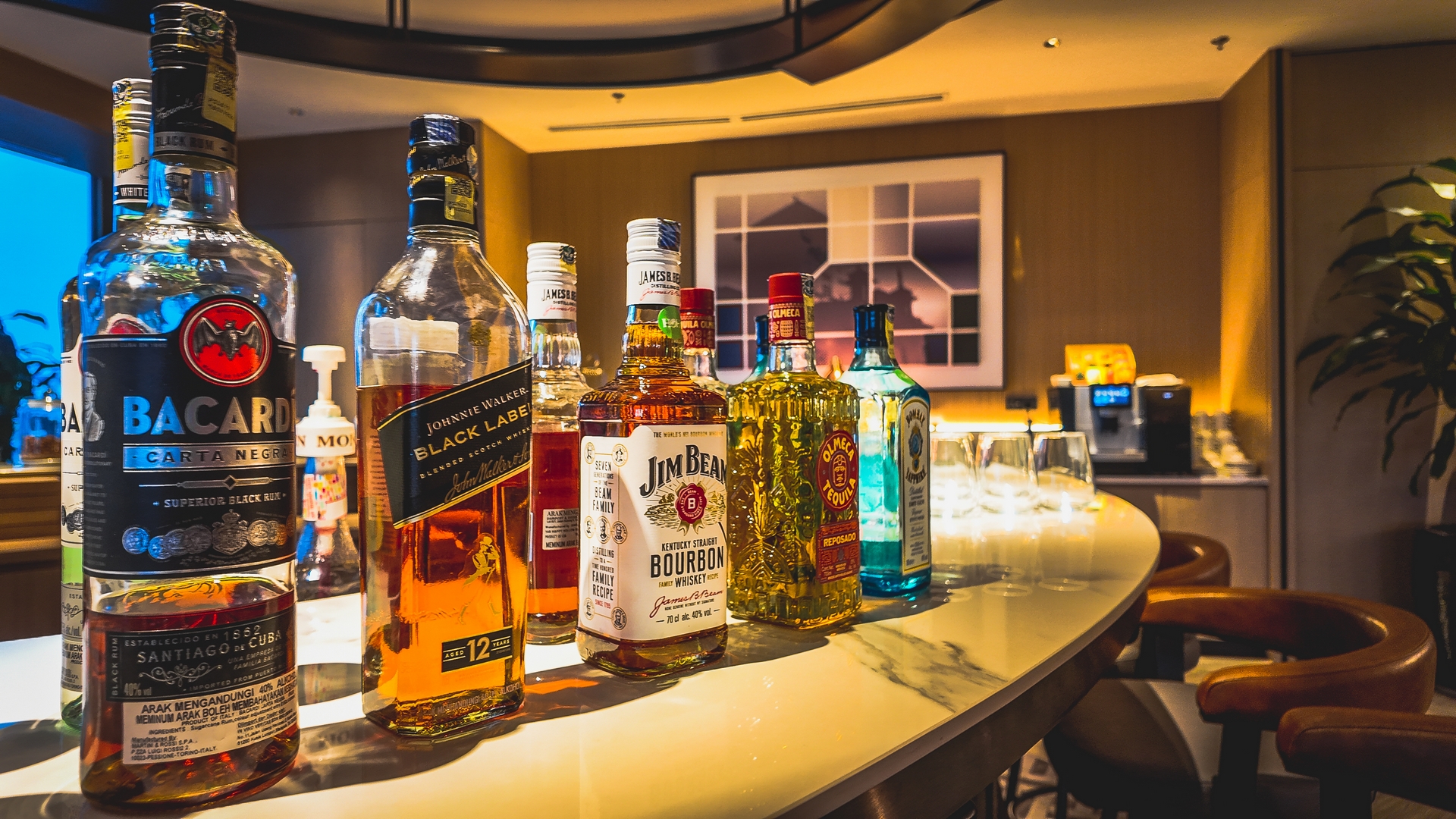
More striking still is the transformation of the circular bar, which is now fully utilised during cocktail hour. Previously, drinks were ordered through a server, who would retreat to the back kitchen to prepare them before returning with the finished glass. The process was perfectly functional, if somewhat detached. With the bar now operating as an active focal point, the experience has acquired an entirely different energy.
There is something inherently convivial about an open bar: the theatre of a drink being prepared, the easy exchange between guest and bartender, the sense of participation that elevates a simple pour into a small ritual of hospitality. The effect is both more interactive and more urbane. What was once a transactional exchange now becomes part of the evening’s pleasure, lending the lounge a livelier, more sophisticated atmosphere.
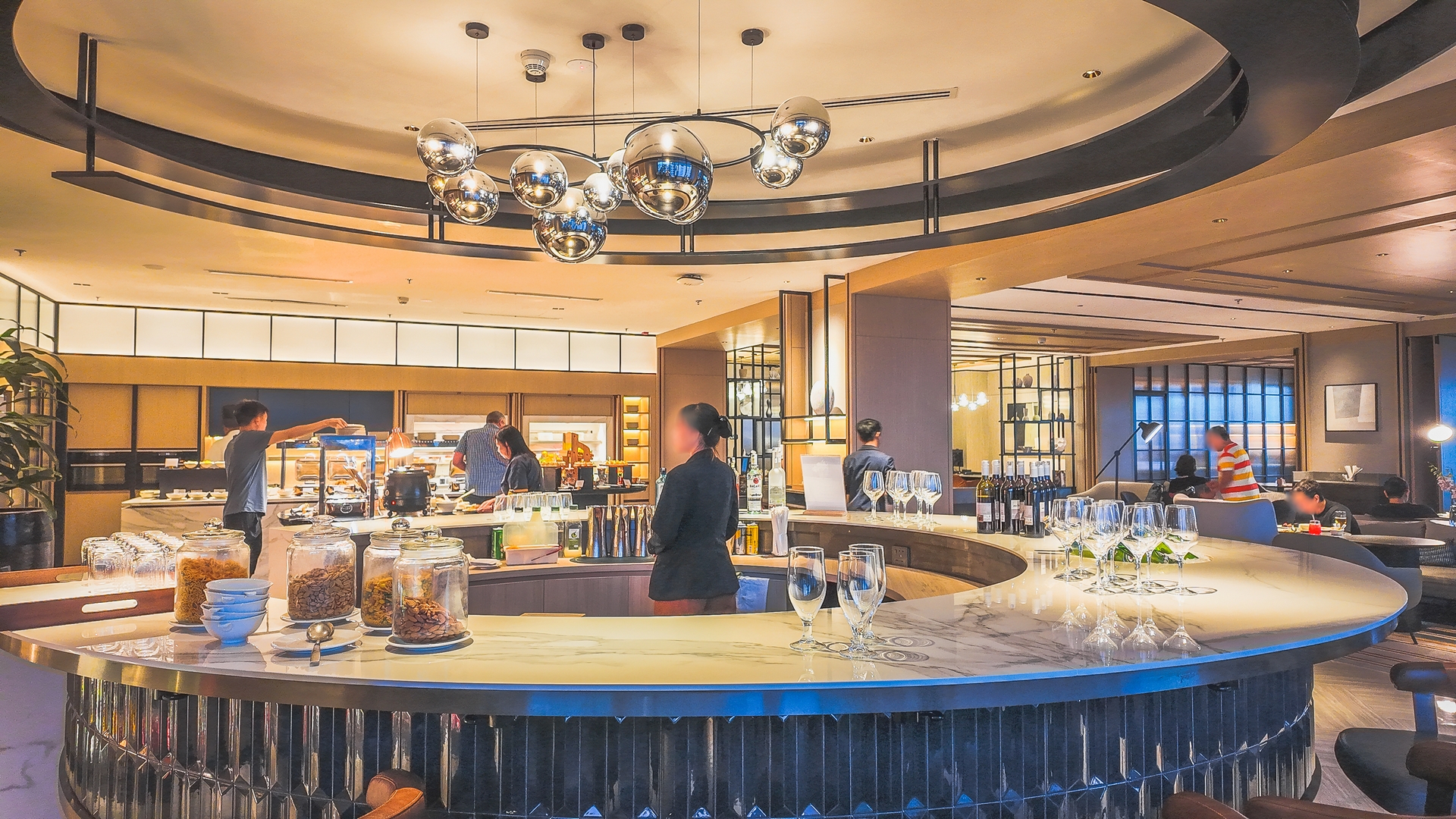
The circular counter lends itself particularly well to this arrangement, drawing guests into the action rather than leaving them as passive recipients of service. It recalls, in a terrestrial setting, the polished sociability of the open bar aboard Emirates’ A380 — that particular strain of aviation luxury in which service becomes part of the entertainment.
Cocktail hour assumes a different character for younger guests. Finger food, popcorn and milk are served as table games occupy the children, while cartoons are projected onto a screen, creating the soft, flickering ambience of a private cinema. Parents can remain close by, enjoying the evening without having to choose between adult company and their children’s entertainment.
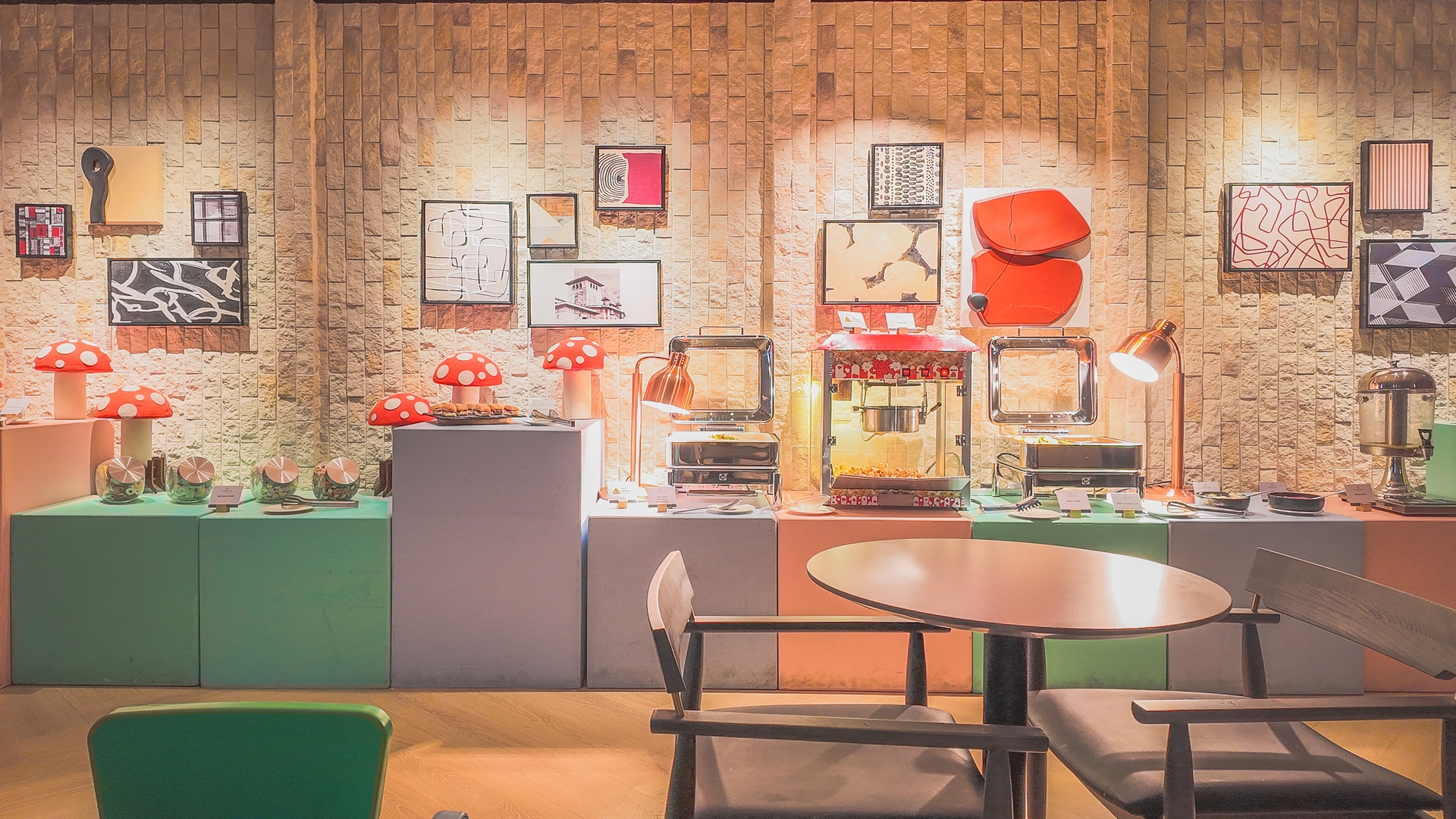
It is a small domestic tableau, transplanted into the hotel environment, and all the more appealing for its unforced ease. The adults settle into their drinks; the children become absorbed in the screen; conversation ebbs and flows around the lounge.
The evening unfolds without urgency, as a good hotel evening should.
Unspoken Bar
Unspoken Bar belongs to the evening.
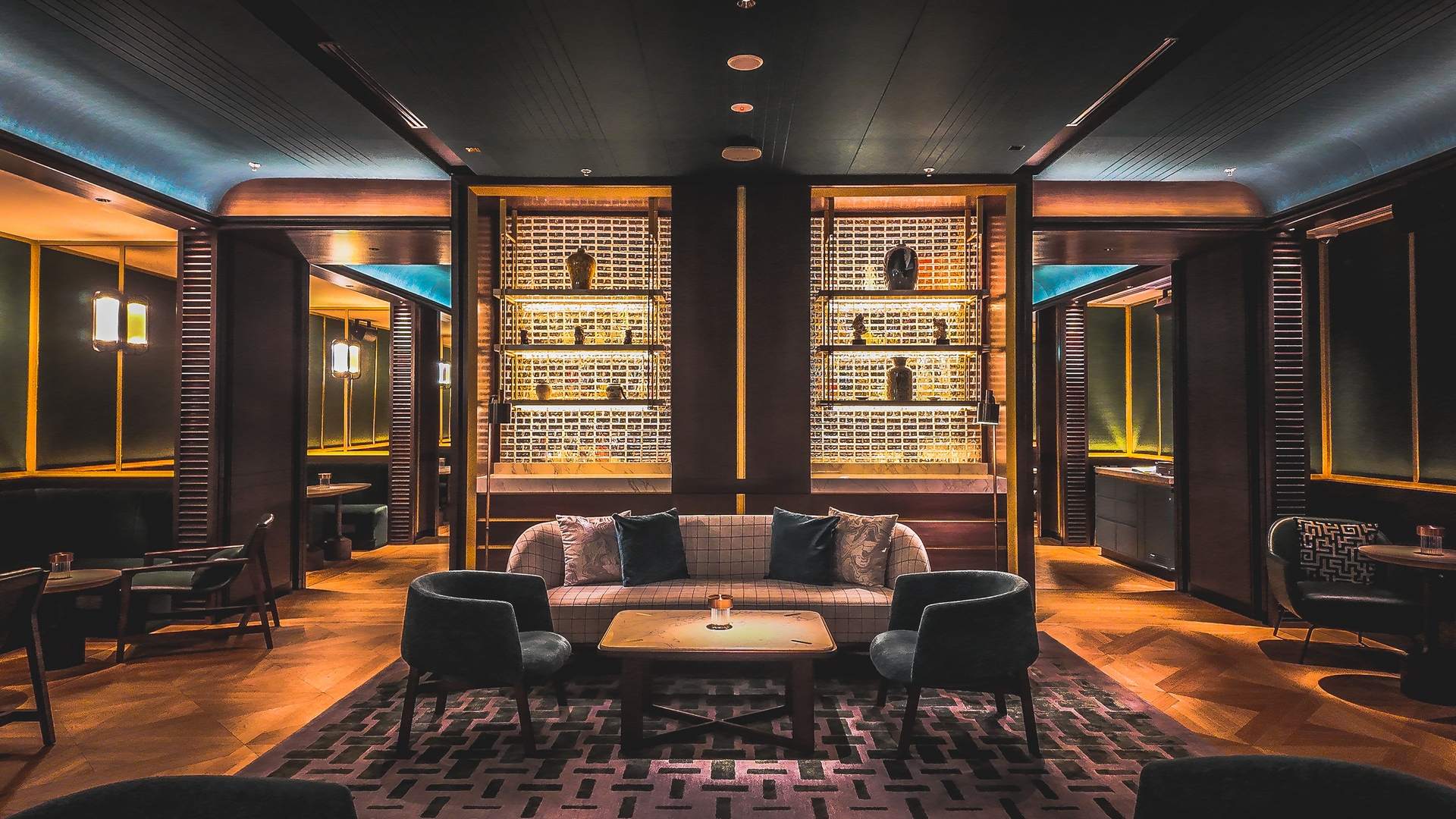
The interior is darker, more enveloping, its palette built around gold, green, timber and marble. Gold catches the low light; green recedes into shadow; timber gives the room warmth, while marble introduces a cooler, more permanent note.
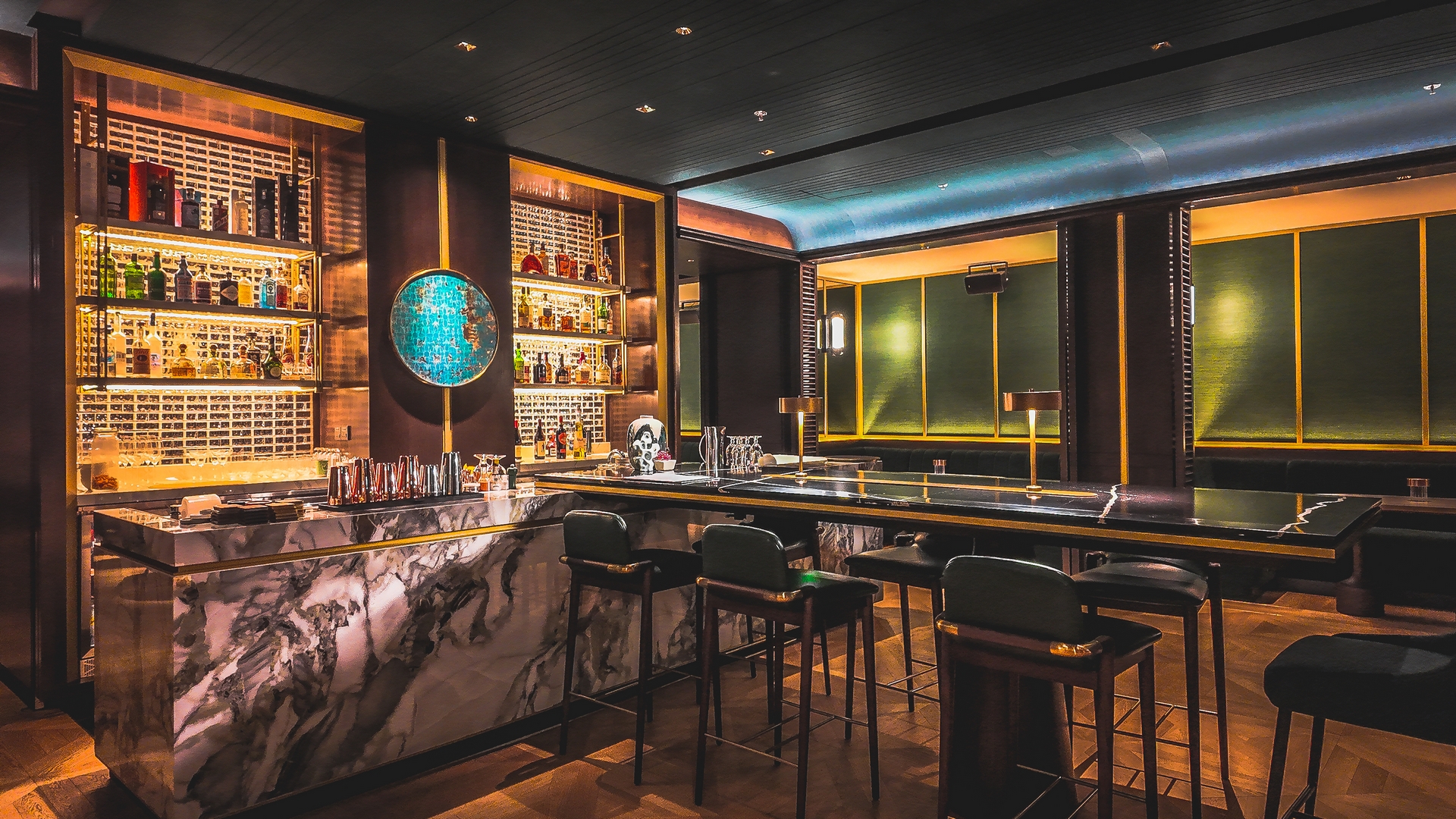
Porcelain Chinese artefacts, including qilin and fans, add another layer of visual texture.
The room is considered without becoming solemn.
The cocktail list moves between classics and original compositions, alongside premium spirits and wines.
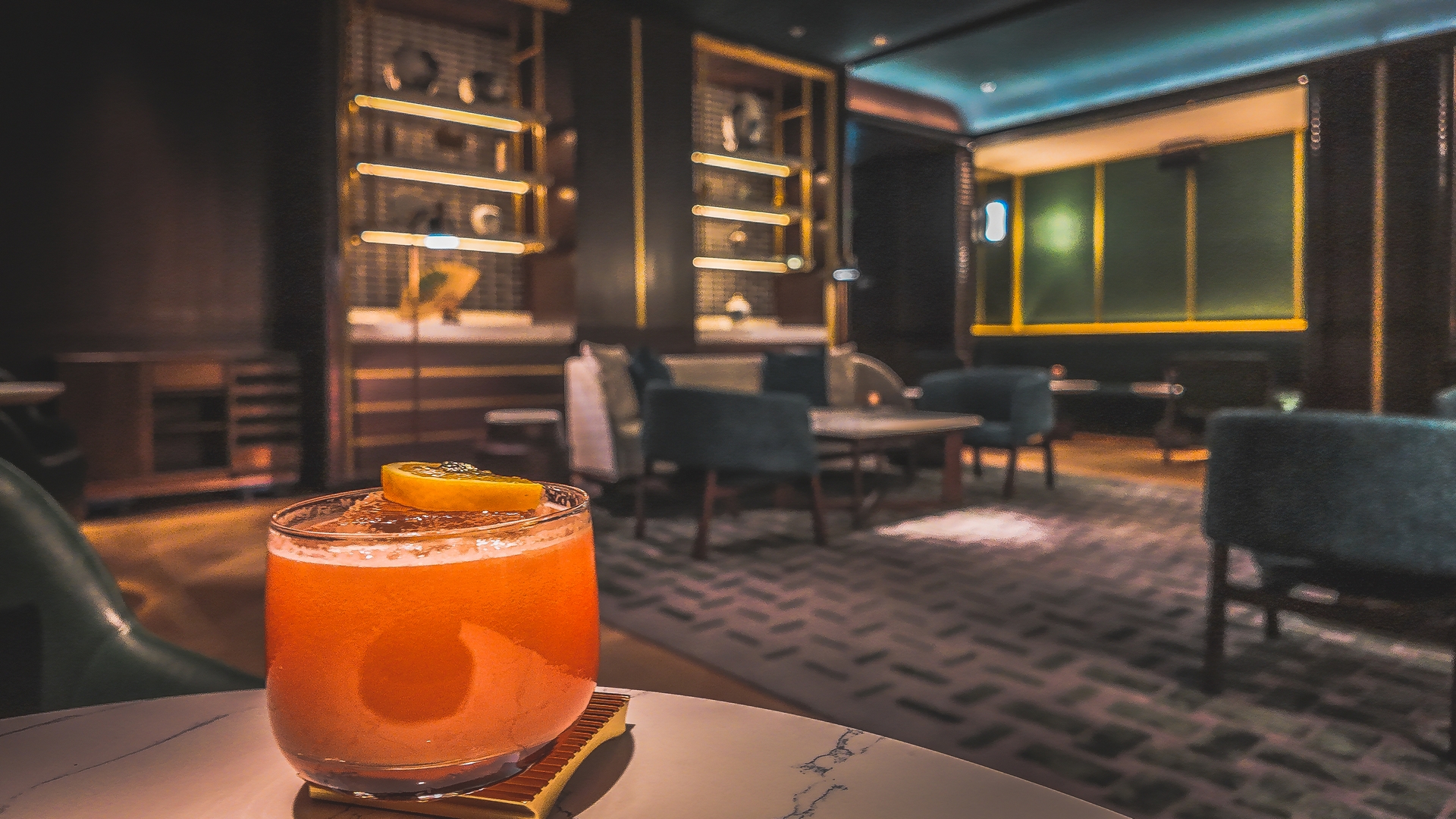
Velvet Ember
Bourbon | Dark Rum | Amaretto | Coffee Liqueur | Lemon Juice | Angostura Bitters Taste
Profile : Rich, smoky, slightly nutty with smooth coffee notes.
Velvet Ember combines bourbon, dark rum, Amaretto, coffee liqueur, lemon juice and Angostura bitters. The darker spirits establish a warm, smoky base, while coffee brings roasted depth and Amaretto contributes a faint nuttiness. Lemon lifts the composition, preventing the richness from becoming too dense, while Angostura leaves a dry, aromatic finish.
It is a cocktail with the temperament of late evening: deep, smooth and quietly persistent.
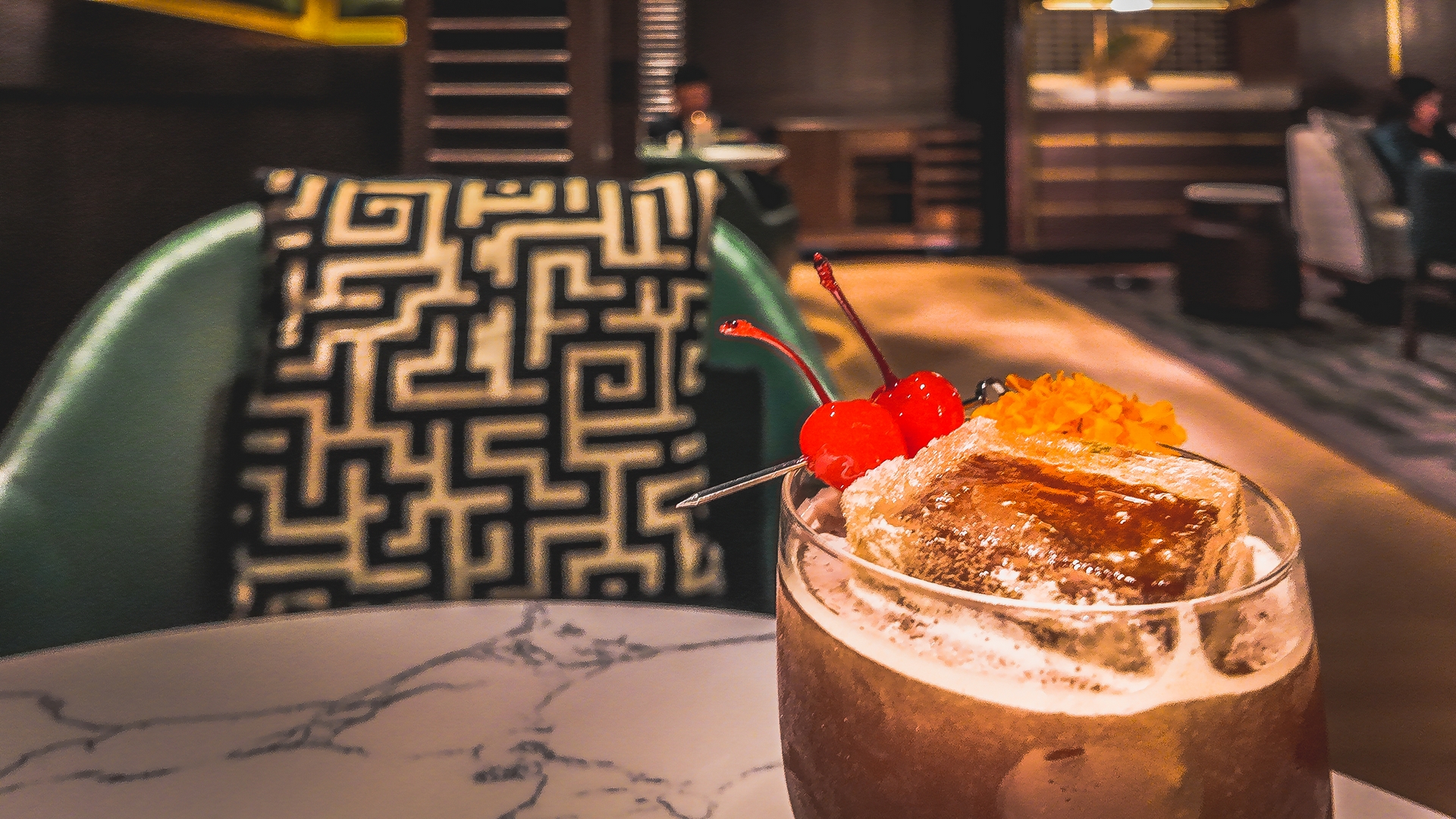
Smoked Paradise
Scotch Whisky | Dark Rum | Campari | Honey Syrup | Orange Juice | Orange Bitters Taste
Profile : Bold, smoky with balanced citrus bitterness.
Smoked Paradise is more assertive, bringing Scotch whisky and dark rum together with Campari, honey syrup, orange juice and orange bitters. Smoke and citrus bitterness establish the first impression; honey rounds the edges, while orange keeps the drink bright enough to avoid heaviness.
It has a more angular profile than the Velvet Ember, with bitterness lingering beneath the sweetness.
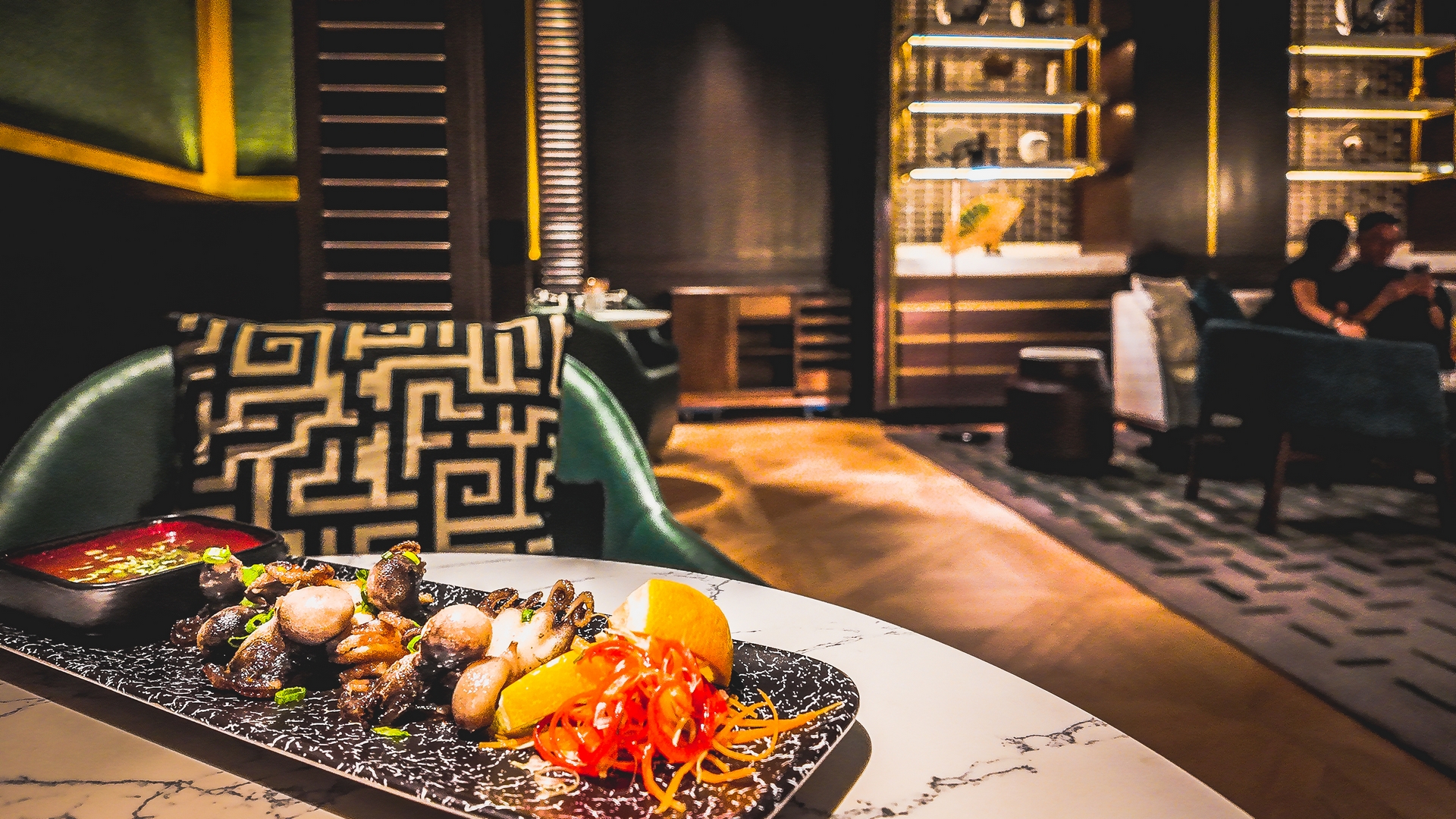
Grilled Baby Octopus
Chili Flakes | Garlic | Nuoc Cham Sauce
Grilled baby octopus with chilli flakes, garlic and nuoc cham provides something saline and charred alongside the drinks. The octopus remains supple beneath the grill’s smokiness, while the nuoc cham brings acidity and lift. Chilli and garlic add warmth without obscuring the flavour of the seafood.
The combination works particularly well in the darker atmosphere of the bar, where the char of the octopus and the smoke in the cocktails seem to belong to the same evening.
After 10pm, the room takes on another life as Singaporeans arrive following the closure of the shopping malls.
The evening, it seems, is not quite ready to end.
The night continues.
Where to Shop
SKS City Mall
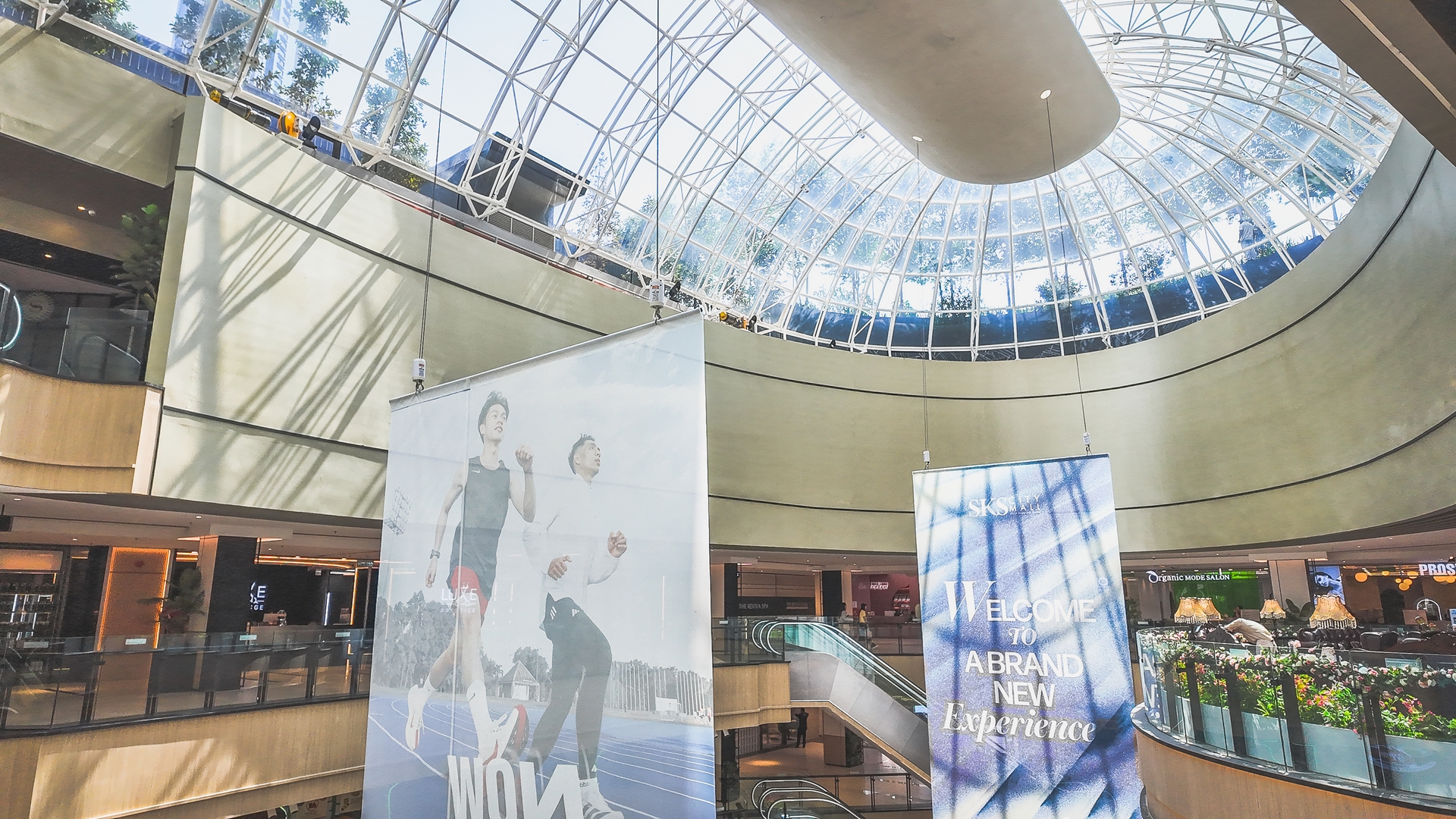
SKS City Mall opened in May 2026 and is connected directly to the hotel.
There is still something appealing about the immaculate newness of it: pale surfaces, clean lines and a generous wash of natural light entering through the skylight.
There are two routes from the hotel.
The lift leads to Level 1, where one end of the lobby opens towards the sheltered drop-off point and the other towards the mall. Alternatively, escalators near the function rooms on Level 5 lead directly to Level 4 of the mall.
The entire passage is sheltered.
In Johor Bahru, where tropical weather can change its mind within minutes, that detail acquires a significance of its own.
Beauty and Wellness
Thai Odyssey has a new outlet in the mall, while Qi Odyssey offers deep-tissue Chinese massage.
There are at least five hair salons and two nail parlours, together with AEON Wellness and Watson’s for skincare and beauty essentials.
The rituals are familiar to Singaporeans — hair, nails, skincare, massage — but the entire sequence can be accomplished without returning to the traffic outside.
Where to Play
Indoor Playground – Jungle Gym
On Level 3, a substantial indoor playground Jungle Gym gives younger children a destination of their own.
It becomes particularly useful during the hours when the tropical heat is at its most oppressive, or when rain renders the pool temporarily inaccessible.
There is something reassuringly uncomplicated about an indoor playground in the middle of a staycation.
Children disappear into play.
Adults find a chair.
The afternoon passes.
The Art of Staying In
Perhaps the most pleasing hours are the ones between plans.
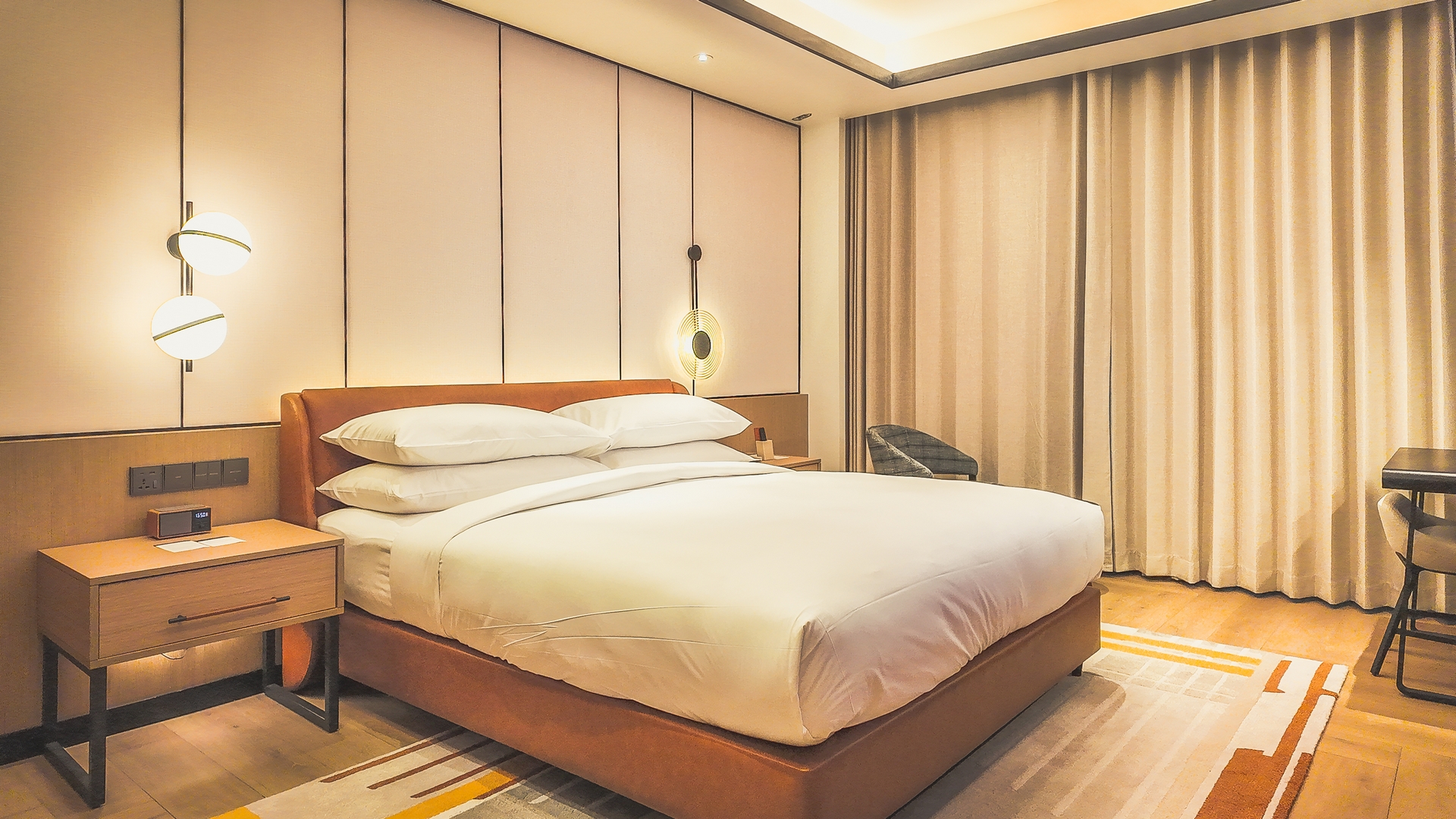
A swim that runs longer than intended. Coffee left cooling on the dining table. Children still in their pool clothes at six. A drink downstairs before dinner, when the light has turned amber and the city outside is beginning to glow.
Johor Bahru remains close — its heat, its appetite, its restless, exuberant texture.
But from here, it can be taken in selectively: a little of the city, then the cool of the room; the movement outside, then the quiet within.
For a weekend, that is a rather lovely arrangement
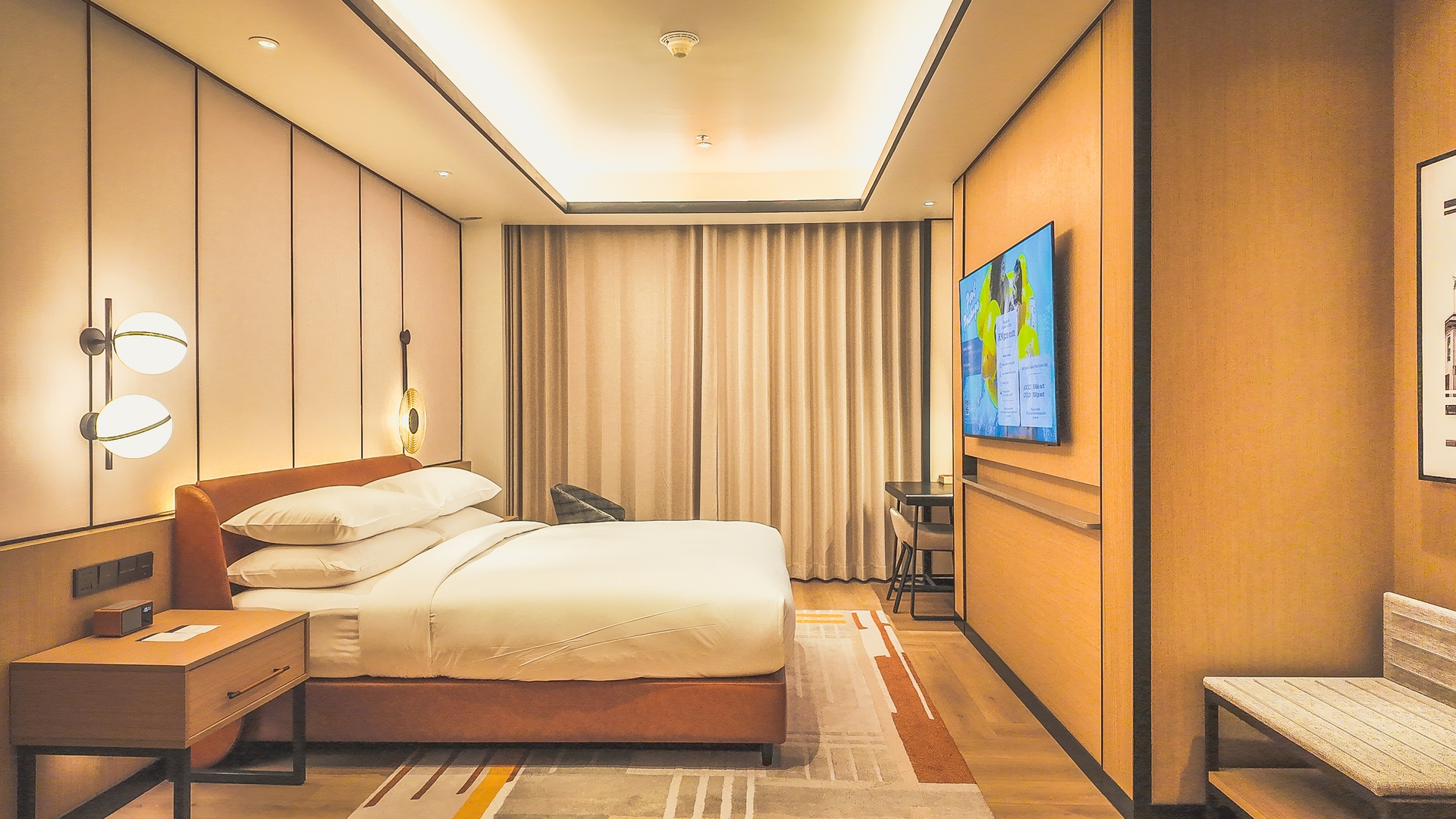
Sheraton Johor Bahru
05-01A, Menara SKS, Jalan Storey, Bukit Senyum, 80300 Johor Bahru, Johor, Malaysia
Tel: +60 7-707 7777


